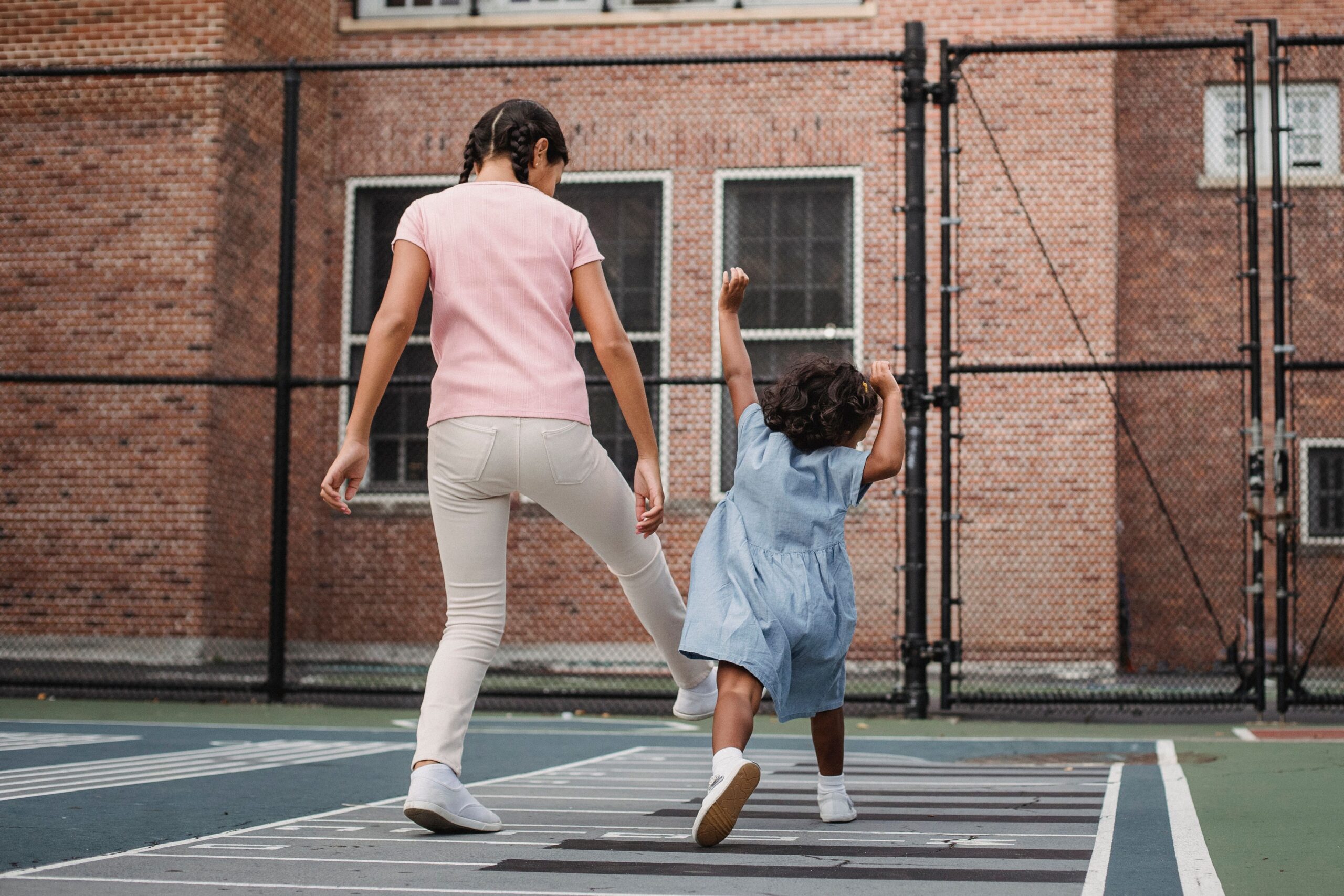
We provide adults with permission to play. We also provide children with the same permission but they need less help getting over the hurdles. Once they have been given permission to play again, they are free to explore the world with a sense of awe, wonder, and curiosity. This psychological emancipation permits the participant to reexamine their relationship with the world around them through the safety of pretend. It is something so fundamental to being human that it is not something that is taught; it is something everyone is born with and it is actively discouraged at a later stage in development.
At some point in almost every adult’s life the sense of play is suppressed through emotional or physical violence or the threat of violence. However, within the spaces we set aside for ourselves, we establish the social norms, we set ourselves up as the arbiters of acceptable behaviour, and with the permission of our participants, we give them permission to play. Those who do not wish to play are gently, but firmly, told to leave. We often say that live role-playing is not a spectator activity; it is not something you watch, it is something that you do. By doing this, we preserve the magic circle as a container strong enough to support the vulnerability that play requires.
For most live role-playing and tabletop role-playing events, passive observation is discouraged or outright banned. There are many larps that have taken place in public spaces that stop while there are observers, only to continue when the observers have gone. This is not to say that it is not possible to watch a role-playing event; of course it is, but the observers are not engaging in the same activity as the participants and the two cannot be meaningfully compared. An observer may feel emotional responses to what is occurring, but this is from an empathic relation to the observed parties.
For the live role-playing participant, it is not the observation but the experience itself which is the source of these feelings. It is entirely likely that the feelings carried by the participants vary wildly between each other based on where they are in relation to the narrative. The observer has their own distant relation to the narrative that sits outside the main core of the activity itself because it remains firmly in the sphere of public social norms.
It is true that a participant may find themselves watching from the sidelines of the circle. Holkar and Wood correctly observe that “we shouldn’t see this as larp falling short of an aesthetic ideal in which such concepts don’t apply.” (Holkar and Wood, 2025). Taking on an observation role while engaging as a participant is still engaging with the medium from inside the new set of social norms. When Deterding (2018) talks about people needing alibis to play, entering the playground becomes the alibi regardless of ability or even activity.
The emancipatory act of participating in play as adults threatens the emotional stoicism and use of aggression for control in masculine power dynamics. When people are seen to step outside of these definitions of acceptable behaviour, society is ready to force people back into it. By necessity, consensual play requires mutual support, openness, and sensitivity in order to be successful. Encouragement, kindness, emotional vulnerability and expression, curiosity, and imagination are all in direct opposition to a society that encourages the opposite values of emotional stoicism, competition, rigid self-control and strict social hierarchies that enforce marginalization. When choosing to observe rather than participate, the individual is choosing to not engage with that vulnerability, although it is important for the individual to choose for themselves. If we do not respect individual agency, then we risk undermining the very empowerment we seek to encourage.
Bowman and Hugaas observe that the “higher the risk, the greater the need for a strong, secure container in which players feel supported when challenging themselves” (Bowman and Hugaas, 2025). This container exists within the magic circle and its resilience lies not in its rigid conformity to set dogma, but in its ability to adapt and support to secure the participants within the circle based on the needs of the group. Those who remain agree to the social contract formed by the participants with each other in an environment where individuals are empowered to explore their own agency and autonomy.
This allows us to provide a place where play is not only permitted, it is expected. Where vulnerability is encouraged, not discouraged, and where support for each other and emotional expression is paramount. A place where we are free to enjoy the pursuit of emergent storytelling that scintillates and excites us for who we are and not what we are forced to be. I can see why this would scare some people, and I respect that. There will always be space for them in the circle when they are ready.
But this is something every single human is born to do. It takes years to condition us against the instinct to play in our environment. Sometimes there are good reasons to stop playing. The real world is unforgiving and we must treat it with the respect it deserves, keeping ourselves safeguarded and aware of any risks we may experience. But as long as it is safe to do so, we should explore, create, and enjoy our life, and in this space, in the artform, we explicitly give our participants permission to play.
References
Bowman, Sarah Lynne, and Kjell Hedgard Hugaas. 2025. “Philosophies of Psychological Safety in Analog Role-playing Game Discourses.” International Journal of Role-Playing.
Csikszentmihalyi, Mihaly. 2014. Flow and the Foundations of Positive Psychology: The Collected Works of Mihaly Csikszentmihalyi. Dordrecht: Springer.
Deterding, Sebastian. 2018. “Alibis for Adult Play: A Goffmanian Account of Escaping Embarrassment in Adult Play.” Games and Culture 13.
Holkar, Mo, and Laura Wood. 2025. “Performance and Audience in Larp.” Nordic Larp, October 20.
Huizinga, Johan. 1955. Homo Ludens: A Study of the Play-Element in Culture. Boston: Beacon Press.
Kemper, Jonaya. 2017. “The Battle of Primrose Park: Playing for Emancipatory Bleed in Fortune & Felicity.” Nordic Larp, June 21.
Kivel, Paul. 1998. Men’s Work: How to Stop the Violence That Tears Our Lives Apart. Center City, MN: Hazelden.
Kivel, Paul. 1999. Boys Will Be Men: Raising Our Sons for Courage, Caring, and Community. Gabriola Island, BC: New Society Publishers.
Photo by Antonius Ferret on pexels.com
