Month: December 2019

  • Overview of Edu-Larp Conference 2019

    Published on

    in

    Overview of Edu-Larp Conference 2019

    By

    Katrin Geneuss

    Edu-larp can be described as implementing live-action role-playing games in formal or informal educational contexts, “used to impart pre-determined pedagogical or didactic content” (Balzer & Kurz 2015). The aim of the Edu-larp Conference 2019 was to present and discuss recent international research as well as share best practice examples or innovative formats of edu-larp.The first edu-larp conference was held in 2014 in Sweden, organized by Carolina Dahlberg. From single workshops at the Nordic Larp Conferences Knudepunkt dealing with edu-larp, Carolina took to actually making a separate conference, taking place before the main event. In consecutive years, the edu-larp conference has been running every year since and will again in Finland 2020. Edu-larp conferences have also been hosted in the United States in a similar setup as the ones in the Nordic countries. They have taken place the day before the Living Games Conference, the US larpers’ version of Knudepunkt, and were hosted in 2016 (Austin, Texas) and 2018 (Boston, Massachussetts).

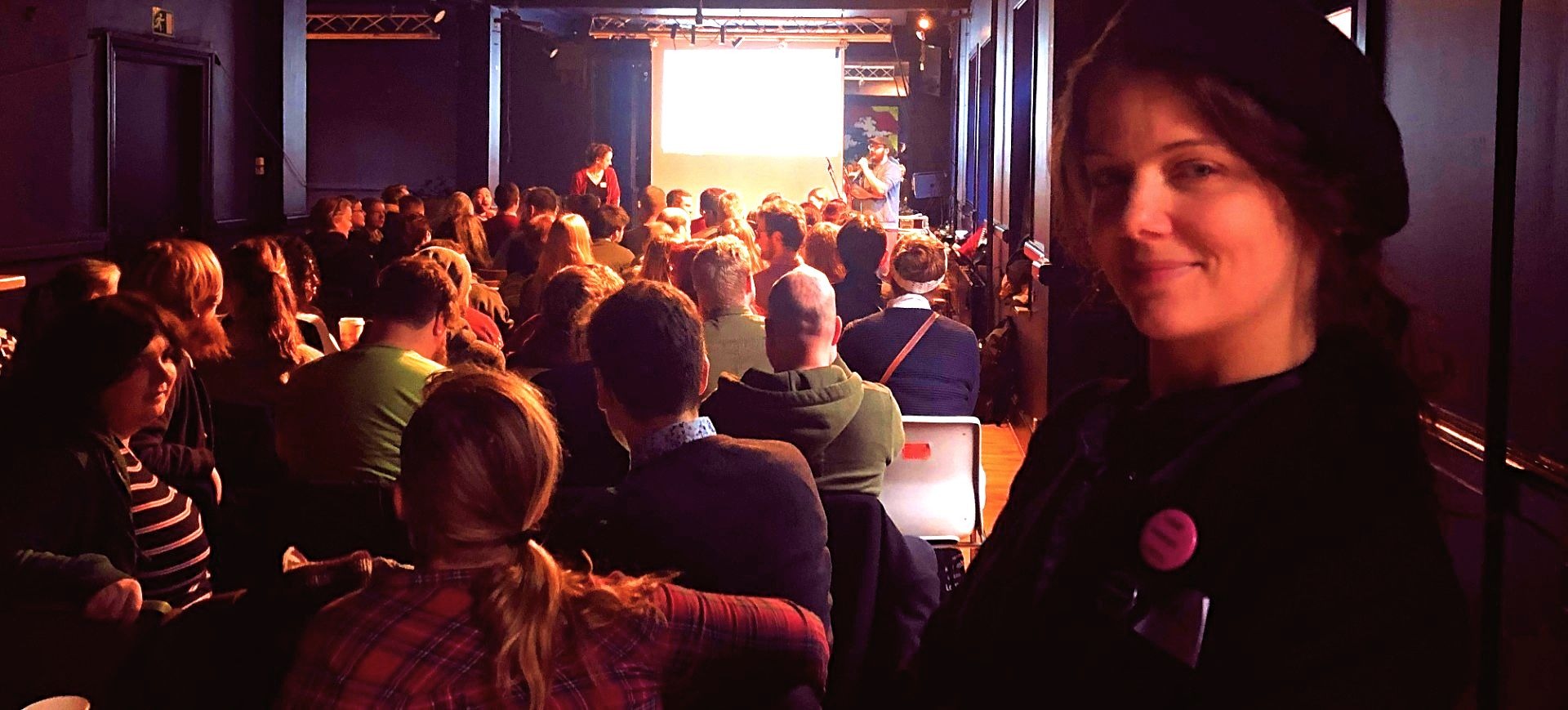
    The Edu-larp Conference 2019 was held at Ungdomshuset in Odense (Denmark) on 7 February 2019 from 9-17. The organizers (Muriel Algayres, Charles Bo Nielsen, and Katrin Geneuss) had sent out an open call for papers via social media and all proposals were accepted. There were eight presentations in total, spanning research and development projects, as well as reports on specific ways of facilitating edu-larps and of implementing future projects. Furthermore, three workshops were held (described below) and the program included an optional trip to Efterskolen Epos, a boarding school that uses edu-larp as one of its teaching tools.

    This article contains summaries of presentations, workshops, and the trip to Efterskolen Epos.

    Photo of Josefin Westborg
    Josefin Westborg

    Summary of the Eight Presentations

    Josefin Westborg presented results from her bachelor’s thesis in a talk entitled “Who Sees What? Perceived Learning Areas After Participating in an Edu-larp.” Applying the model of Hammer et al. (2018), she handed out an existing survey using the constructs 1) portraying a character, 2) Manipulation a fictional world, 3) Altered sense of reality, and 4) Shared imagination. Further, she conducted qualitative interviews with four edu-larp participants who had different functions in the games. Their perceptions about learning from edu-larps are similar, regardless if they were a student or a teacher. The important factor seems to be how immersed a participant is in the larp. Based on her work, Westborg suggests adding the constructs agency and personal growth to the model of Hammer et al. (2018).

    Carola Nebe from the German association Waldritter e.V. presented a short film which was produced to explain the method of edu-larp to an audience who might not be familiar with the technique. It can be found here.

    Photo of Carola Nebe
    Carola Nebe

    Olivia Fischer from the College of Teacher Education in Vienna (PH Wien) presented a format for how to introduce edu-larp as a teaching method in teacher education. In short, she first explains edu-larp as a concept and then lets students participate in edu-larps with different purposes and focuses relevant to education. She proposed among other things that edu-larps holds potential for raising student self-efficacy, which concerns “people’s beliefs in their ability to influence events that affect their lives” (Bandura, 2010, p. 1) and contributing to “Bildung,” which refers to a tradition of self-cultivation, personal maturation, and identity development, which only to a certain extent can be translated with “literacy.”

    Photo of Olivia Fischer
    Olivia Fischer

    Katrin Geneuss presented parts of results from her PhD thesis “Die waren ja mittendrin! Ganzheitliches Lernen im Rollenspiel EduLARP” (Geneuss 2019). She focused on difficulties associated with using edu-larps during regular lessons of German, History, and Philosophy in Bavaria. Through semi-narrative interviews, she found that pedagogues were concerned with the perceived effort/result-ratio, meaning that edu-larps take a lot of time to design and to facilitate, but the learning outcome is difficult to measure. This connects to another challenge, which is how to set grades on the student’s performance. To meet the teacher’s needs and to decrease the time of preparation, it would be of help to offer ready-to-play material, as can be found here. Despite those and other minor concerns, the thesis reported that due to the high degree of motivation and active involvement of the students, the STARS-project in Munich is appreciated by teachers and pupils alike.

    Photo of Katrin Geneuss
    Katrin Geneuss

    Muriel Algayres presented the results of the introduction of a role-playing game activity for secondary class students in History (Algayres 2019). She compared intrinsic and self determined motivation (see Ryan & Deci 2017) for a group of students involved in the activity with a control group. Though the quantitative levels of intrinsic and self-determined motivation were higher for the group of students involved in the activity, the sample of students was too small to establish statistical significance. However, based on the positive results, she highlighted the potential for educational role-playing games to increase intrinsic motivation in students.

    Photo of Andrea Castellani
    Andrea Castellani

    Andrea Castellani and Matteo Bisanti gave an overview over the Italian larp conference Edularp.it, which in its first year featured talks by 13 different speakers. Further, they presented Il Congegno di Leonardo, which is an edu-larp organization in Italy. Initially focusing on edu-larps for science education in secondary schools, they are currently expanding activities into other subjects and other target groups (primary school pupils, larpers, the general public, etc).

    Photo of Matteo Bisanti
    Matteo Bisanti

    Jannick Trolliet introduced the audience to how edu-larp is used in Swiss holiday camps with youths. He pointed out that the remote location invites children and young adults to explore the natural environment as well as physical interaction.

    Qla Zetterling from the Swedish company Lajvverkstaden summarized the project From Russia with Love in Belarus, where he facilitated edu-larps to teach sexual education in orphanages. Edu-larp can be a necessary vehicle to talk about topics that are socially not accepted or taboo otherwise.

    Photo of Qla Zetterling
    Qla Zetterling

    Workshops

    Between the sets of presentations, the participants were offered three mid-day workshops. On the workshop on research, which was led by Sarah Lynne Bowman and Katrin Geneuss, participants worked together on definitions and terminology, as well as on making a map of participant research intentions and methodologies. This workshop showed that from a research perspective, edu-larps as a field of research is diverse and fragmented both in terms of the topics and methods used, when applying edu-larp in formal or informal settings. Furthermore, qualitative research in edu-larp makes use of a variety of theoretical and methodological perspectives, for example, thematic analysis (see Braun & Clarke, 2006), grounded theory (see Strauss & Corbin 1997), action research (see Stringer 2008), ethnography (see Balsiger & Lambelet 2014), motivation theory (see Ryan & Deci 2017), and network analysis (see Bruun & Evans 2018). These are some of the perspectives in use to answer equally diverse research questions. Many participants were in the beginning of their research careers and/or had edu-larps as one of many research interests. As can be expected from a budding field, researchers seem to bring in the theories and methodologies they know from other more or less related fields.

    sticky notes on a whiteboard brainstorming the academic field of edu-larp

    Another workshop was lead by Olivia Fischer, and was concerned with implementing drama techniques and edu-larps in teacher education. This workshop featured many hands-on exercises for the participants, several of which were inspired by improvisational theatre. A third workshop on edu-larp design was lead by Charles Bo Nielsen. The workshop to the format of what can be called “a larp jam:” Starting with a brainstorm of ideas from common “idea points,” the workshop participants proceeded to team up and develop ideas further. As an end product, the developed ideas were narrowed down by participants to finalized pitches, which were presented to the overall audience of the conference.

    Visit to Efterskolen Epos

    The conference had an optional add-on: the audience was offered a trip to the Danish boarding school Efterskolen Epos. It is one of two secondary schools in Denmark using role-playing games as an integrated part of their teaching strategy. The trip was co-organized by Esben Wilstrup and Charles Bo Nielsen. At Efterskolen Epos, participants engaged in joint discussions with pupils as well as teachers from the school. This gave different perspectives on how the school utilizes both pupil and teacher resources when designing games from which students may acquire knowledge, skills, and competencies required by the Danish school system (grades 9 – 10). In Denmark, an “efterskole” (the literal translation from Danish is “after school”) is a government-funded institution that acts as a transitional boarding school to prepare lower secondary students (8th, 9th, and 10th graders in the Danish school system) for upper secondary school. An “efterskole” usually has a focus, often related to particular fields of interest, such as sports, music, outdoors, or larp. This focus is often accompanied by a pedagogical vision and practice. As a government funded school, Efterskolen Epos follows the standard educational regulations of 9-10th grade including regulations for exams and grades.

    participants brainstorming in the edu-larp workshop 2019
    Participants in a workshop at the Edu-Larp Conference 2019. Photo by Anders Berner

    Outlook

    The variation of the contributions to the edu-larp conference indicates that larp as an educational tool is applied in many different contexts, ranging from holiday camps to courses at colleges for teacher education. These formal and informal learning and teaching strategies demand well-trained teachers and facilitators, which is why multiple programs need to be developed. Research in edu-larps may be seen as a new bud in the young fields of game-based learning and gamification. As such, research in edu-larps is diverse both in terms of research questions and methods. Furthermore, research in edu-larps seems to be intimately tied to teacher practice and development of unique edu-larps, rather than investigations of standard materials. Finally and linked to the last point, the field has a great and diverse interdisciplinary potential, both in terms of research and design. As mentioned previously, this potential of edu-larp among others touches the fields of performative studies, drama education (Heathcote & Bolton 1995), and psychology, as well as interdisciplinary teaching, where edu-larps may help link, for example, the Humanities and the Sciences.

    References

    Algayres, Muriel. 2018. “A Study of Active Learning in Educational Roleplaying Games and Students’ Motivation.” Proceedings from the TAL2018 Conference, Syddansk University, 2018.

    Balsiger, Philip, and Alexandre Lambelet. 2014. “Participant Observation.” In Methodological Practices in Social Movement Research, edited by Donatella Della Porta, 144-172. Oxford: Oxford University Press.

    Balzer, Muriel, and Julia Kurz. 2015. “Learning by Playing. Larp as a Teaching Method.” Nordiclarp.org. Last modified March 4.

    Bandura, Albert. 2010. “Self‐efficacy.” In The Corsini Encyclopedia of Psychology 1-3.

    Braun, Virgina, and Victoria Clarke. 2006. “Using Thematic Analysis in Psychology.” Qualitative Research in Psychology 3, no. 2: 77-101.

    Bruun, Jesper, and Robert Evans. 2018. “Network Analysis as a Research Methodology in Science Education Research.” Pedagogika 68, no. 2: 201-217.

    Geneuss, Katrin. (2019). „Die waren ja mittendrin!“ Ganzheitliches Lernen im Rollenspiel EduLARP. Grundlagen – Wirkungen – Einsatz im Deutschunterricht. Elektronische Hochschulschriften: Ludwig-Maximilians-Universität München.

    Hammer, Jessica, To, Alexandra, Schrier, Karen, Bowman, Sarah Lynne, and Geoff Kaufman. 2018. “Learning and Role-Playing Games.” In Role-Playing Game Studies: Transmedia Foundations, edited by José P. Zagal and Sebastian Deterding, 283-299. New York: Routledge.

    Heathcote, Dorothy, and Gavin M. Bolton. 1995. Drama for Learning. Portsmouth, NH: Heinemann.

    Ryan, Richard M., and Edward L. Deci. 2017. Self-Determination Theory: Basic Psychological Needs in Motivation, Development, and Wellness. Guilford Publications.

    Strauss, Anselm, and Corbin, Juliet M. 1997. Grounded Theory in Practice. Sage.

    Stringer, Ernie T. 2008. Action Research in Education. Upper Saddle River, NJ: Pearson Prentice Hall.


    Cover photo: Muriel Algayres in the foreground, Katrin Geneuss and Charles Bo Nielsen presenting.

    Editor: Elina Gouliou

  • On the Commodification of Larp

    Published on

    in

    On the Commodification of Larp

    By

    Usva Seregina

    Note: a French translation of this article appears at https://ptgptb.fr/marchandisation-du-gn

    This article explores the development of larp as an activity and a community in the face of a growing tendency of contemporary culture to become commodified. Through presenting the wider cultural setting of consumer culture and its impact on larp, the article proposes a variety of characteristics and developments that have lead to the commodification of larp. The author investigates the positive and negative influences of commodification on larp and questions whether this is a direction we wish to be taking as a community.

    In recent years, we have witnessed a definitive growth of the larp community and a growth in recognition of larp in wider culture as a legitimized activity. As larp begins to be more present in society, the wider culture also penetrates the social structures of larp as a community and an activity, one of the central outcomes of which is the commodification of larp. In this article, I discuss how larp is becoming commodified, what that means, and what the repercussions of this development are for specific events as well as the community at large.

    To begin discussing the commodification of larp, it is first important to define commodification. Commodification is the process by which an object, a behaviour, an interaction, or really just about anything becomes a commodity that we consume in the role of a consumer. Consumption is often mistakenly equated with buying or with accumulating material possessions, but the purchase of goods is only a small element of consumption, with the desires, values, and experiences that we interact with via an act of consumption taking a more important role. Consumption is an act of establishing one’s self, one’s agency, and one’s place in the world through a process of making choices and evaluating alternatives. It is at its core a relationship to the world: a power structure, in which the consumer appropriates the commodity. In this setup, commodification can be seen as the process of objectifying something with the aim of appropriating it. Such consumption-oriented logic largely penetrates contemporary Western society, forming what is often called consumer culture. The power structures of consumer culture emerge in previously non-commercial settings, such as citizenship, public services, local communities, and interpersonal relationships (following Slater 1997; Baudrillard 1998; Bauman 2001; Cohen 2003). I believe that such consumption-oriented logic is also seeping into larp.

    Larp has largely managed to ideologically exist on the outskirts of consumer culture, mainly due to its previously marginalized and almost hidden nature from the perspective of mainstream culture. Perhaps because of small budgets and a lack of existing blueprints for organization, larp has always been a very communal activity, in which everyone has been required to pitch in and thus literally create events together. This includes both the content of the larp itself as well as many of the practicalities surrounding event organisation. As larpers often stress, no one has a “lead part” in larp, but it is rather working together and supporting one another that is the main attraction of the activity. This allows for an extremely egalitarian power structure, as individuals co-create the performance together and thus share power, responsibility, and benefits.

    A commodified larp sees a change in the relationship between a larper and a larp, where the larper becomes a consumer that appropriates the larp as a commodity. The power structure shifts significantly, as larpers now relinquish their power to co-create in return for social legitimization, wider accessibility, growth, and development of larp as an activity. This is not a power structure that is necessarily consciously taken on, but one that is enacted through changed responsibilities and focus of engagement. In practice, commodification emerges through how we approach a larp, how we engage in its performance, and what we expect from the event as well as its participants and organizers.

    a treasure chest with many coins

    How is Larp Becoming a Commodity?

    I propose that there are a number of factors that have contributed to the commodification of larp. Firstly, I believe that media coverage as well as a wider acknowledgement of larp as an activity aids its commodification. In acceptance by the wider culture, we have inadvertently begun to be a more intertwined part of it. We naturally begin to take on forms of consumer culture, as this is what we have all been acculturated into. Media coverage is by no means a bad thing: it has helped larp gain a better standing in wider society, allowed for novel funding and collaboration opportunities, and eased access into the community. At the same time, however, media coverage helps to objectify larp (as I will elaborate below) and bring in a wide array of actors from outside the community, most often with profit-making aims. For instance, we now see larp-like events organized by companies run by individuals with little knowledge of larp. The most prominent example of this is Disneyland’s Star Wars: Galaxy’s Edge, the designers of which have taken on elements of larp to create interactive theme park experiences.

    Secondly, larp has seen a growth in interest toward it, which contributes greatly to the commodification of larp, as a growing demand requires us to reconfigure how events are organized and pushes us toward professionalization. If an event is geared toward hundreds of people rather than dozens, commodification becomes an issue of handling practicalities. Instead of communal cooking, it becomes more logical to hire catering; instead of having everyone clean up together, it is easier to pay a cleaning company; etc. Bigger larps also become more ambitious in terms of providing a more realistic experience, engaging detailed propping, make-up, lighting, machinery, and space construction to name a few. As Harviainen (2013) has explored in detail, any larp event requires management, even if it is not often acknowledged as such. Yet bigger larps require acknowledged professional organization for them to work.

    We can see a clear strive toward professionalization of larp through an influx of high-budget, high-production value larps, which have ironically been given a commodified name of “blockbuster larps.” These are often either directly based on or at least heavily borrow from popular media franchises, such as Harry Potter, Downton Abbey, X-men, or Hunger Games (on blockbuster larp, see Fatland and Montola 2015). In line with the common misconception of consumption as purchasing, it is important to stress that the commodification of larp does not go directly hand in hand with the professionalisation of larp. Hence, I do not believe that blockbuster larps are the cause of commodification so much as they are a symptom of the commodification already taking place. Nevertheless, the growing presence of blockbuster larps clearly supports further commodification of larp. Such larps take place in bigger and fancier venues, with large groups of staff and/or volunteers that take care of cleaning, catering, decorating, and propping. Consequently, the expectations for customer service rise, with larp slowly becoming more of a service rather than a communal experience. The large scale of production also raises standards and expectations for larp, as well as sets certain “procedures” for events, thus further objectifying the practice by solidifying the form larp should take.

    As larps become more and more professionally organized, the role of a participant diminishes in terms of any practicalities surrounding an event. It may seem silly to say that larp becomes commodified because we are less involved in doing chores, but such lack of physical engagement leads to less time forming bonds among participants and with the space that we interact in together. Similar issues can be seen in wider consumer culture, where we increasingly “buy back” our leisure time through convenience commodities such a microwave meals or cleaning services. We become seemingly free from chores, but we also lose touch with the materiality of our world and our ability to engage in it practically, as we no longer know how to create or fix many of the things that surround us (Frayne 2015).

    a pocket watch, treasure chest and many coins

    The attitude of diminished responsibility easily transfers from the practicalities surrounding larp organization to activities involving the content of the larp. For instance, while previously larps would assume for you to obtain your own costume, there is now a growing possibility to rent or buy ready costumes from organizers. Of course, organizer-provided costuming can in itself become a communal endeavour or help alleviate stress about high standards for props, yet such ”add-on services” do make it easy to just show up to the event without preparing much, without talking to other larpers, without taking the time to read up on larp materials. In the same way that we buy back our free time from practicalities, we seem to buy back our time from preparation for larp, making more “efficient use” of our resources.

    Many new participants may also not be fully aware of what they are signing up to and what they are expected of at events. This results in situations where more experienced larpers feel as if they are providing entertainment for those who only engage passively. This seems to be especially common for larps based on popular media franchises, as they attract fans wishing to purchase an experience of their favourite fantasy world. Of course, it is completely okay for newcomers to need an introduction to the practices of a new activity they are engaging in and it is the role of any community to mentor its new members, but this can become an overwhelming task when expectations clash violently.

    Thirdly, we are objectifying larp more and more, which makes it easier for larp to be commodified. The most obvious examples include things like “fan products,” such as t-shirts or patches that are now visibly present at larp events. The marketing of larps is also taking on new levels, with larps often having trailers, distributed print ads, as well as planned and timed social media communication plans (e.g., every week new information about a larp is revealed). On a wider level, larp also becomes the focus of various social media channels, such as video blogs, with individuals gaining the possibility to experience larp though photos and videos without actually being there.

    We can also see objectification in how our language is changing in regards to larp. For instance, larpers will now talk about “buying a ticket” to a larp rather than “signing up” to a larp. Larpers will also refer to events fulfilling intended experiences or expectations, as if they were purchasing a service. Language both reflects and influences our mindset and attitudes, pointing to the shifting nature of our relationship to larp.

    More subtle forms of objectification can be seen in the documentation of larp. It is now extremely common for larps to be photographed or even filmed. One of the defining aspects of larp has always been its ephemeral nature: it only exists while it is being performed, with its meaning emerging in the interaction among participants (Auslander 2008). In documenting these fleeting performances as much as we do, we begin to condense and fragment the live performance, freezing it in time to concretize its meaning. Larp now gains an objective truth to its experience, which can be revisited at one’s convenience. Documentation is further used for marketing purposes to sell tickets to larps, as well as to secure funding and expensive venues for future events. Such objectification can easily slip into repeatability of experience or even its mass production, which may cause us to lose creative and lively aspects of larp.

    A person's hands over a plant growing out of coins

    Fourthly and perhaps most importantly, commodification is driven by our own wish to be recognized and legitimized as a community and as an activity, which demands taking on power structures of consumer culture. This is especially visible in how we are organizing and communicating about larp. Larp is clearly becoming legally and financially much more organized, with various companies emerging that either organize larp events or help cater to them on some level. The foundation of companies has been explained by a need to get “ahead of the game,” which is completely understandable. With larp becoming more commonplace, many larpers rightfully fear that people outside the community will come in to create and take over a commercialized larp field. And we do see this happening, as I noted above. It is, however, unclear what it is that we fear they will steal from us. Money? Potential “customers?” The “brand name” of larp? Moreover, are we merely responding to an “outsider threat” or are we actually building larp into an activity geared toward efficiency and profit-making?

    In line with the above, there is a clear drive to make larp something to live on. Many individuals are striving to create jobs out of larp, with the formation of companies being the first clear step in that direction. While this is a noble idea, in practice we must face the issue of transformation of power structures and the nature of interaction within the larp community once certain individuals begin to profit from larp. This brings us back to the cultural context that larp exists as part of. In our society, work is seen as the ultimate form of status and legitimization, which leads to a setting, in which activities and individuals performing those activities are not seen as valid before they are made productive and profitable (Frayne 2015; Mould 2018). As a result, many fields that are not originally commercialized see a clear development towards “careerization” of practices, that is, the creation of careers out of non-work activities. This allows for legitimization, but comes with a multitude of psychological and community disrupting issues (see e.g., Seregina and Weijo 2017). When larp becomes a job, the power structure between organizer and player shifts from shared responsibility for creating to one of exchange of an objectified and potentially repeatable experience.

    Larp always has and always will involve a lot of labor. As Jones, Koulu, and Torner (2016) describe, this involves a variety of activities, such as emotional labor, labor aimed at fulfilling self-actualization off-game or in-game, and labor aimed at fulfilling physiological and safety needs. It is important to stress that labor is not the same thing as work. Work is a formalised type of labor, which is done for a producer in exchange for capital and the result of which is a commodity that can be exchanged for capital by consumers. Labor, however, can exist outside of a work setting and its power structures. Hence, in making larp work, we transform the nature and power structures around the labor done as part of it.

    Jones, Koulu and Torner (2016) further note how problematic the organisation, distribution, and acknowledgement of labor is in larp, as many tasks go unnoticed while others require very specific skills or resources. Building on this, in professionalizing larp, duties previously open to any member of the community may become limited to professionals of that specific field. Moreover, as skilled workers become booked for professional projects, they may not have time or energy for other projects, heavily skewing the ability to organize larp to those with more economic and social capital. Who will be able to do labor (both in-game and off-game) in larp in the future if larp continues to be commodified and professionalized?

    Bucket of coins

    The Impact of Commodification

    If larp is indeed becoming commodified, what kind of impact does that have on the activity and on our community? To begin with the positive impact, a commodified larp becomes much more widely accessible and approachable. More people are able to access information about events, and it becomes easier for new larpers as well as larpers with various accessibility needs to engage in the activity. Moreover, larp becomes much more recognized and legitimized by the wider culture, giving larpers much more social capital in terms of what they spend their time, money, and energy on, as well as allowing the activity to be taken seriously in wider society. Larp as commodity further allows us the individualistic freedom that comes with consumer choice: we become absolute sovereigns in deciding what we want to gain out of the experience and how. This allows for steering and personalizing experiences to be in line with our desires.

    Commodification goes hand in hand with raised standards and expectations, as well as formalization of structures and organizational practices. Standardized, formalized practices allow for safer, predictable spaces of interaction for participants, both in terms of how to act themselves and what kind of behaviour to expect from others. The result is larp with better protection from harassment and less stress about preparation and/or expectations. At the same time, in building on existing blueprints for creating and managing experiences, organizers gain better tools for designing larp and engaging in more ambitious projects.

    Reflecting the above, consumption was intended to be an avenue for individual freedom and equality, as all parts of culture now become supposedly accessible to all regardless of class or status (Slater 1997; Cohen 2003). In reality, in its focus on liberal freedom, consumption is inherently individualistic and classist, leading to alienation, collapse of communality, and growing differences between layers of society. Following this, a commodified larp becomes chained by the limitations of consumer culture. Such larp involves focus on personal experience and personal gain, which leads to a lack of attachment or perceived responsibility, with individuals merely drifting from fancy to fancy. In the long run, this can lead to the collapse of a sense of connection and communality, as larpers begin feeling alienated in their focus on their own experiences. With no obligations to others, larp slowly turns into just one of the many consumer experiences that can be purchased and consumed at one’s leisure. A community can still be born in such a setting, but it becomes a subculture of consumption (Schouten and McAlexander 1995) or a brand community (Muniz and O’Guinn 2001), where connections are built through our link to the same commodity rather than through our direct relationships to one another.

    person with wrench moving a large gear
    Power house mechanic working on steam pump by Lewis Hine, public domain.

    Standardization of larp brings many advantages, but it also causes larp to become objectified and thus easily repeatable. In other words, larp runs the risk of becoming a service that can be replicated on an assembly line, thus losing much of its improvisational, creative, and lively nature. Similar developments have taken place in many creative fields, such as design of public space and academic research. Mould (2018) describes how creativity as a practice in general has become commodified and commercialized in today’s culture, with only specific, capitalised forms of creativity being valid. In becoming formalized, larp becomes easy and efficient, but may also lose many of its creative aspects.

    Professionalization of larp and the resultant raising costs associated with larp further encourage growing class differences among larpers, with certain high-profile larps becoming inaccessible to those without economic means. While at this time there are larps requiring different economic investments (with many larps being low-cost or even free), it is important to acknowledge that the inaccessibility of certain parts of larp as an activity strongly shifts the egalitarian power structures within the larp community. In effect, some larp becomes upper class and other larp becomes lower class. While sponsor tickets do exist and are a noble cause, they further mark us as participants of a different nature and a different class. Such tickets are also often of little help to larpers with less economic means, as inaccessibility does not always rely on the cost of the larp itself, but is also associated with such things as travel, planning of the care of dependants, or time taken off work. Yet the sponsorship itself may come along with praise, freebies, or sometimes even guaranteed spots and preferred characters, further raising the status of sponsors.

    In light of growing interest toward larp, the activity may also develop into a scarce commodity and hence become more coveted, objectified, and high-class. Scarcity is a central tool of commodification (Slater 1997), as it makes commodities more desirable and thus fuels our need to consume, often making something feel in short supply within a fragmenting context of abundance. If some larps become accessible only to the few because of economic and social difference and the number of potential participants for each event grows disproportionately to the available spots, we face the increasing problem of how to choose participants fairly. The rejection and disappointment associated with not getting into events can break communality and create different classes based on social capital among larpers. Algayres (2019) shows that differences in social capital influence how we interact within larp and the extent to which we can influence the direction that a larp takes. Hence, by enforcing structures that strengthen class differences, we further a context in which individuals cannot engage on equal terms.

    We witness a continued drive for growth in larp, which is another clear symptom of consumer culture. A culture focused on commodification involves an incessant drive to grow and develop, yet for no other purpose than growth itself (Slater 1997; Baudrillard 1998). We are driven by desire for more, for something new, for something different, and this desire is never satiated (Campbell 1987). Reflecting this, we see a push toward making bigger larps, more expensive larps, more ambitious larps. And while there is nothing wrong with exploring and developing the creative boundaries of the activity, I sometimes wonder what the end goal of this growth is? Are we just caught in a capitalist frenzy for development?

    Lastly, commodification may lead to the exploitation of labor, especially in contexts where individuals involved in creating larp come in with a mixture of commodified and non-commodified perspectives toward larp. Making use of a background of communal event creation, many profit-oriented larp events only succeed through the labor of unpaid (and often overworked) volunteers. These volunteers are only paid in social capital or “exposure,” just like those working in already heavily commercialized creative industries (Mould 2018). Jones, Koulu and Torner (2016) propose that larp organizers need to rethink what is defined and proposed as work, what kinds of skills are necessary to organize or engage in larp, as well as who can be asked to do labor and to what extent within larp. As larp grows, we will see more and more instances of complex power structures around labor and possible exploitation of labor. Hence, we need to be aware of and reflect on how we will develop as a community and an activity.

    stacks of coins getting progressively taller

    Questioning Linear Development

    As I near the end of my article, I want to stress that the aim has not been to moralize or to spell out a better or worse form of larping. Consumption is beyond any moralization: it is in itself merely a form that a power structure can take. Commodification of larp further emerges as normal linear development of an activity within consumer culture and one that feels logical, as this is the way anything progresses in our world today.

    Commodification is structural, but it is also an internalized power structure and a logic via which we interact with objects, people, spaces, and the world. Whether or not a larp becomes a commodity is thus a matter of balance of structure and individual attitude toward larp and other larpers. As a result, I do not think it is possible to fully steer toward a commodified or non-commodified type of experience either as an organizer or a participant. Yet I believe we have a responsibility to be aware of how we potentially help along the process of commodification, whether we are for or against it.

    As I outlined above, commodification of larp comes with both positive and negative aspects. However, the positive aspects of commodification tend to mask the negative impact that it brings along, with many proponents of commodification arguing that the benefits outweigh or can be taken on without the drawbacks of this development. But commodification is always a packaged deal. It is foolish to think that commodified larp can be reaped only for its positive values and that it will not influence the community at large. Commodification has a long history of crushing anything in its way through firing up endless desire and an incessant need for growth until the entirety of an activity is set up to work for its purposes.

    What becomes important now is to become aware of the development that is happening and that we enable through our actions. One of the biggest issues that living in consumer culture has caused is the seeming impossibility to imagine any other form of existence. Yet in its roots at the margins of consumer culture, larp has the potential to provide emancipatory and utopian visions of alternatives (e.g., Kemper 2017; Bowman and Hugaas 2019; Hugaas and Bowman 2019). Let’s not squander that in hopes of being legitimized and normalized by a culture that will only use us up.

    We must question what commodification does for and to our community, and we must be aware of and ready to accept all the repercussions that come with our decisions. I do not think it is feasible for our growing community to exist in consensus of what larp is and how it should be approached. As a result, we will most likely see an increased fragmentation of our community and our practice. Some will think commodification is the right direction for development, while others will combat it. At the same time, I do not believe it is possible to fully stop the commodification process, as the wider context of consumer culture will continue to push our community into that framework. Larp will continue to develop, but we can set the tone to this development.

    coins in and outside of a heart-shaped container

    What we need to do is to try to imagine what we intend to see as the goal for our need to commodify and grow. We need to question the linear development that consumer culture provides us and think about what kind of future we want to carve out for larp. What will engagement in larp look like as an organizer and as a participant? How will we treat each other and larp events? What kinds of responsibilities will we have to ourselves and to others? Moreover, what will accessibility look like? Will we exist among increasing economic, social, and cultural inequalities? Will we see a juxtaposition of upper class and lower class in larp? Who will be able to participate and how?

    Furthermore, we must strive to understand why we want to develop larp into a certain direction and whether the outcomes of such a development are what we really want to end up with. Why do we strive for more social acceptance? Why do we aim for higher production value and better marketing? Why do we want more media coverage? Who will profit and what will it cost? As we begin to give up our power as co-creators of larp experiences, who are we giving power to? And how will they wield it?

    References

    Algayres, Muriel. 2019. “The Impact of Social Capital on Larp Safety.” Nordiclarp.org. Last modified October 29.

    Auslander, Philip. 2008. Liveness: Performance in a Mediatized Culture, London: Routledge.

    Baudrillard, Jean. 1998. The Consumer Society, London: Sage.

    Bowman, Sarah Lynne, and Kjell Hedgard Hugaas. 2019. “Transformative Role-Play: Design, Implementation, and Integration.” Nordiclarp.org. Last modified December 10.

    Bauman, Zygmund. 2001. ”Consuming Life.” Journal of Consumer Culture 1, no. 1: 9-29.

    Campbell, Colin. 1987. The Romantic Ethic and the Spirit of Modern Consumerism, Oxford: Basil Blackwell Ltd.

    Cohen, Lizabeth. 2003. A Consumers’ Republic: The Politics of Mass Consumption in Postwar America, New York: Knopf.

    Fatland, Eirik and Markus Montola. 2015. “The Blockbuster Formula – Brute Force Design in The Monitor Celestra and College of Wizardry.” Nordiclarp.org. Last modified May 6.

    Frayne, David. 2015. The Refusal to Work: The Theory and Practice of Resistance to Work, London: Zed Books.

    Harviainen, J. Tuomas. 2013. “Managerial Styles in Larps: Control Systems, Culture, and Charisma.” In Wyrd Con Companion Book 2013, edited by Sarah Lynne Bowman and Aaron Vanek, 112-124. Los Angeles: Wyrd Con.

    Hugaas, Kjell Hedgard, and Sarah Lynne Bowman. 2019. “The Butterfly Effect Manifesto.” Nordiclarp.org. Last modified October 20.

    Jones, Katherine Castiello, Sanna Koulu, and Evan Torner. 2016. “Playing at Work: Labor, Identity and Emotion in Larp.” In Solmukohta 2016: Larp Realia and Larp Politics, edited by Kaisa Kangas, Mika Loponen, and Jukka Särkijärvi, 125-134. Helsinki, Finland: Ropecon ry.

    Kemper, Jonaya. 2017. “The Battle of Primrose Park: Playing for Emancipatory Bleed in Fortune & Felicity.” Nordiclarp.org. Last modified June 21.

    Mould, Oli. 2018. Against Creativity, London: Verso Books.

    Muniz, Albert M. and Thomas C. O’Guinn. 2001. “Brand Community.” Journal of Consumer Research 27, no. 4: 412-432.

    Slater, Don. 1997. Consumer Culture and Modernity, Oxford: Polity Press.

    Schouten, John W., and James H. McAlexander. 1995. “Subcultures of Consumption: An Ethnography of the New Bikers.” Journal of Consumer Research 22, no. 1: 43-61.

    Seregina, Anastasia, and Henri A. Weijo. 2016. “Play at Any Cost: How Cosplayers Produce and Sustain their Ludic Communal Consumption Experiences.” Journal of Consumer Research 44, no. 1: 139-159.


    Editor: Elina Gouliou

    Photo selection: Kjell Hedgard Hugaas, All photos free use from Pixabay.

  • Vedergällningen, the Vengeance: a Viking Horror Larp

    Published on

    in

    Vedergällningen, the Vengeance: a Viking Horror Larp

    By

    Alva Mårdsjö

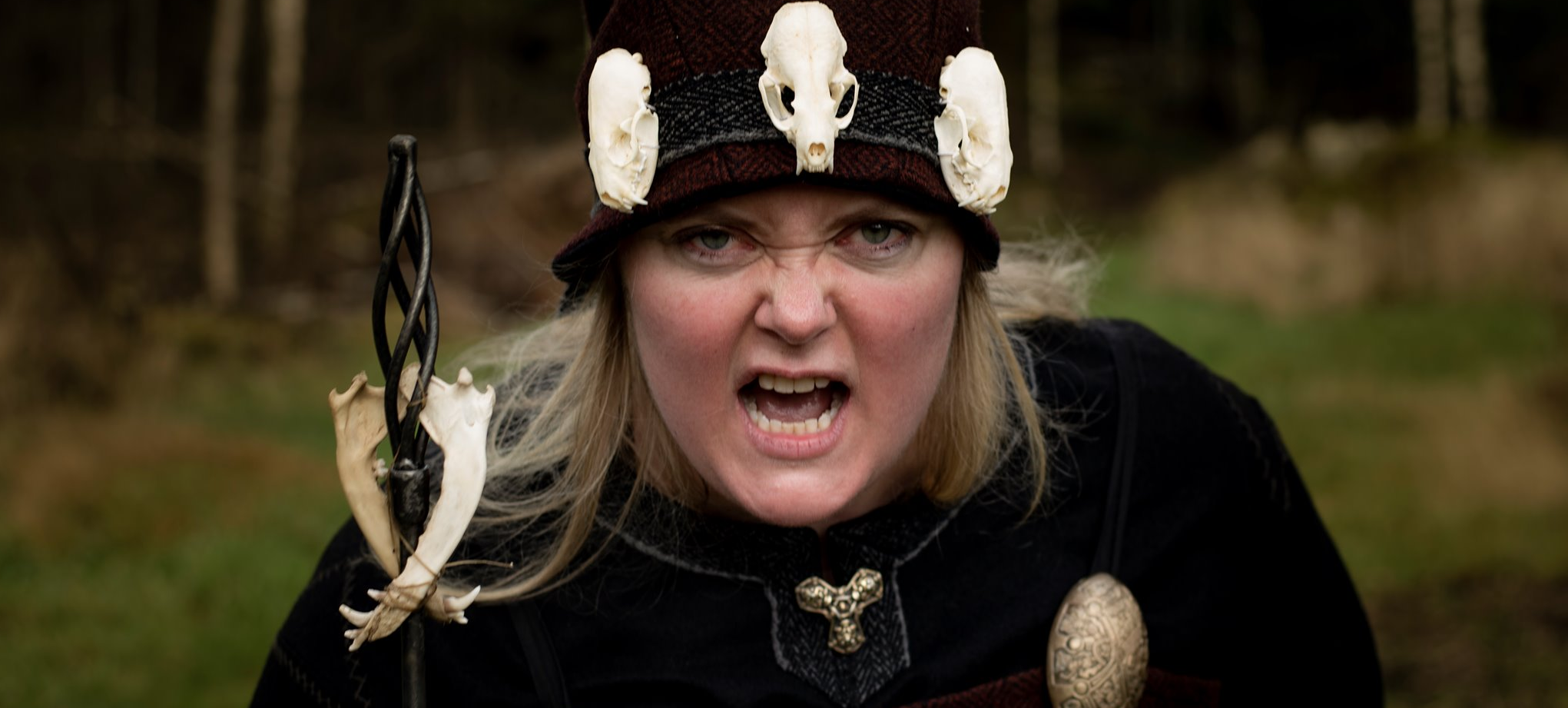
    Vedergällningen was a Viking horror larp focusing on the relationships between humans, and between humans and the gods. It was played in the Berghem larp village in Sweden, on 1-3rd November 2019. Vedergällningen was created by Karin Edman under the brand Wonderkarin. The larp was run in English, with players from both Sweden and abroad, totalling about 85 participants, including both players and crew.

    The larp world was set in a fictional Viking age and time where magic exists and works, the gods walk the earth, and supernatural beings roam the forests. The larp itself was set in the village of Astfanginn, a village where völvas, their disciples, and thralls lived and worked. A völva is a person who knows sorcery, or as it is called in this world, magic “seidr”. The seidr are magic rites to make something happen, from healing someone, to giving someone power in battle, to calling down the gods to the earth. The völvas are usually female, but sometimes they can be male. What sets this village apart from other villages is that in this village the residents have settled based on their merits in seidr, and then the followers who are attracted to the residents also settled there.

    people in Viking larp discussing communally
    The followers of Gyrid communing in the forrest, Gyrid being to the right. Photo by Hanna Olsson.

    There was a set hierarchy in the village. The Council are firmly in the top, a group of völvas so senior they seldom leave the village. Then there were five travelling völvas, and then the followers of the travelling völvas. In the larp, there were also three different groups of vikings. At the bottom of the hierarchy are the thralls, also within their own group.

    This all sounds a bit complex, so I will take myself as an example. My character was Halldora and I was part of the group The Followers of Gyrid consisting of me, Hjördis, Geirlaug and Hjerka and our leader Gyrid who was one of the travelling völvas. I had a mentor in the Council, Ljufu. I was also assigned a friend, Ranveig, in the Followers of Järngerd. This meant I had plenty of connections both to other characters and to other groups, creating an alibi for play. The other characters had a similar network of connections to explore. Each group also had their own house to sleep in, meaning it was relatively easy to find each other, even though it was dark after 9 pm and rained quite a bit.

    This design worked very well for me, especially since I had signed up to the larp by myself without knowing too much who else had planned on going. And although I knew some people there off-game, I played with them very little, as I had so much play with my assigned connections. This design also meant that both I and most other players that I know of also had plenty of threads to follow, which in turn generated more play. It also created a feeling of the village being lived in, and relationships being established and being changed.

    There were a number of set events within the larp; the vikings would arrive, the Vedergällningen ritual would be held calling down the gods, and the ending scene of the larp. This level of transparency gave me as a player room to steer my game and time the experience which I enjoyed.

    Ingame, one dark and stormy night, Vikings arrived to the village to seek help as their ships had been destroyed, and they were in need of physical, mental and magical healing. Before the first night was over, the völvas became victims of a horrible crime. To get vengeance, the völvas called the gods for answers and aid. This did not go exactly to plan, and now the humans had to face both Loki and their beasts, as well as themselves.

    Our group “The followers of Gyrid” believed in the goddess Idunn. Idunn was the goddess of youth and fertility; her symbol is the apple. Our magic powers were focused on rituals for healing and youth, using food and drink. I talked with the gods and sometimes got answers. Gyrid, the three other disciples, and I worked and lived in a small hut and this was also where I spent most of my time playing.

    Person with facepaint holding up a cup
    Gyrid Eirikdottir. Photo: Hanna Olsson.

    If you were the person in need, something like this would have happened to you:

    You stand outside our hut, in the dripping wet and cold November night. The door opens and you see lights and feel the warmth streaming out.

    ‘Welcome, come in, what ails you?’ we ask, inviting you in. You sit down on the warm blankets and pelts on the floor, sweet smell in the air. Gyrid sits behind you, directs her disciple with small gestures and eye contact. On the chest over there you see a bowl of berries, the spine of a big animal, and cup of mead. You lean back and when you look up into the ceiling, it is covered with hanging apples and branches; the lovely smell permeates the air. Hjördis sets the tune with her staff, the rhythmic sound reverberating in the hut. Geirlaug, then takes up the tune and Hjerka and Halldora soon chime in too. The song is about Idunn and how her power is granted to them. At first it is only pleasant, the song and soft touches and small nibbles fill you; then it turns darker and the soft touch turns into restraint; and the nibbles are not so delicious anymore and you don’t want to eat it but you are forced to swallow. But it is for your own good and soon, so soon, you will feel better. The song fills the hut, the smells and the screams. And then it is over; you are healed. What do you have that you can pay with? Maybe the price was a bit more steep than you first bargained for. What is the bitter pill you have to swallow? Is it a year and a day as a thrall, or losing the ability to ever have children, or simply the rage that helped you keep your men in check that you lost? But we all know, before long, you will be back again. Now out again with you, out into the rain and cold; there’s a line waiting.

    This was my most hedonistic larp this far. If you’re imagining November in the Swedish forest to be a bit cold and drab, you are completely right. But despite the surrounding setting, I slept well, ate well (including eating a mallard!), danced, sang a lot, and had a lovely time performing rituals with players I had never met before and not really talked to before either; still we managed to form a very well functioning group by just the exchange of a few words, our expectations and wishes, and setting up the hut together.

    Viki
    Skadulf facing the Völvas of Astfangin. Photo by Cajsa Lithell.

    I didn’t spend time thinking of how I looked or how I acted but could just follow my character and what my character was up to. I think this was largely due to the fact that the larp was explicitly queer friendly and lesbian-themed. Most positions of power were held by women, and there were overall a lot of female and nonbinary players, compared with relatively few men. This ensured that I could relax and just enjoy myself and go with it. I also appreciated the relatively high average age in this larp, and the maturity of the players. The calibrations ensured that I had time setting up scenes and following threads, allowing me to steer the experience.

    Another factor that added to my feeling of immersion was how little time I spent talking and how much time I spent doing. There’s something special about carrying water, plucking mallards (so soft feathers!), stroking and touching and restraining other players, singing and feeding and eating. Running scared through the wet forest, beasts close by. Relishing the feel of wood, and bone, cold water on the hands and hot coffee in the stomach. The sound of the other villagers, the smells of wet fur and leather. Tip-toeing around Loki and their beasts as not to spite them. All my senses were activated and my body moved most of the time. Engaging the body and the senses so much gave me a deeper relation to the larp and it is something I will steer towards in the future more than I have done before.

    What made Vedergällningen good to me was that there was so much room for different experiences, such as playing with power, being scared, being used and owned as a thrall, feeling like an outsider, being a witch, being a warrior and so on. Having different gender expressions and tastes. Lots of sex (in-game of course) or none at all, go for what you like.

    What made me take the step from thinking of writing up this piece was two fold. I often wish larps that I did not attend had accompanying documentation pieces, so I offer this work as a contribution to others. Secondly, Vedergällningen is being run again and I wanted to let a broader audience know about it. If you’re curious, have a look at https://vedergallningen.wordpress.com for more information. (Disclaimer: I have no affiliation with Wonderkarin; I just had a good experience).


    Cover Photo: Skade cursing out the Viking who killed the First of the Council. Photo by Cajsa Lithell.

    Editors: Elina Gouliou and Mo Holkar

  • Transformative Role-Play: Design, Implementation, and Integration

    Published on

    in

    Transformative Role-Play: Design, Implementation, and Integration

    By

    Sarah Lynne Bowman

    Role-playing has the potential to have profound transformative impacts on participants. Over the years both personally and professionally, we have received hundreds of stories from players who have experienced dramatic expansions in their worldview, their understanding of others, and their ability to affect change in the world around them as a result of role-play. In our own backgrounds, we can both point to several role-playing experiences that have altered the course of our lives as a result of the realizations and interpersonal connections resulting from them. The sheer number of people interested in implementing role-playing and simulation as tools for education, empathy-building, and skill training attests to the methods’ potential potency (Bowman 2014a). Whether through virtual play, tabletop, or larp, role-playing can change people’s lives for the better when participants are open to expanding their perspectives.

    Following our Butterfly Effect Manifesto (2019), we believe that the insights gained from role-playing can become powerful tools to help participants become more self-aware, process “real life” experiences in a community that feels safe, and transform their lives and the world around them for the better. When role-playing achieves any of these goals—whether in subtle ways or with greater magnitude—we call these instances transformative experiences. However, in our view, the role-playing experience itself is only truly transformative if it impacts the participant’s life in some meaningful way after the event. Thus, while an experience may feel transformative in the moment, the integration of that experience is the wider-reaching impact that we are most interested in cultivating. In other words, for a complete transformation to occur, the impact should expand beyond the bounds of the original experience and integrate into one’s daily frames of reality and identity.

    bufferfly on a petal drinking water

    We propose that although transformative effects might occur—and certainly do occur—by chance or as a result of intuitive choices that designers and participants make, we can seek to maximize the potential of such impacts through intentional design, implementation, and post-event integration. We argue that designers and players who wish to maximize the potential for transformative impacts should consciously and transparently focus on the following goals throughout the entirety of the process:

    1. Establishing a clear vision explicitly detailing the desired impacts,
    2. Providing environments that feel safe, and
    3. Offering structures and resources for post-event integration at the end of play.

    While this article focuses mainly on design and implementation, individual players also can use these suggested approaches independently to increase the likelihood of undergoing transformative impacts from any given role-play experience.

    Before we proceed, we should note that careful consideration and implementation of these concepts and processes will not ensure a transformative impact will take place. Experiences vary from person to person and event to event. However, we believe that the more intentional the choices that designers and organizers make in accordance with these principles, the more likely at least some participants will experience a profound shift in their sense of self, perspective, or agency in the world. We strongly recommend that designers and organizers explicitly state their goals before and after the experience in order to create a deeper sense of investment, increased trust with the participants, and clearer focus upon these impacts for everyone involved.

    Finally, we believe that informed consent and safety should be at the forefront of this design philosophy. In other words, we trust players to judge for themselves the extent to which they feel comfortable leaning into certain types of content or experiences based on their own emotional, psychological, and physical thresholds. While growth often involves facing our own resistance to change, we do not advocate for pushing participants beyond their limits. Therefore, while we believe that transformative impacts should always be at the forefront of design and implementation choices, concerns about safety and consent are inextricably linked to creating a secure-enough container for such experiences to transpire.

    Below are some suggestions for how to intentionally and systemically design for transformative impacts, followed by some examples from our own design backgrounds.

    woman in space holding a galaxy in her hand

    Designing for Transformative Impacts

    When seeking to design for transformation, the first step should be establishing a clear vision explicitly detailing the desired impacts upon participants. Although additional categories likely exist, we propose the following impacts, which fall under four broad groups: Emotional Processing, Social Cohesion, Educational Goals, and Political Aims. Note that designing for certain types of impacts—such as therapeutic aims—may require advanced training, consultation with experts, or increased safety measures.

    Emotional Processing

    Social Cohesion

    • Increasing empathy
    • Teamwork
    • Leadership
    • Holding space
    • Conflict resolution/Transformation
    • Prosocial communication
    • Perspective taking
    • Collaboration/Co-creation/Cooperation
    • Building understanding
    • Exploring intimacy/Relationship dynamics
    • Exploring community dynamics

    Educational Goals

    • Intrinsic motivation
    • Content exposure/Mastery
    • Promoting active engagement
    • Self-efficacy/Perceived competence
    • Multitasking
    • Problem solving
    • Scenario building
    • Creative thinking/Innovation
    • Critical thinking
    • Skill training
    • Understanding systems

    Political Aims

    We recognize that any such list can never contain every possible impact that a role-playing experience can invite and any single design can likely only address a few of these aims. Our goal is to provide a concrete tool that enables participants to make conscious choices during the design and implementation processes.

    Practical Implementation

    As one gets further into the design process, a number of choices are made that can affect the transformative potential of a role-playing experience. Some examples are the setting, format, game structure, practicalities, mechanics, character concepts, safety tools, workshops, and debriefing structures. Conscious implementation is key if designers seek to maximize the potency of these potential impacts.

    While choices relating to the larger structure of the game — such as concept, setting, and format — can have a clear influence, in this article, we will limit our focus to the categories of Safety, Workshops/Debriefing, and Character Design.

    Safety

    Feeling safe to stretch beyond one’s comfort zone without exceeding one’s boundaries is called a growing edge in personal development. Implementation requires creating a secure-enough container for participants to feel that they can surrender into the experience and feel held in the process by the facilitators and co-players. Some recommended structures for intentionally designing safer spaces include:

    * The process by which sign-up lists are screened for players whose previous actions have marked them as either unsafe (red flag) or on watch (yellow flag) by the organizers.

    ** For example, casting players who have a good reputation for providing safe and consensual play in the more sensitive or antagonistic roles.

    orange kitty looking in a puddle and seeing a lion reflected back

    Workshops and Debriefing

    We believe that designing for transformative impacts requires creating an intentional framework for transitioning into and out of the game frame. This framework can include steps for establishing: a sense of communal trust, a shared reference point for the game’s themes, explication of the game’s transformative goals, methods for expressing preferences for play, safety culture and tools, and norms around communication of participant and organizer needs. Workshops before and during the game can help to achieve these goals. Debriefing after the game can aid in the transition back to the frame of daily life.

    With these goals in mind, we have constructed the following suggestions for workshopping and debriefing activities:

    Pre-game

    • Safety briefings and practicing tools
    • Trust building exercises
    • Establishing character relations
    • Explaining game mechanics/tools
    • Practical/Logistical briefings
    • Contextualization discussions*
    • Pre-game consent negotiations
    • Discussing or playing backstory scenes

    Mid-game/Breaks

    • Calibration discussions or exercises
    • Narration of events occurring between acts
    • Mid-game consent negotiations
    • Contextualization discussions*
    • Self-care or downtime for participants
    • Co-player care or emotional processing
    • Organizer care

    Post-game

    • Structured or informal debriefing
    • De-roling or formalized shifting from character to player
    • Contextualization discussions*
    • Narrativizing events taking place after the game, or Epilogues
    • Integration practices (see below section)

    * One important step that is often overlooked in design is contextualization, which can take place at any stage during the off-game periods of role-play. For example, in the larp Just a Little Lovin, which is about HIV/AIDS in the 1980s, the organizers provide contextualization sections during the workshops before and after each Act break. Contextualization helps the group filter their experience through the lens of the larger social context within which it takes place, an especially important step for role-plays that feature historical, personally sensitive, or politically-charged content.

    Character Design

    Much of the transformative potential of role-playing lies in the character design, particularly in the relationship between the character and their player. Whether the character is designed by the organizers, by the participants, or both, several considerations are important to keep in mind during character creation and enactment:

    • Strong alibi vs. Weak alibi: How much responsibility do players feel that they have for their character’s actions?
    • Close to home vs. Far from home: How close are the characters to the players’ identities and experiences?
    • Fictional vs. Autobiographical: How close to a player’s actual life events is the character’s story?
    • Deep character immersion vs. Light role-play: How deeply, intensely, or seriously are players expected to immerse into their character?
    • Fantastical abilities vs. Mundane: Do the characters and setting have fantastical qualities or are they representative of social realism?
    • Personal themes vs. Unfamiliar concepts: Are the themes relatable to the players or are the themes new to them?
    • Bleed management – Maximization vs. Regulation: Does the game intend to maximize the potential for bleed or attempt to regulate it?
    • Existing social dynamics vs. Constructed: Do the interactions mirror ones familiar to the participants’ lived experiences or are they unique constructions?
    • Playing with strangers vs. Playing with familiar people: How well do the players know one another?
    • High status vs. Low status: How much status and responsibility do the characters have in relationship to one another?

    As with any of these implementation considerations, we cannot be certain that a particular design choice will lead to a transformative impact. For example, we cannot assume that playing a character similar to the self with a particular set of emotionally-charged life circumstances that the player finds relatable will inevitably lead to bleed or deep insights about one’s daily self. However, we find it important to recognize that certain design choices can influence the way in which a character is experienced by the player and the potential impacts those experiences may have on the person moving forward.

    boy sitting as he disintegrates into pixels

    Facilitating Integration

    The discussion about “when a role-play ends” is ongoing. Some players argue that play ends when the organizers decree that players should drop character. Others consider the processing that players undergo in the days, weeks, months, and even years following an event to also be part of the experience. Extreme views posit that a role-play ends the moment the last person to participate passes away, as all living memory would have passed with them. For our part, it seems evident that many external and internal processes do not end the moment that play does, which means that these processes have the potential to lead to a transformative impact if the participant sufficiently integrates insights gleaned from the role-play into daily life.

    Thus, we believe that conscious implementation of integration practices after a role-play is crucial to support these transformative changes. Integration is the process by which players take experiences from the frame of a game, process them, and integrate their new awarenesses into their self-concept or the frames of their daily lives. Integration can range from small observations that shift one’s worldview to large-scale changes in identity or the structure of one’s life after the experience.

    Below are examples of integration practices in which players may engage on their own initiative or guided by organizers. In an attempt to provide structure, we propose the following six broad categories: Creative Expression, Intellectual Analysis, Emotional Processing, Returning to Daily Life, Interpersonal Processing, and Community Building.

    Creative Expression

    Some players choose to integrate their experiences by creating new works of art, including:

    • Journaling
    • Studio art
    • Performance art
    • Game design
    • Fiction writing
    • Storytelling
    • Co-Creation

    Intellectual Analysis

    Players may also engage in cognitive processing where they seek to analyze their experiences on an intellectual level, including:

    • Contextualization
    • Researching
    • Reframing experiences
    • Documentation
    • Theorizing
    • Applying existing theoretical lenses
    • Reflection

    Emotional Processing

    Participants often find valuable the ability to emotionally process their experiences, either individually, one-on-one, or in a group setting:

    • Debriefing
    • Reducing shame
    • Processing bleed
    • Ego development/Evolution
    • Individual or Group therapy
    • Validating own experiences
    • Identifying and acknowledging needs/desires/fears
    • Identifying and acknowledging Shadow aspects
    • Distancing identity from undesirable traits/Behaviors explored in-character

    Returning to Daily Life

    On a psychological level, participants sometimes find a variety of practices useful in helping them transition from the headspace of the game frame to that of their daily lives and identities:

    • De-roling
    • Managing bleed
    • Narrativizing role-play experiences
    • Distilling core lessons/Takeaways
    • Applying experiences/Skills
    • Engaging in self-care/Grounding practices
    • Transitioning between frames of reality
    • Incorporating personality traits/Behaviors

    Interpersonal Processing

    Some participants find social connections important after a role-playing experience, which helps them transition from the social frames of the game to their off-game interpersonal dynamics:

    • Connecting with co-players
    • Re-establishing previous social connections
    • Negotiating relationship dynamics
    • Sharing role-playing experiences with others
    • Engaging in reunion activities

    Note that some role-play experiences can dramatically shift a player’s interpersonal life, e.g. romantic bleed leading to a daily life relationship, new friendship groups forming, etc. Other times, existing relationship dynamics may help players ground back into their daily life while the new experiences from role-play are being integrated and processed.

    Community Building

    Some players take the lessons learned in role-playing further, deciding to create or transform the communities around them:

    • Networking
    • Planning events
    • Collaborating on projects
    • Creating new social systems
    • Sharing resources and knowledge
    • Establishing safer spaces
    • Creating implicit and explicit social contracts
    • Engaging in related subcultural activities
    • Evolving/Innovating existing social structures

    These lists are not intended to be exhaustive and no participant is likely to wish to engage in all of these activities after role-playing. However, our goal is to provide a framework for designers, organizers, and players to use in order to intentionally integrate their experiences into the flow of their lives after an event.

    Woman with a red leather jacket blowing magic dust from her hands

    Examples of Designing for Transformative Impacts

    We shall now discuss ways in which we have designed for transformative impacts in our own work to provide concrete examples of how one might consider this process from start to finish.

    In the larp Epiphany (2017), co-written with Russell Murdock and Rebecca Roycroft, Sarah Lynne Bowman included concepts from White Wolf’s Mage: the Ascension within the framework of a weekend-long spiritual retreat. Epiphany invited players to enact characters who were quite similar — in some cases, nearly identical — to their daily selves. These characters were designed in collaboration with the organizers; players detailed which personal content they wished to explore through an extensive questionnaire, which the writers translated into a character sheet. While the characters had magical abilities, the goal of the larp was for players to explore their own spiritual and philosophical beliefs and share their personal perspectives and practices with one another within the fictional framework. This goal was explicitly stated in the first paragraph of the design document, meaning that players knew they were explicitly opting-in to close-to-home, personal play:

    The setting is a weekend self-help Epiphany Retreat where adults learn how to access their inner potential. Over the course of the larp, mentors will guide initiates through an Awakening into their own magical power through a series of classes and rituals. Participants will socialize and discuss metaphysical principles with one another as they learn to expand their consciousness and personal power. The goal of Epiphany is to play characters similar to ourselves that explore issues of philosophical paradigm, empowerment, and enlightenment. (Bowman, Murdock, and Roycroft 2017)

    This slippage between character and player allowed some participants to explore aspects of themselves within the frame of the larp that led to insights and even life changes after the event was over. The larp featured: safety mechanics, consent negotiations, a post-larp Reflection Hour where participants could make art, write, or contemplate their experience, formal debriefing, and informal sharing in the Facebook group and chat after the event. These aspects of the design were intended to establish a secure enough container for players to lean into exploring growing edges within themselves through the frame of the game and character, while also giving participants tools to process and integrate those experiences after the event. For an example of such processing, see the documentation piece by Clio Yun-su Davis, Morgan Nuncio, and Jen Wong. Documentation itself can be an important integration process for participants, along with journaling, story writing, and other forms of creative output.

    Another quite different example is how Kjell Hedgard Hugaas and Karijn van der Heij are in the early design stages for a larp called The Mountain, inspired by the song of the same name by Steve Earle. Set in a small mining community in American coal country, the larp centers on a mining accident that captures the world’s attention and promises to change the way of life in the sleepy town forever. While the expected participants are likely to be mostly middle class and quite politically progressive, the characters that populate the town are almost exclusively working class conservatives. As such, The Mountain aims to educate the participants on a subject matter that is most likely unknown to them, broadening their understanding of actions taken by people that they perceive as being very different from themselves, and increasing their understanding of the lived experiences of others.

    In order to achieve these aims, the larp leans heavily on concepts and structures that are already familiar to the participants, such as family, romantic love, shared dramatic/traumatic experiences, and so on. By applying these already familiar concepts, the designers hope to create a sense of belonging that allows for emotional connection and intensity to occur even in a somewhat unfamiliar setting for the participants.

    By allowing players to connect with experiences far from their own, the larp’s intended impacts are to increase empathy, promote prosocial communication, and build cross-cultural understanding. Additionally, by highlighting the oppressive systems that underpin the setting on both a social and a political level, the designers aim to raise awareness, promote political activism, and build bridges across a deep political divide. Thus, The Mountain will focus upon several transformative impacts in one larp experience, while still providing a tightly focused narrative concept and setting.

    person standing on rocky ledge gazing toward a portal with light emanating from it

    We’ve Only Just Begun…

    Although role-playing is enjoying a Golden Age at the moment, we believe that our communities have only begun to scratch the surface of the potential of the medium. While we acknowledge that desiring to role-play for entertainment is an entirely valid motivation, we seek to provide tools for participants to use role-playing experiences as a means to transform themselves and the world around them in positive ways. We look forward to what the future will bring in terms of role-play design, innovation, and integration.

    Selected Bibliography

    Below are a few recommended resources to consider when designing for transformative impacts and building safety structures. We also suggest joining the Facebook group Larping for Transformation for more discussion.

    Algayres, Muriel. 2019. “The Evolution of the Depiction of Rape in Larp.” Nordiclarp.org. Last modified May 20.

    Algayres, Muriel. 2019. “The Impact of Social Capital on Larp Safety.” Nordiclarp.org. Last modified October 29.

    Andresen, Martin Eckoff, ed. 2012. In Playing the Learning Game: A Practical Introduction to Educational Roleplaying. Oslo, Norway: Fantasiforbundet.

    Beltrán, Whitney “Strix.” 2013. “Shadow Work: A Jungian Perspective on the Underside of Live Action Role-Play in the United States.” In Wyrd Con Companion Book 2013. Edited by Sarah Lynne Bowman and Aaron Vanek, 94-101. Los Angeles, CA: Wyrd Con.

    Bowman, Sarah Lynne. 2010.The Functions of Role-Playing Games: How Participants Create Community, Solve Problems, and Create Community. Jefferson, NC: McFarland & Co.

    Bowman, Sarah Lynne. 2014a. “Educational Live Action Role-playing Games: A Secondary Literature Review.” In The Wyrd Con Companion Book 2014. Edited by Sarah Lynne Bowman. Los Angeles: Wyrd Con.

    Bowman, Sarah Lynne. 2014b. “Returning to the Real World: Debriefing After Role-Playing Games.” Nordiclarp.org. Last modified December 8.

    Bowman, Sarah Lynne. 2015. “Bleed: The Spillover Between Player and Character.” Nordiclarp.org. Last modified March 2, 2015.

    Bowman, Sarah Lynne. 2016. “A Matter of Trust – Larp and Consent Culture.” Nordiclarp.org. Last modified February 3.

    Bowman, Sarah Lynne. 2017a. “Active Imagination, Individuation, and Role-playing Narratives.” Tríade: Revista de Comunicação, Cultura e Midia 5, no. 9 (Jun 2017): 158-173.

    Bowman, Sarah Lynne. 2017b. “Immersion into Larp: Theories of Embodied Narrative Experience.” First Person Scholar. Last modified March 8.

    Bowman, Sarah Lynne, Russell Murdock, and Rebecca Roycroft. 2017. “Epiphany: A Mage: the Ascension Larp Design Document.” Google Docs. Last modified December 12.

    Branc, Blaž, et al. 2018. Imagine This: The Transformative Power of Edu-Larp in Corporate Training and Assessment. Edited by Michał Mochocki. Copenhagen, Denmark: Rollespilsakademiet.

    Brown, Maury. 2016. “Creating a Culture of Trust through Safety and Calibration Larp Mechanics.” Nordiclarp.org. Last modified September 9.

    Brown, Maury. 2017. “Safety Coordinators for Communities: Why, What, and How.” Nordiclarp.org. Last modified April 17.

    Brown, Maury. 2018. “Safety and Calibration Design Tools and Their Uses.” Nordiclarp.org. Last modified November 29.

    Clapper, Tara. 2016. “Chasing Bleed – An American Fantasy Larper at Wizard School.” Nordiclarp.org. Last modified July 1.

    Davis, Clio Yun-su. 2019. “Writing an Autobiographical Game.” Nordiclarp.org. Last modified September 11.

    Davis, Clio Yun-su, Morgan Nuncio, and Jen Wong. 2018. “Epiphany – A Collaborative Mage: the Ascension Larp.” Nordiclarp.org. Last modified February 1.

    Davis, Clio Yun-su, Shayna Cook, and Lee Foxworthy. 2018. “Walking the Talk: Working Disability into Gaming.” Roundtable at Living Games Conference 2018. YouTube. Last modified August 16.

    Fatland, Eirik. 2013. “Debriefing Intense Larps 101.” The Larpwright. Last modified July 23.

    Harder, Sanne. 2018. “Larp Crush: The What, When and How.” Nordiclarp.org. Last modified March 28.

    Hugaas, Kjell Hedgard. 2019. “Investigating Types of Bleed in Larp: Emotional, Procedural, and Memetic.” Last modified January 25.

    Hugaas, Kjell Hedgard, and Sarah Lynne Bowman. 2019. “The Butterfly Effect Manifesto.” Nordiclarp.org. Last modified August 20.

    Kemper, Jonaya. 2017. “The Battle of Primrose Park: Playing for Emancipatory Bleed in Fortune & Felicity.” Nordiclarp.org. Last modified June 21.

    Kemper, Jonaya. 2018. “More Than a Seat at the Feasting Table.” Nordiclarp.org. Last modified February 7.

    Koljonen, Johanna. 2016. “Safety in Larp: Understanding Participation and Designing For Trust.” Last modified September 18.

    Leonard, Diana J. and Tessa Thurman. 2018. “Bleed-out on the Brain: The Neuroscience of Character-to-Player Spillover in Larp.” International Journal of Role-Playing 9: 9-15.

    Mendez Hodes, James. 2018. “Best Practices for Historical Gaming.” Jamesmendezhodes.com. Last modified November 12.

    Montola, Markus. 2010. “The Positive Negative Experience in Extreme Role-playing.” Proceedings of DiGRA Nordic 2010: Experiencing Games: Games, Play, and Players.

    Nilsen, Elin. 2012. “High on Hell.” In States of Play: Nordic Larp Around the World. Edited by Juhana Pettersson. Helsinki, Finland: Pohjoismaisen roolipelaamisen seura.

    Paisley, Erik Winther. 2016. “Play the Gay Away – Confessions of a Queer Larper.” Last modified April 15.

    Simkins, David. 2015. The Arts of Larp: Design, Literacy, Learning and Community in Live-Action Role Play. Jefferson, NC: McFarland & Co.

    Stark, Lizzie. 2012. “Mad About the Debrief.” Leaving Mundania: Inside the World of Larp. Last modified October 22.


    Cover photo: Photo by Stefan Keller, Kellepics on Pixabay.

    Edited by: Elina Gouliou