Author: Sanne Harder

  • Larp Crush: The What, When and How

    Published on

    in

    Larp Crush: The What, When and How

    Written by

    [This article is also available in Spanish, at: http://vivologia.es/larp-crush-el-que-el-cuando-y-el-como/
    Thank you to Vivologia for translating it!]

    This article is based on a presentation I made at the Nordic larp conference Knutpunkt 2018 in Lund, Sweden. It is based on my own experiences as well as conversations with larp crushed people.

    There must be more to it. That’s what I’ve always thought.

    Larpers generally agree that what happens in-game stays in-game. This idea is known as an alibi — as described by e.g. Markus Montola (2010). Just because your larp character is a sadistic tyrant does not mean that you are. The same goes for relationships: Your sister is not your actual sister, your friend is not your actual friend, and your lover is not your actual lover.

    Right?

    But then there’s the larp crush. It sounds like a little blip on your romantic radar — something you laugh at and quickly shrug off. But as it turns out, that is often a misconception. In the words of a young lady who approached me after my talk at Knutpunkt: “It’s called larp crush because your heart is crushed afterwards.”

    Defining the Larp Crush

    What is a larp crush? If you are not sure whether you have had one, you can rest assured: You have not. It is not the kind of experience that goes unnoticed.

    A larp crush is a condition where you and your character get your wires crossed, so to speak.

    It is a close relative to larp bleed, which Sarah Lynne Bowman (2015) defines as “moments where […] real life feelings, thoughts, relationships, and physical states spill over into [the players’] characters’ and vice versa.”

    However, larp crushes are known to be potentially more intense than pretty much any other experience of bleed.

    In order to examine the larp crush, I have been looking into how actors deal with the equivalent of bleed. According to professor of media psychology Dr. Elly A. Konijn, actors rarely get confused about their identity (Konijn 2000). In my experience, the same goes for role-players. However, they do get affected by their character’s emotions and behaviour. Just like actor Jim Carrey was affected by portraying Andy Kaufman in the biopic Man on the Moon, so do role-players get affected by their character’s emotions.

    This is my definition of a larp crush:

    • A larp crush is a variant of bleed, which means that you are having trouble separating your real world emotions from your character’s.
    • You know that you have a larp crush when you feel an inexplicable desire to spend time staring into another person’s eyes for unreasonable amounts of time.
    • It is only a larp crush if you felt no prior attraction to the person in question. You might have thought they looked nice, but you didn’t see them in a romantic light. If you did, it’s not a larp crush — it is a regular crush!
    • It is only a larp crush if it was triggered by your in-game relationship. Finding out at an afterparty that you really like each other is not a larp crush — it is a regular crush.
    Painting of a woman gazing longingly at a man staring at himself in a lake Echo and Narcissus (1903) by John William Waterhouse.

    Immersion into Character

    In Nordic larp as well as in most Hollywood films, realism is by far the most prevalent genre. This means that being able to reproduce realistic emotions is considered “good role-playing.”

    Our approach is much like that of actor and theatre practitioner Konstantin Stanislavski’s work.

    Early Stanislawski method acting claims that the actor should give themselves up, and become one with the role. Furthermore, you should use emotional recall to create believability.

    Recalling genuine emotions not only creates the expression of those emotions; it also makes you relive them. Because of the potential danger of this method, Stanislawski later distanced himself from it. However, it was too late: Hollywood had already embraced it. Some of the most famous actors, from Dustin Hoffman to Heath Ledger, used this method.

    When larping, so do I.

    Becoming emotional or being moved by a performance appears to be one of the most important criteria an audience uses to judge the impact of a performance. The same is the case for participants larping in the Nordic style (Bowman 2017).

    Unless we get emotionally involved, we do not get the catharsis feeling that the ancient Greeks used to describe the feeling of being emotionally purged — of having gone through a great ordeal, and coming out on the other side.

    As a side note: For some larpers, emotional identification with the character never happens. However, many people are able to create an emotional bond with their character some of the time, although not always. Because Nordic larpers often see character immersion as an indicator of success, larp without immersion into character is often considered a failure and a disappointment.

    Actors agree that the ticket to an emotional bond with your character is preparation. You must know all about your character — where she comes from, her status, her character, her habits, her life goals or lack thereof. You must know enough that you are able to build “an inner model,” or as psychologists describe it, a theory of mind.

    Limerence

    Larp crushes feel like falling in love. They consist of a mixture of obsession and compulsion. You are constantly thinking about the object of desire, and you can’t help but interpret everything he or she says or does and what that means for your relationship.

    While doing research for this article, I stumbled on the term limerence. It was coined by psychologist Dorothy Tennov in 1979. It is an often involuntary state in which you are emotionally attached to another person to the point of obsession. Although it involves physical attraction, it goes much further than just the wish to have sex. You might call it an extreme version of romantic love. As Tennov (1979) describes, Limerence is first and foremost a condition of cognitive obsession.”

    According to Tennov, never experiencing limerence is just as natural a state as experiencing it. However, people who have never gone through limerence are prone to think it is a myth. It is not, but it is a bit of a unicorn that some people go their entire life without ever seeing. Larping is excellent at inducing this state.

    The limerent person — that is, the person experiencing a full-on crush — becomes extremely attentive to little signals, such as body language, wording, or actions.

    Being limerent is like that moment in The Wizard of Oz when the doors open, and you step out of Kansas and into Oz. It is like an awakening. You are high on energy, and everything is doubly intense.

    Dorothy with Toto staring in wonder at Oz The Wizard of Oz (1939). Photo by Insomnia Cured Here on Flickr. CC BY-SA 2.0.

    According to scientists, an MRI brain scan of a person in love looks a lot like the brain of a person under the influence of cocaine (Fisher, Aron, Brown 2018). Over the years, it has in fact been debated whether being in love should be classified as a mental disorder (Tennov 1979). There is no doubt that limerence is a very powerful physical condition as well as a state of mind. Also, while you are going through it, you have as little power over the chemical reactions that are going on in your brain as if you were on drugs.

    Limerence is not the product of human decision: It is something that happens to us. Its intrusive cognitive components, the obsessional quality that may feel voluntary at the moment but that defies control, seem to be the aspect of limerence in which it differs most from other states. (Tennov 1979)

    Larp crushes make you feel alive. Everything is coated in meaning. For better or worse, whether you are drowning in misery or over the moon with joy, you are incredibly tuned into the world around you.

    We all have a generalized longing for union with the beautiful and the excellent. Limerence is a pure manifestation of that longing.

    Are Larp Crushes “Real?”

    The answer I have currently arrived at is: Yes and no.

    Larp crushes are definitely real experiences of being in love. Larp crushes are real in the sense that the barrier between you and your character’s emotions are eroded to the point where you really, truly are going through limerence.

    However, larp crushes are “created” because you deliberately place yourself in a situation where you are balancing between hope and uncertainty. Placing yourself in a state where you are constantly balancing hope and uncertainty feeds the limerence. That is what is referred to as The Bungee Method in Charles Bo Nielsen’s (2017) article “Playing in Love,” which is intended as a guide to playing romantic relationships in Nordic larps.

    Often, when you experience a larp crush, you have no idea about the person behind the character. But actually, that lack of knowledge does not set larp crushes apart from other kinds of crushes: There is no need to know the person who becomes the object of limerence. People often describe falling in love at first sight.

    A knight in armor and a lady in a veil Tristan and Isolde Sharing the Potion (1916) by John William Waterhouse.

    According to Tennov, the best way of getting rid of limerence is if it is revealed that the limerent object is highly undesirable. However, since most people are decent enough, this approach is not very reliable.

    Tennov estimates that the average limerent reaction lasts approximately from 18 months to 3 years. However, a few may last a lifetime, while others might wear off more quickly. There seems to be a connection between exposure and duration.

    There are three efficient ways of getting rid of limerence:

    • Consummation: you get together and have a relationship. (No, sex is not enough)!
    • Starvation: you never see this person again.
    • Transference: you somehow manage to transfer your feelings to a third person.

    Staying in touch is most certainly not the way to go, if you want to get rid of unwanted feelings. However, Tennov believes that the person who is at the receiving end has an ethical obligation to help diminish the pain that the limerent person is undergoing.

    Also, if the limerence is not reciprocated, the suffocating attention from the limerent person can be an unpleasant experience, which needs to be dealt with. What both parties need is a very clear statement from the object of limerence (the person whom the limerent person is in love with) that they are not interested. Otherwise the limerent person will continue to nurse the embers of hope.

    Can you Make Your Body Fall in Love?

    According to Konijn, there is only slight evidence that performing specific physical exercises, such as staring into each other’s eyes, will make you fall in love (Konijn 2000). However, separating the character’s feelings from your own is a different story.

    Konijn explains how it is rare that even method actors become affected by a character’s emotions while actually acting. It is during rehearsal and while preparing for the character that they wind up being affected. However, larpers are in a different situation — our performance is significantly more immersive, if not for any other reason, then because we do not have to remember lines, and we are not standing on a stage.

    Scientists Arthur Aron et al. (1997) wanted to find out if intimacy between strangers can be accelerated by carrying out “self-disclosing” and relationship-building tasks. The tasks would gradually escalate in intensity. Indeed, self-disclosure turns out to be linked to establishing intimacy and feeling close. The conclusion was that under the right conditions, and with the right pairings, intimacy can be accelerated.

    In my experience, larping has a similar effect: Having lived through strong emotions together, you feel intimate afterwards. However, while I don’t doubt the sincerity of the feelings, the idea that you truly get to know a stranger on a deep level after spending a few days together, I find dubious at best.

    The emotional “shortcut” to feeling intimate with strangers that larp provides is perhaps best considered a stepping stone to get to know each other. You may have opened the door, but the actual relationship building comes after — and needs to be done, so that you do not wind up in a relationship with someone with whom you are not compatible.

    Still, larp crushes are not that different from falling in love at first sight. While most people are most likely to be nice, you may be falling in love with someone with whom you cannot connect long-term.

    Have I Fallen for a Real Person, or for a Fictional Character?

    You have fallen for a fictional character. However, there is nothing new about this. People do it all the time, when they fall in love with Mr. Darcy, John Snow, or Lara Croft. Just because the object of your desire is fiction, your feelings are not.

    Woman and man about to kiss
    Elizabeth Bennett and Mr. Darcy in Pride and Prejudice (2005). Photo by Peter Pham on Flickr. CC BY 2.0.

    Limerence is very often built on fiction. When people talk about “falling in love at first sight,” what they fall for is obviously not a deep knowledge of each other’s character, but rather a fantasy of who they assume this person might be.

    According to sexologist John Money, everyone carries a blueprint for our ideal partner. Love maps are fairly complex — they both have to do with fulfillment and upbringing. When you fall in love at first sight, what happens is that you find someone onto whom you are able to project your lovemap. Money (1986) continues, “That is to say, the person projects onto the partner an idealized and highly idiosyncratic image that diverges from the image of the partner as perceived by other people.”

    Of course, that projection is in itself a fictitious character.

    The question you need to ask yourself is not whether your feelings are real — of course they are — but rather: Do I want this? Depending on the degree of compulsion/obsession, a larp crush can disrupt your everyday life to a degree where it becomes destructive. Tennov (1979) explains, “Limerence for someone other than one’s spouse can cause major disruption to the family, and when frustrated, limerence may produce such severe distress as to be life threatening.”

    However, limerence can also be a positive, transformative experience that helps you reevaluate your life in a constructive manner.

    Controlling Your Larp Experience

    According to psychology professors Thalia Goldstein and Ellen Winner (2012), there are three psychological skills that help an actor create a strong characterization: theory of mind, affective empathy, and emotion regulation.

    Theory of mind is the ability to understand what others are thinking, feeling, believing, and desiring. Being able to see through someone’s actions and understanding their intentions is integral to creating a strong character, because those are the skills that character creation require. Some people have strong theory of mind, while others find it difficult. Reading fiction, and — of course — larping, trains this skill.

    Affective empathy — as opposed to cognitive empathy — is the feeling you get in response to someone else’s emotion. It is sometimes referred to as “emotional contagion.” It could be sadness for someone’s grief, joy for someone’s happiness, etc. Being happy and shedding tears of joy at someone else’s wedding counts as affective empathy. Letting yourself be affected by your character’s emotions does too.

    Finally, a good larper needs emotional regulation skills. You need to be able to decide whether you want to feel the emotions of your character or not, or to what extent. This is not just a skill for when you are larping; from an early age, we all learn to regulate our feelings, because sometimes it’s inappropriate or inconvenient to show them.

    To be able to control your larping experience, you need emotional regulation skills. Being able to play a romantic relation without getting larp crushed — or the opposite, deliberately getting larp crushed — all comes down to this particular skill.

    Juliet kissing Romeo on a balcony
    Detail of Romeo and Juliet (1884) by Frank Dicksee.

    Tools for Emotion Regulation

    Emotion regulation is currently not something that is emphasized in the Nordic larp vocabulary. Interestingly, though, in other larp scenes the idea of being fully immersed in your character is seen as stigmatizing.

    This stigmatization is something that Tennov (1979) also describes in relation to limerence, stating, “Many societies have attempted to prevent love or, more often, to control it in some way.“

    She even describes how Stendhal, a 19th century author who is often quoted for his philosophical thoughts on love and beauty, was embarrassed at the thought of being discovered as someone who could be taken over by feelings of passion. She ascribes this reaction to society generally being more inclined to reward rational behaviour than emotional.

    While Nordic larp generally praises character immersion, larp crushes seem to be trivialized. The idea that we need tools for handling too much immersion does not seem to have taken root.

    Larp crushes are not trivial fiction. They are real emotions, and they should be treated as such. With regard to finding the tools that will help us get better at creating the experiences we want, we still have far to go. Becoming aware of these emotional responses, and admitting their impact on us, is a first step.

    References

    Aron, Arthur, Edward Melinat, Elaine N. Aron, Robert Darrin Valone, Renee J. Bator, et al. 1997. “The Experimental Generation of Emotional Closeness: A Procedure and Some Preliminary Findings.” Personality and Social Psychology Bulletin 23, no. 4 (April): 363-377.

    Bowman, Sarah Lynne. 2015. “Bleed: The Spillover Between Player and Character.” Nordiclarp.org, March 3.

    Bowman, Sarah Lynne. 2017. “Immersion into Larp: Theories of Embodied Narrative Experience.” First Person Scholar, March 4.

    Fisher, Helen E., Arthur Aron, Lucy L. Brown. 2006. “Romantic Love: A Mammalian Brain System for Mate Choice.” Philosophical Transactions of the Royal Society B: Biological Sciences 361, no. 1473 (December): 2173–2186.

    Goldstein, Thalia R., and Ellen Winner. 2012. “Enhancing Empathy and Theory of Mind.” Journal of Cognition and Development 13, no 1: 19-37.

    Konijn, Elly A. 2000. Acting Emotions, Shaping Emotions on Stage. Amsterdam, NL: Amsterdam University Press.

    Money, John. 1986. Lovemaps: Clinical Concepts of Sexual/Erotic Health and Pathology, Paraphilia, and Gender Transposition in Childhood, Adolescence, and Maturity. New York: Irvington Publishers Inc.

    Montola, Markus. 2010. “The Positive Negative Experience in Extreme Role-playing.” Proceedings of DiGRA Nordic 2010: Experiencing Games: Games, Play, and Players, 2010.

    Nielsen, Charles Bo. 2017. “Playing in Love.” In Once Upon a Nordic Time, edited by Martine Svanevik, Linn Carin Andreassen, Simon Brind, Elin Nilsen, and Grethe Sofie Bulterud Strand, 176-184. Oslo, Norway: Knutepunkt.

    Tennov, Dorothy. 1979. Love and Limerence: The Experience of Being in Love. Lanham, Maryland: Scarborough House.


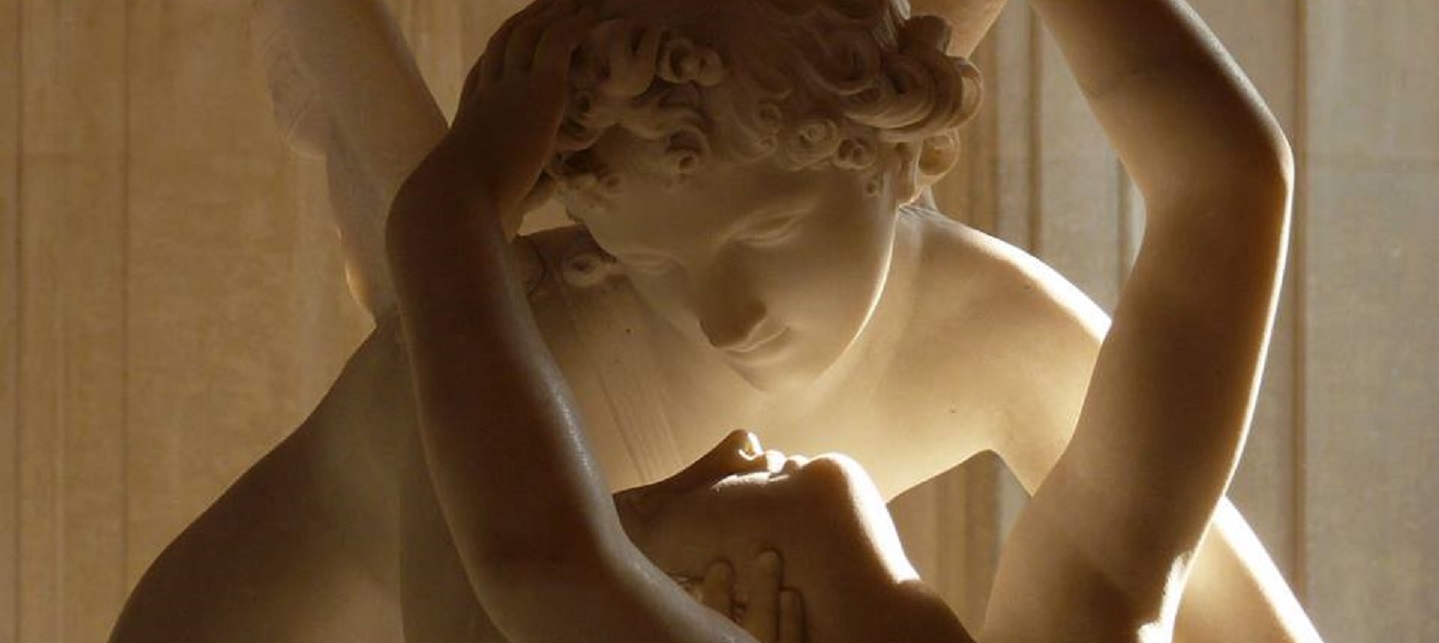
    Cover photo: Psyche Revived by Cupid’s Kiss (1777) by Antonio Canova in the Louvre Museum, Paris, France.
  • Fortune & Felicity: When Larp Grows Up

    Published on

    in

    Fortune & Felicity: When Larp Grows Up

    Written by

    I wish you could have been at Primrose.

    It is spring. Tonight there is a ball on. The women have gone back to the parlors to change out of their day dresses and into their extravagant silk gowns. A pair of soldiers are loitering outside the clock tower, discussing race horses, and paying little mind to the rather exquisite sunset in the background.

    As the young ladies emerge on the porches, the soldiers click their heels together and emit simultaneous “Ah!”s of admiration.

    And these virginal rose buds of spring certainly are a sight for sore eyes: Long, gloved fingers wrapped about their father’s arms. Faces half hidden behind the shades of the bonnets. Silk slippered feet on the gravel path. In the evocative words of the poet, “She walks in beauty, like the night.”

    And off they all go — to dance the night away at the ballroom. Surely tonight they will meet that certain someone.

    I wish you could have been there. My description does not do it justice.

    The author in costume for Fortune & Felicity. Photo by Sanne Harder.

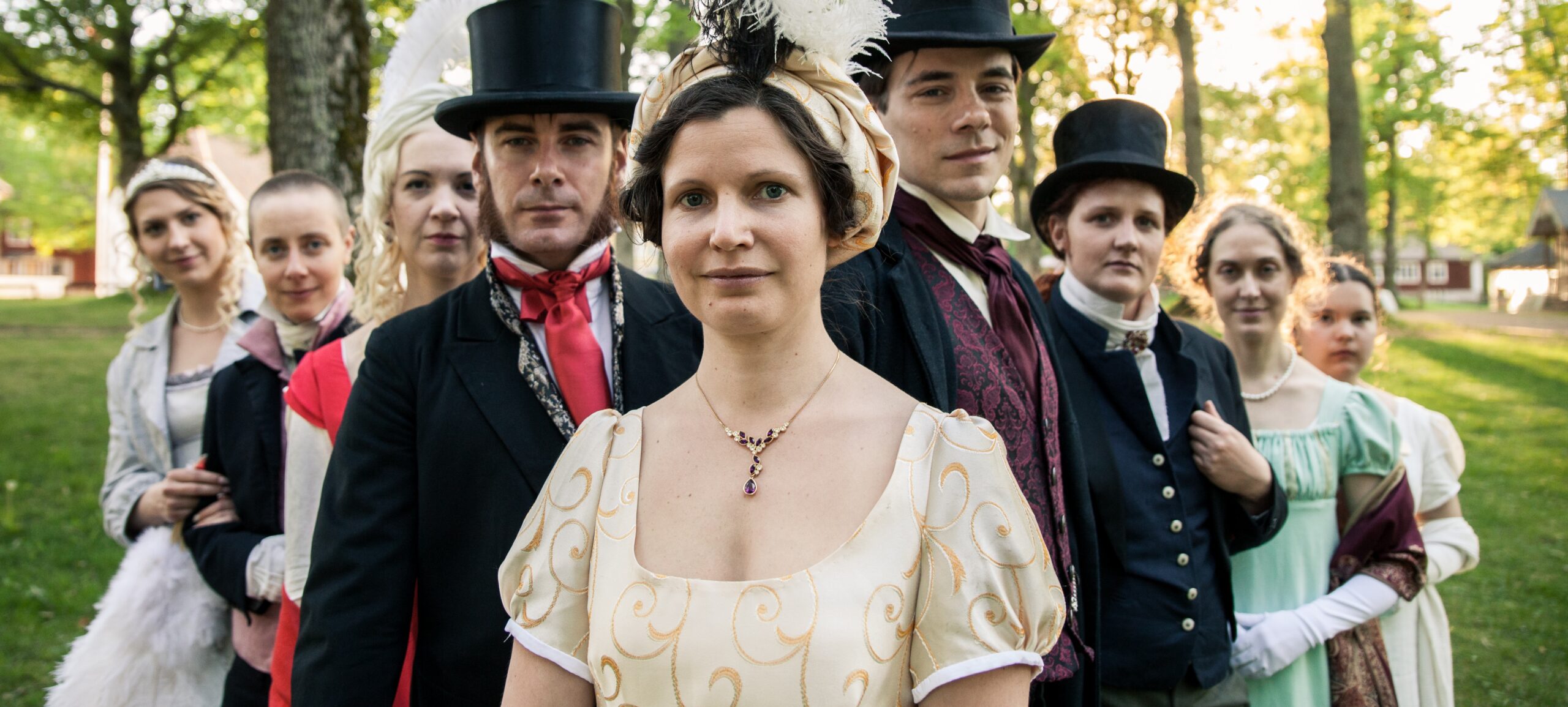
    Fortune & Felicity was a larp held at the beautiful spa village of Medevi Brunn in Sweden. The larp lasted from May 25-28, 2017. It was based on the works of classic writer Jane Austen and set somewhere around 1810. The idea was to create a Nordic larp with a 360 degree illusion setting and strong plot lines that were inspired by Jane Austen’s literary works.

    It’s been over a week since I got back from Fortune & Felicity and the dust is finally settling.

    I’m sure we can agree that there are different kinds of larp experiences: There are the plain awful ones, where you have no chemistry with the other players and you never manage to connect with either the narrative or your character. You wind up feeling like the other players are having all the fun.

    There are the OK ones and there are the good, but not that memorable experiences. Those will be part of your future reference sheet when you meet other larpers, but they are not exactly mind-altering.

    Finally, there are the mind-blowing experiences that leave you euphoric for weeks on end. My experience with Fortune & Felicity was one of the latter. So asking me to write anything objective is rather a tall order. I think of this article as more of an attempt to order my thoughts, hopefully making some valuable deductions and recommendations for organizers and players to consider.

    Pushing the Boundaries for Larp

    Ten years ago, a larp like Fortune & Felicity would have been pretty much unthinkable. The sheer level of ambition would have seemed unrealistic. However, since then, we have seen Nordic larps play out at castles, submarines, and similarly ambitious settings, which would previously have seemed to be one-off experiences negotiated by organizers with special connections and budgets. Larpers are maturing and with student loans now payed off and full-time jobs, we are able to afford more expensive settings.

    In addition to that, “chamber larping” has bridged the previous gap between intricately designed freeform games and the hitherto more brute force designs of larps.While the later years have offered the kind of settings that dreams are made of, Fortune & Felicity is one of the first larps of its size to draw upon the kind of metatechniques that you otherwise mostly encounter at a Blackbox festival. These are techniques that enable players to tell stories that are more intricate than the usual straightforward chronological ones that larpers are used to. I would like to summarize some of the metatechniques the larpwrights of Fortune & Felicity utilized.

    Dramatic Monologue Poetry

    a woman with a fan looking outside a doorway
    Photo by Kalle Lantz & Frida Selvén.

    Fortune & Felicity was a very subtle game. Usually, larping is about broadcasting your intentions as loudly as possible so that other players can pick up on them. But in this larp, everything had to be read as a subtext. This posed a challenge for the players; if the lady I am trying to impress is hiding her face behind her fan, does it mean that she is embarrassed or does it mean that she does not want people to see her blush with delight?

    In order to help players interpret each other’s intentions correctly, the larpwrights gave us a metatechnique that I have dubbed dramatic monologue poetry. The tool was incredibly simple, yet very effective. At any point in the larp, it was considered comme il faut to recite poetry. The poem could be learned by heart or it could be read aloud from a book. Poems were also distributed at poetry workshops. After reading a few lines of the poem, the reader would start revealing the character’s internal dialogue, thus giving the audience an insight into character motivation and intentions.

    This metatechnique worked extremely well. Specifically, I had the opportunity to recite a poem by Shakespeare in front of my fiancée’s family. Since his family were neither as rich nor as accomplished as the one my character came from, I took the opportunity to give them my opinion in full. The stiff smiles on the players’ faces were priceless!

    Amusingly, one of the players picked up on the insult and confirmed my character’s opinion by acting exactly according to my prejudices. This created great play for us both.In other words, the technique was an excellent solution for helping players to read between the lines.

    Subtle Courting

    Before the larp, all players were instructed thoroughly in how to behave when in the company of the other sex. No touching except between family members. No being alone unless if you were engaged. And no eye contact.

    So how does one flirt under those circumstances?

    For the ladies, the answer was simple: you do not. But basically you could assume that if a gentleman was giving you attention, it was because you had caught his interest. There were three sure signs that a gentleman was serious about courting you; if you were receiving flowers, found yourself witnessing poetry readings, or got asked to dance repeatedly, then a proposal was probably afoot.

    However, as in Jane Austen’s books, there were gentlemen out there who did not play by the rules. Those gentlemen would lead you astray just for sport!

    One of the lead designers, Anna Westerling, discussing the intersections between freeform and larp at the Nordic Larp Talks 2014.

    The Fortune Teller

    At Fortune & Felicity, there was a fortune teller. The fortune teller was in fact a team of talented game masters who took interested players off to a Blackbox room to play alternative scenes.

    The Blackbox larp is the direct opposite of the 360 degree illusion larp. There is no setting other than the blackness of the room and usually participants are dressed in neutral clothing. Blackbox larps have no physical restrictions. You can play achronological sequences. The scene can take place on a space station, during the Jurassic times, or anywhere else your imagination might take you — much like with any pen and paper RPG. In that sense, it is a hybrid form of role-playing.

    At Fortune & Felicity, the blackbox was used to elaborate character relationships. Personally, I played out several scenes with my fiancée that showed us much of our future. Among other things, I found out that if I were to go ahead and marry my true love, we would most likely end up rather impoverished. Obviously, this knowledge added much to my “present day” play.

    Blackbox defies physical space and time — and therefore makes it possible to garnish the larp with the kind of literary tricks that we usually only encounter in books and films.

    The Art of Mansplaining

    In Fortune & Felicity, the responsibility of carrying on a conversation lay with the gentlemen. This major obstacle was not really a metatechnique, but it still deserves mentioning because it was a very elegant way of emphasizing the gender disparity of that time.

    Some gentlemen found it difficult, while others enjoyed taking the lead. As someone who was playing a women, I found it somewhat frustrating, but only in the sense that it helped me imagine what life would have been like for my gender in 1810.

    Luckily, the game masters offered the women a possible out: when conversation got too boring, the woman could signal to the player of the male character by mentioning her journey to Primrose. “Oh, the roads are rather muddy this time of year,” for example. I used this trick a few times, but generally found that the male characters around me were quite apt at carrying on an interesting conversation!

    Ladies and gentlemen in amused conversation
    Photo by Kalle Lantz & Frida Selvén

    Based on Established Literature

    All the stories in Fortune & Felicity were directly inspired by Jane Austen’s works. The most visible way in which the writers had incorporated this inspiration was in the character descriptions and relationships.

    The larp had pre-written characters. The characters were long enough for people with knowledge of Austen’s works to recognize them as characters from her books, but short enough that the players could easily build on the written material and make them their own.

    For me, it was immediately clear that my character was inspired by Miss Marianne Dashwood from the novel Sense and Sensibility. She is a somewhat melodramatic and rather naïve girl, who falls deeply in love with one of the more memorable Austen villains, Mr. John Willoughby. At first, I actually found the task of portraying her a bit daunting, but after having watched Ang Lee’s film from 1995, I found that I could draw on actress Kate Winslet’s brilliant performance. Having her version of Marianne in the back of my head, I felt like there was a richness of inspiration I could access that I have seldom experienced otherwise.

    Although many of the participants knew Jane Austen’s works, other did not. I believe being a fan of Jane Austen added to the experience, but I do not have the impression that not having these references subtracted anything from the game. I love how classically Austenesque the different plots played out, but on the other hand, they could certainly stand alone too.

    Lines of dancing characters in Regency attire.
    Photo by Anders Hultman.

    Setting the Bar High

    Sunday morning in Primrose. The young couples are gathering outside the village church. They are waiting to declare their engagements in front of the congregation. As the doors open, they file inside in pairs — clasping each other’s hands and sharing shy sidewards glances. The parents and the rivals sitting in the pews bear witness as the vicar proclaims the engagements.

    And then, abruptly, the larp comes to an end. Anna and Anders in their pristine Regency outfits reap their accolades. We clap and clap. For the game masters, for the live band. For each other, even.

    I return to the 21st century. Shell shocked. Elated. The way you feel when you have had one of those really strong larp experiences.

    But also deeply grateful to be home. To be me, and not Miss Marianne. Quite frankly, Miss Marianne would never even dream of a life such as mine. It would have been beyond her otherwise vivid imagination.

    My hope for the future of the larp scene is to see more ambitious scenarios like Fortune & Felicity, where organizers and larpwrights become more aware of developing game design that supports the content and theme of the larp. Like previous vessels of fiction have done it, I hope that larp has a future where we can explore not just genres, but also more advanced forms of storytelling.

    For now, we’ve only just begun.

    A man lifting a woman up as if dancing in a forest
    Photo by Kalle Lantz & Frida Selvén.

    Fortune & Felicity

    Production and design: Anna Westerling & Anders Hultman

    Design: Jennie Borgström, Susanne Gräslund, Elsa Helin, Anders Hultman, Frida Karlsson Lindgren, Gustav Nilsson, Martin Rother-Schirren, Anna Westerling & Joel Grimm with Jeppe Bergmann Hamming & Maria Bergmann Hamming.

    Characters:

    Overall design: Jennie Borgström, Sabina Sonning and Anna Westerling

    Clubs: Rosalind Göthberg & Mimmi Lundkvist

    Hearts: Jeppe Bergmann Hamming & Maria Bergmann Hammingg

    Diamonds: Ylva Berry, Jennie Borgström & Jacob Ordeberg

    Spades: Susanne Gräslund & Daniel Linder Krauklis

    Game Masters:  Alex K Uth, Anders Hultman, Anna Westerling, Arvid Björklund, Elin Gissén, Elina Andersson, Elsa Helin, Frida Karlsson Lindgren, Frida Selvén, Gustav Nilsson, Jakob Jacob Ordeberg, Jennie Borgström, Joel Grimm, Kalle Lantz, Lizzie Stark, Martin Rother-Schirren, Mimmi Lundkvist, Peter Edgar & Ylva Berry

    Orchestra: Elsa Helin, Henrik Summanen, Niclas Hell & Susanne Gräslund

    Soundtrack composed by: Henrik Summanen

    Trailer: Sara Fritzon

    Costume: Anders Hultman & Mikaela Lindh

    Photo: Kalle Lantz & Frida Selvén

    Design and illustration: Anna Westerling, Janetta Nyberg & Lotta Westholm

    PR: Mia Häggström & Anna Westerling

    Editing: Lizzie Stark, Jason Morningstar & Sarah Lynne Bowman


    Cover photo: Photo by Kalle Lantz & Frida Selvén. Photo has been cropped.

  • The Law of Jante in Nordic Role-playing

    Published on

    in

    The Law of Jante in Nordic Role-playing

    Written by

    Disclaimer: The opinions expressed herein are those of the authors and do not necessarily reflect the official policy or position of Nordiclarp.org or any larp community at large.

    Outwardly, the Nordic role-playing scene seems like a tolerant, egalitarian place where everyone is welcome. But the truth is that we are so busy being equal, that we fail to see excellence, and are downright fearful of elitism. Our fear of saying out loud that some role-players are better than others fosters secret social structures, where people are included or excluded depending on how well-connected they are.

    There’s a taboo in Danish role-playing. On the surface it’s about openness, tolerance, and equality, but in reality I believe it boils down to the infamous Law of Jante, the first paragraph of which says: “You’re not to think you are anything special”.

    Back in the days of yore, when I started role-playing, conventions still held competitions about who was the best role-player. As a matter of fact, I once made it to the second round in such a contest. A good role-player was defined as somebody who could not only rack in loads of XP (experience points), but was also capable of doing some degree of acting. It was up to the gamemaster to decide if you lived up to these criteria.

    Somehow along the line, these competitions died out. ‘Being a good role-player is not about winning or losing’ became the general approach in the tradition I belonged to – and actually, I had to agree. Once free-form became a norm at conventions, counting XP became meaningless. Role-playing became less about the game, and more about immersion. A good game should be about the individual experience of the player: How the story and the setting moved you, what the chemistry between the players were like, what you took away from the experience.

    In addition to this, a lot of role-players came from backgrounds where they had been more or less ostracised or even traumatised for lack of social skills. If being a good role-player was no longer just about counting XP, the competitions could have come very close to popularity contests. We didn’t want that.

    The Gamemaster of Doom

    In the 1990s, the general consensus was that everyone was welcome. “Everyone can role-play”, is what people were saying. It didn’t matter if you couldn’t act if your life depended on it. Even people whose social skills were so bad that they consistently ruined everyone else’s experience were welcomed. I remember a specific “Gamemaster of Doom”, who was so bad he would just sit there, leafing through papers, without even speaking to his players. It didn’t matter: We had room for the freaks and the outcasts that had nowhere else to go.

    If you were really unlucky, that might be her first and last experience with role-playing.

    Except for the fact that it quickly became a lie. Because secretly, there was a selection process going on. If you had played with the above mentioned game master, you were not likely to do so again. Why should you? It was not a good experience. No, someone else had to take their turn with him, in the name of tolerance and openness. Sadly, said person would usually be the unknowing outsider, who did not yet have her social network to warn her. If you were really unlucky, that might be her first and last experience with role-playing.

    As I got to know more about the other people who played role-playing games, I got better at knowing whom to avoid. But perhaps more importantly, I got to know those people who had a reputation for delivering. At conventions they were gamemasters, writers, and players. At larps, they were organisers or players.

    These were people who could take an otherwise mediocre scenario and boost it so thoroughly that it became not just a good experience, but actually unforgettable. They were dynamos in their own right. At conventions, you would amble over to stand next to them, hoping to be put in the same group. At larps you could do even better, if you had the nerve: Why not phone them up beforehand and ask for your character to be a sister, a close friend, or even a lover?

    The system of nepotism favoured people who were in the know. People who were already well-connected, and who weren’t afraid of asking for favours. People like me.

    The Good and the Bad

    The fact of the matter is that some role-players are better than others. When people ask me why I role-play, I usually say: For my own sake. Not for an audience, not to impress anyone. Just for the experience. However, this is not the entire truth. We are each-other’s audience. But more than that: We affect each-other’s experiences in good ways and bad ways. A good role-player knows this, and takes that responsibility seriously.

    Some people are bad role-players, and some people are good ones.

    Even though we don’t want to be open about it, it is not random: Some people are bad role-players, and some people are good ones. Sometimes the bad ones get lucky and manage to get through a game without ruining anything for everyone else, and sometimes the good ones have a bad day. But the trend is clear. In the name of our all-accepting, egalitarian community, we refrain from saying it out loud. But that doesn’t make it any less true.

    Why This Is a Problem

    Why should I care? I am one of those people who gets to play with all the best. And yet, it bothers me. It bothers me for several reasons.

    Obviously it’s a problem that the opportunity to play with really good role-playing partners does not present itself to you unless you happen to know the right people. Often enough we even wind up scaring potentially interested newbies off by letting them play with lousy co-players. If we want our hobby to be characterised as a closed-off society where you have to fight your way in, then we are doing exactly the right thing. However, that doesn’t serve us very well in the long term.

    The other problem is for the bad players themselves. Because we refuse to (publicly) acknowledge the good players, we cannot give the bad players the tools to get better. Simply put: We have not analysed what it means to be a good player, so there are no shortcuts. You have to go on spoiling a lot of people’s games before you see the light – provided you ever will. No-one will even tell you why they only play with you once, they just kind of seem to move on without you.

    Solutions, Please!

    At present time, I do not have the solutions. However, a good starting point would be to acknowledge the situation. If we were open about who the good players were, it would become much more legitimate for organisers to cast them into particular functions: Why not do the opposite of what we are doing now, and actually make sure that there is at least a few skilled role-players present when running games for newbies?

    Similarly, larp organisers who cast solid players who can be counted on for a good delivery in pivotal roles should not be accused of nepotism. They should be applauded for making conscious choices, as they do this to give the rest of the players the best possible experience.

    We need to direct our attention towards the good players

    First and foremost, we need to direct our attention towards the good players. What is it that they do? Most of them tend to be seasoned role-players, with many years of experience. So it is probably not a question of an innate genetic talent, but rather a thoroughly honed skill set.

    Currently there is an undergrowth of bloggers who are working on charting what skills a good role-player possesses. Needless to say, it is a difficult chore. We all play for different reasons, and being a casual gamer, you would look for different qualities than an immersionist or a dramatist would (see ‘The three way model‘ for an introduction of these terms).

    Mapping Good Role-playing Skills

    However, one trait seems to crop up everywhere: Social skills. As Lizzie Stark puts it: “Larp is a social activity”. The same can be said of all role-playing games that aren’t digital (and some that are). This implies something we already knew, but didn’t want to admit: Maybe not everyone is as welcome as we would like to believe. Maybe the same people who lacked the social skills to get through school unscathed find themselves confronted with their shortcomings once again.

    Another Anecdote

    Good role-players are the people we should be looking up to

    I’m going to end this article with yet another anecdote – but this time a recent one. I was running a game for some teachers who were interested in using role-playing as a tool, but who needed to be shown what it is. I wanted to give them a good experience, so I asked a friend who is an experienced role-player to join them. Within a very short time, his mere presence managed to escalate the game in a way that none of the others would have been capable of doing. It happened in many ways: By way of imitation, but also because he was able to create action that would beget action. His participation lifted the experience for everyone else.

    Pretending that ‘everyone can role-play’ is a huge underselling of the skills that good role-players have. If we want to continue making increasingly complex games, we need players that can measure up to the games. That is something we will only get if we are working consciously towards it.

    There is a reason why Danes don’t like to mention that some people are better at what they do than others. We come from an egalitarian society, and we don’t like braggarts. But we have to stop equalling skill with status. What is wrong with being a skilful role-player? Absolutely nothing. Being good at something doesn’t make you an arrogant elitist. More likely, it means that you have invested a lot of time in getting good.

    Good role-players are the people we should be looking up to. We need to start seeing them as a resource which should be made available. Not as a hidden discourse. As for the bad role-players: We don’t need to put them down, but we do need to show them the way.