Author: Nór Hernø

  • Workshop Design: A Guide

    Published on

    in

    Workshop Design: A Guide

    Workshops are a staple of many Nordic larps, playing a crucial role in preparing participants to step into their roles, engage with the narrative, and collaborate effectively. While learning is a central aspect, workshops are more than just an educational prelude to the game; they are spaces where boundaries are negotiated, skills are honed, and the magic circle of the larp begins to take shape. 

    Designing a workshop, however, requires a different set of tools than those used in larp design. Here, the focus is on learning outcomes rather than narrative, and on facilitating participants’ transition into the fiction of the larp. 

    This article serves as a guide for designers, outlining a series of steps that will take you from the initial idea to the final plan for a learning design. While the focus is on workshops, a complete learning design often incorporates other formats, such as briefings and exercises (see “WEB: Workshop – Exercise – Briefing“). The steps described here can be applied to the entire learning design process. They are, however, particularly useful for workshops, which require more intensive design effort and work. In this context, a workshop is defined as: 

    “An interactive and co-creative session focused on participants’ hands-on interactions” 

     Step 1: Examining the participants’ needs 

    The first step in creating a learning design that aligns with your vision and the narrative framework of your larp is to consider what the participants need in order to play it.

    To guide the process of identifying these essential elements, there are three key aspects to focus on:

    • What participants need to know
    • What participants need to create
    • What participants need to do
    The key aspects
    The key aspects– diagram by Nór Hernø

    Knowing: 

    The knowledge you require the participants to have needs to match the learning outcome of your design. Is there any foundational knowledge they must have to engage meaningfully with the larp? This could include everything from safety mechanics to character memories, or the social dynamics of the setting. 

    Creating: 

    Consider what aspects of the larp you want the participants to contribute to and have ownership over. Creating together fosters co-ownership, and by allowing the participants to generate elements of the larp, there is a good chance they will be more personally invested and have an easier time remembering those design elements.  

    However, be mindful of the limitations: There are things that you may not want the participants to create. For example, they may design aspects of their characters and relationships, but you might want to ensure that the framework and key narrative elements remain under your control to maintain coherence with your larp design. 

    Doing: 

    You can facilitate how the participants start to larp, work together, act and interact with each other, and feel safe doing so, through your learning design. This can be both explicit and implied: 

    Explicit: You might need the participants to have specific skills or take certain actions. For example, if your larp includes tasks or jobs, you can create a learning design that explicitly teaches the participants to do it. 

    Implicit: You might want the participants to have a certain behavior, for example if your larp emphasizes a specific form of interaction or mood, you can model the participants’ behavior implicitly through your design, by having them do the workshops in a certain way or by implementing themed tools like music, photos, directed movement patterns, etc. 

     Create a list, mind map, or whatever feels right for you, of the elements necessary for the participants to play your larp. If you already have specific ideas you want to include in your learning design, add them to this brainstorm too. 

    Step 2: Sorting your ideas 

    The next step is to start sorting through the brainstorm and ideas, considering the relevancy of the elements, determining if they can be combined, and identifying which formats best support the learning outcome you want from your design. The article “WEB: Workshop – Exercise – Briefing” covers the three learning formats, as well as a model for visualizing the balance between them. 

    Do this sorting however you prefer. For example, if you have created a list, underline the most important elements and add their relevant learning formats. Alternatively, if you have done a mind map, grab some coloured pens and start circling. 

    Sorting your brainstorm, focusing on synergies and learning formats
    Sorting your brainstorm, focusing on synergies and learning formats– diagram by Nór Hernø

    “Know” might be better supported with a briefing, “do” may play a greater role in exercises and workshops, and “create” is often a central element of workshops. However, this is not always the case. You might be able to integrate several elements of knowing into a workshop – for example, knowing the social dynamics of the setting, a shared cultural action, and so on – if it overlaps with what the participants need to create and do. 

    When you have finished this sorting process, you will know what needs to be planned (briefings and exercises) and what needs to be designed (workshops). 

    Step 3: Finding inspiration 

    When you are aware of what kind of workshops you need to support your larp, you can start designing them. Luckily, you don’t have to start from scratch, as there are countless places you can draw inspiration from, including: 

    • Other workshops: Examine workshops, both for larps and not, you have experienced, which have been successful in similar contexts. Think about what they consisted of, how they facilitated learning, and what kind of atmosphere they created. 
    • Other people: Conversations with other larp designers, facilitators, or participants can be a valuable source of inspiration. Ask others how they design specific workshops, what their favorite workshops and -tools are, and what they have learned from experience. 
    • Educational materials and exercise books: Look to educational resources such as teaching guides and manuals, or the many books on physical and team-building exercises. While these might not be directly related to larping, they often offer valuable inspiration, you can build on. 
    • Online sources: The internet is an endless resource – Also when it comes to workshop ideas. From the specialized articles found at Nordic Larp to a simple Google search, type in keywords relating to your workshop needs and you get more ideas than you have time to read. 

    While inspiration can come from many sources, it’s crucial to tailor it to the specific needs of your larp. You should never attempt a 1:1 replication of a workshop. Every larp is unique in its narrative, setting, and participant dynamics, and your workshops need to reflect that uniqueness. What worked in one context may not be directly applicable in another. 

    Step 4: Adapting, designing, and describing 

    After gathering inspiration and ideas, you need to start adapting and designing the workshop, transforming your ideas into a concrete plan. Start describing the workshop step by step and let the following questions guide you in this process, adapting the workshop to the participants’ needs and your larp design: 

    • Does it align with the larp? Do not use a workshop just because it is fun or interesting. It needs to align with the required learning outcome, so be prepared to kill your darlings. 
    • Does it fit with the mood and setting of the larp? If your larp is light-hearted and fun, you want different workshops than if it is dark or emotionally intense. Aligning your workshops with the mood of the larp helps participants immerse themselves. 
    • Does it support the desired participant behavior? The workshop should foster behavior and interactions that align with your previously defined “doing” elements. If the participants’ behavior during the workshop can mimic how they are expected to behave during the larp, you can help facilitate their transition into the fiction of the larp. 
    • Can it be adjusted for practicality? Not all exercises are suitable for every group or available time and space. Ensure that the workshop is feasible for the available space, time, and the size and composition of the group. 

    Considering these questions when describing the workshop can help guide your design process. A well-designed workshop supports your game by guiding participants toward engagement with the narrative and their roles within it. By designing and adapting with that in mind, you can create a workshop that is both unique to your larp and effective in helping participants immerse themselves in the experience. 

    Step 5: Structuring your learning design 

    The final step to creating a learning plan is structuring all the learning formats and sessions. This includes both the briefings, exercises, and workshops you have planned. Establishing a structure helps you organize the content and further develop it by uncovering oversights or additional potentials. 

    To guide this step, use the 6W-Structure

    • When 
    • Where 
    • Who 
    • What 
    • How 
    • Why 
    The 6W-Structure to develop and organize your learning plan
    The 6W-Structure to develop and organize your learning plan– diagram by Nór Hernø

    The first three Ws cover the practical information you need for running the learning plan: When and where will the learning session be held, and who is involved (both facilitator and participant group). This will help you map out the plan and identify most logistical issues, such as whether the schedule works (remember everything takes more time than you think) or if the location fits the planned session. This is especially necessary for more complicated learning plans with several locations and facilitators but is also useful as a framework for simple plans. 

    The next three Ws cover the content, descriptions, and your design choices: What is the headline of the session and what materials are needed, how is the session is conducted (described step by step), and most importantly – why it is done. Asking why you are doing said learning session helps you reflect on your design choices and easily share these reflections with others. It also helps you discover if you have overlooked something in step 4, such as whether your chosen workshop aligns with the larp or if something in the workshop actively works against your design. 

    As a rule of thumb, always ask “why” 3 times to get from the surface descriptive level to the conscious design level. Through this process, you might discover a flaw in your design and fix it before the plan meets the participants, or realize that, by changing a few elements, you can achieve an even better outcome. An example could be the following workshop:

    Ask Why three times
    Ask Why three times– diagram by Nór Hernø

    This difference in the reason behind the workshop can help you design for that specific purpose. In the first example, you might want to instruct the participants to collaborate during the ritual, aiming for impressive and empowering aesthetics, whereas the second example might shift the workshop’s focus to clearly define the individual participants’ tasks and how they can fail.

    The final result can be presented in table as the following (short) example: 

    The finished learning plan
    The finished learning plan – diagram by Nór Hernø

    This table functions not just as your finished design overview, but also as a runtime plan ready to use.

    By following the steps outlined in this guide – examining participant needs, sorting ideas, finding inspiration, adapting designs, and structuring them – you have the tools to create a purposeful learning plan with workshops tailored to your specific larp. By aligning your learning design with not only the learning needs, but also the narrative, mood, and desired behavior, you ensure that every element of the workshop contributes meaningfully to the overall experience of workshop as well as larp.

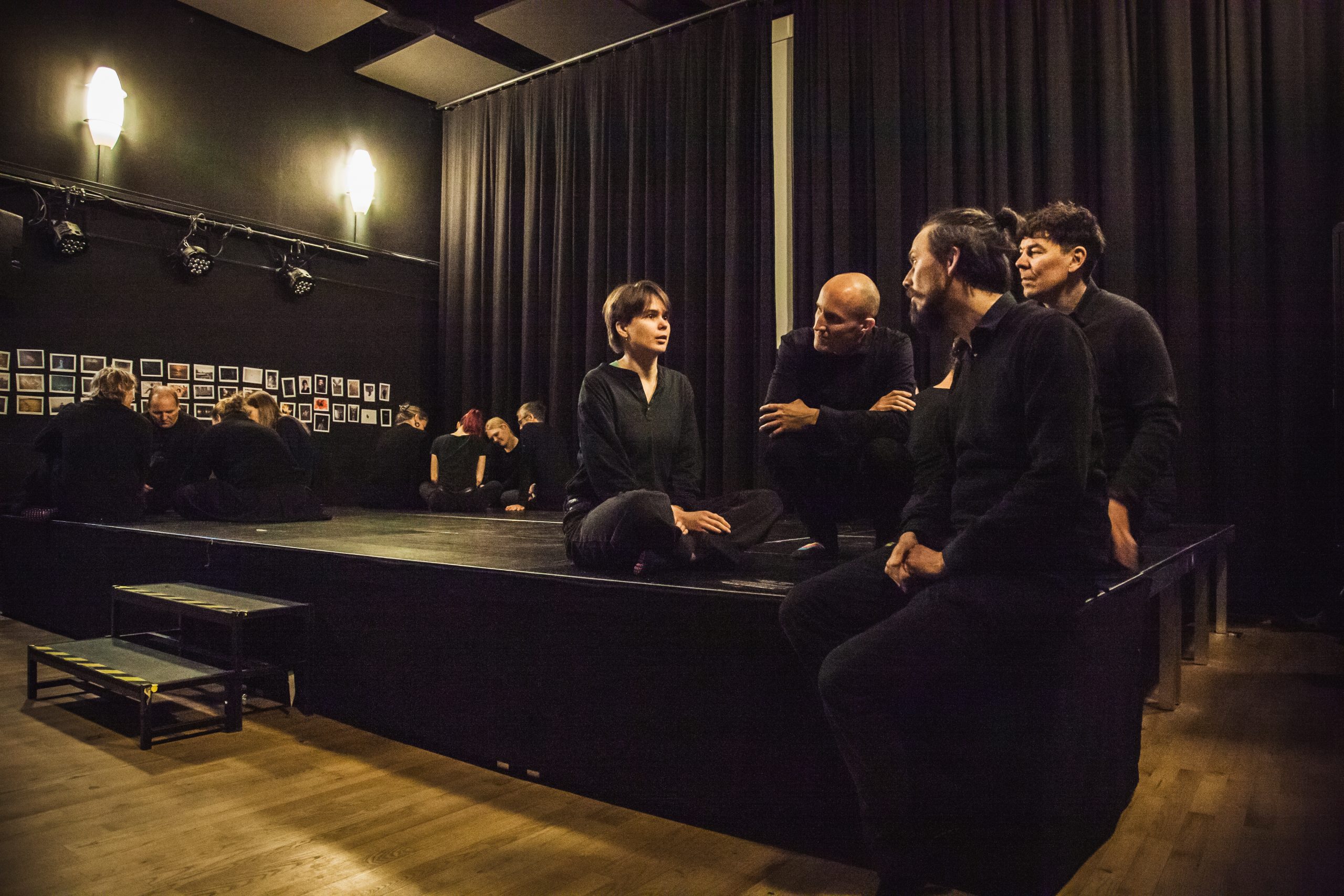
    Cover image: Panopticon workshop, photo by Christian Kierans

  • WEB: Workshop – Exercise – Briefing

    Published on

    in

    WEB: Workshop – Exercise – Briefing

    “This workshop could have been an email” 

    This is a statement I have encountered in the larp community quite a few times by now, which is rather tragic to someone who has worked professionally with learning design for years and has a deep passion for it.  

    Designing and organizing a larp requires skill. The same applies to designing the learning experience required to play said larp: It necessitates a distinct focus on learning output and the methods required to achieve that goal. Creating a learning design equal to that of our larp design will help us facilitate the participants’ transition into the fiction of the larp, as well as better their recollection of important information.  

    The first step of creating a learning design is to consider what the participants require to play your larp. The next step is to take the available learning formats into account, figuring out what format will best allow that to happen. Often, everything we facilitate for the participants prior to the start of the larp (and sometimes during) is referred to as “workshops”. The problem with using “workshop” as a blanket term is that workshops are a specific kind of learning format, and this term does not encompass everything we do prior to a larp. This can cause a clash of expectations, making the participants feel like expressing the opening sentence of this article. After all, the worst workshops are those that aren’t actually workshops. 

    Instead of using “workshops” to describe the time before a larp set aside for the participants’ learning experience, I suggest using a more neutral term like “larp preparations” or, as I prefer appreciating alliteration, “pre-play-prep”. 

    The most common learning formats used for the pre-play-prep before a larp are: workshop, exercise, and briefing. The WEB model described below is a visual tool in two parts, created to define, distinguish, and summarize these three types of learning sessions. In this context, the three formats are defined as follows: 

    Workshop: An interactive and co-creative session focused on participants’ hands-on interactions. 

    Exercise: An activity where participants, individually or in groups, practice a given technique or skill. 

    Briefing: An orientation session that informs and instructs participants before they are to do something. 

    Each type is suited to specific learning goals and participant engagement levels, and understanding these differences can help create better experiences for the participants. 

    The WEB Model: Definitions
    The WEB Model: Definitions – diagram by Nór Hernø

    The WEB Model: Spectrum 

    The three types of learning sessions can be positioned on a spectrum indicating the participants’ level of activity, agency, and degree of co-creation.”

    The WEB Model: Spectrum
    The WEB Model: Spectrum – diagram by Nór Hernø

    The learning sessions have a shared purpose, which defines their focus and design – Learning – Although they approach learning in different ways, using different tools and techniques to facilitate the process. 

    It is important to note that the model is a spectrum and not a scale. The spectrum does not indicate value or learning output, as none of the learning sessions is inherently better than the others. Each one is best for different purposes: 

    • Workshops can give participants co-ownership of a given project, as participants co-create the content. They are ideal for creating shared narratives, culture, and routines, which are not previously defined by the larp designer.
      Examples: Creating (fully or in parts) characters and relationships, developing rituals, establishing the cultural customs of the group, etc.
    • Exercises give participants the opportunity to practice and train a given technique or skill, making them comfortable repeating and reproducing it in another context.
      Examples: Practicing meta-techniques and game mechanics, rehearsing a ritual, practicing specific interactions and behaviors, etc.
    • Briefings are good for clear and direct distribution of information, where every participant or participant group need the same instructions necessary to participate in the larp or a different activity.
      Examples: Giving the participants practical information, explaining setting, rules, meta-techniques, game mechanics, etc.

    In some cases, it can be impossible to distinguish clearly between the three types of learning sessions, as they might overlap or mix different approaches, e.g., when the participants rehearse the ritual they just created together, when the explanation of a meta-technique transitions to practicing it, or when participants practice specific interactions and behaviors by embodying their characters while co-creating the scene in which these interactions occur. 

    In other cases, the difference between the three types of learning sessions is clear to the point it can be comical to imagine using the wrong one: You would not workshop the location of the toilets or the schedule of the larp. 

    The reason why it is important to be aware of the type of learning session is two-fold: 

    1. It helps you be aware of your pre-play-prep design choices and what kind of learning output you might want for a given session. Do you want your participants to co-create something new? Do you want them to repeat something you have created? Or do you want them to listen to and understand a set of instructions?
    2. It helps you and the participants manage expectations, such as energy levels and the type of engagement required.

    The WEB Model: Pre-Play-Prep Sum 

    In a learning design consisting of multiple learning sessions, the sum of the sessions can be represented in the following figure:

    The WEB Model: Pre-Play-Prep Sum
    The WEB Model: Pre-Play-Prep Sum – diagram by Nór Hernø

    For example, if your learning design consists primarily of briefings combined with a few exercises, the sum of the sessions might be represented as follows in the figure:

    The WEB Model: Pre-Play-Prep Sum, example 1
    The WEB Model: Pre-Play-Prep Sum, example 1 – diagram by Nór Hernø

    The sum of learning sessions is again not an indication of value or learning output but solely a depiction of variation in the pre-play-prep. If there is a strong tendency toward placement in a corner of the triangle, as in this example, consider whether this aligns with the desired learning design or if more variation is needed. 

    For example, if greater participant activity and agency are required, one or more suitable workshops can be added to the pre-play-prep, altering the figure:  

    The WEB Model: Pre-Play-Prep Sum, example 2
    The WEB Model: Pre-Play-Prep Sum, example 2 – diagram by Nór Hernø

    This approach to pre-play-prep provides a structured framework for designing larp learning experiences and helps visualize the balance of learning sessions. This can support the designer in making informed choices about how to engage participants effectively and ensure the desired learning outcomes. A clear understanding of the different learning formats allows both designers and participants to manage expectations about the level of participation and the type of engagement required in each session, leading to a more enjoyable and cohesive experience – and fewer workshops that could have been an email. 

    Footnote/anecdote regarding the model: 

    The WEB Model was created on the final night of the 2023 Danish Larp Designers’ Summer School in response to participants repeatedly asking me about the difference between a workshop and an exercise – a situation prompted by a dare. The finishing touches and the English translation of the model (originally titled “BØW” in Danish) were completed in preparation for my 2024 Solmukohta talk and workshop on the subject. Subsequently, the model was reintroduced to the Danish Larp Designers’ Summer School as part of my workshop design class in 2024.

    Cover image: Panopticon workshop, photo by Christian Kierans

  • Building Player Chemistry

    Published on

    in

    Building Player Chemistry

    At Knudepunkt in 2019 I attended a panel discussion, You Look Like I Want To Play With You, hosted by Karijn van der Heij, where participants shared their experiences of co-players refusing to play on pre-written relations. According to the participants, the excuse often used by said co-players was them feeling “a lack of chemistry”. Disregarding the problematic nature of such a judgement, the argument inherently states that chemistry is something which either exists or doesn’t between people, even though we have multiple examples of the opposite being true. Just take something as common and widely discussed as relational bleed: You might never have met the person playing your best friend or one true love before, but after a larp weekend of holding hands and/or gazing into each other’s eyes, they seem awfully nice. Or look to Hollywood and the number of romantic leads ending up in real-life relationships after having starred in a movie together, no matter their relationship status going into it.

    All in all, chemistry is not something that either exists or doesn’t, it is something that can be built between people, doing certain things together. Which also means it can be workshopped.

    While it took a few years, some research and testing, I created a workshop method aimed to do exactly that: Building player chemistry.

    The goals for the method are:

    • Building trust and a feeling of safety between participants.
    • Having participants tune in on each other, becoming aware of their workshop partner.
    • Having participants model behavior that creates closeness, attention, and appreciation between them.

    The method is based on 6 steps, continuously adding degrees of interaction ranging from being distant to touching and from non-verbal to verbal. It can either be run as a workshop by organizers before a larp, to help support players with intimate relations, or used by players portraying intimate relations before the start of the larp (or during the larp if your relation play just doesn’t work out). In this context, intimate relations refer to relations where love, romance, or simply physical and emotional closeness is one of the primary forces. This includes romantic partners, lovers, close friends, and family members, as well as abusive relationships based on the perception of love or closeness.

    The method is based on, and inspired by, elements from:

    • Studies of the effects of eye gazing and related exercises
    • The Meisner and Lucid Body drama schools/techniques
    • Ars Rego (created by Maria and Jeppe Bergman Hamming for Spellbound, 2018)
    • Ars Amandi (created by Eliot Wieslander for Mellan Himmel och hav, 2003)

    Disclaimer: The workshop includes both extended eye contact and touch, which the participants must be comfortable with. 

    Running the workshop:

    Total runtime of the workshop is approximately 40 minutes, not including exercise instructions. Start by dividing the participants into pairs. Instruct them on all steps of the workshop, prior to starting the exercises, so that the workshop can be run as one continuous flow, facilitated only verbally by the organizer.

    Step 1: Eye contact

    Time: Approx. 5 minutes

    This step consists of four rounds. Participants sit in front of each other with some distance between them (1-1.5 meters), eyes closed. On cue, they look into each other’s eyes, for a set amount of time, then close their eyes again and rest for a moment. Every round has an extended duration of eye contact:

    1: 5 seconds

    2: 10 seconds

    3: 30 seconds

    4: 2.5 minutes

    Remember to give the participants breaks with their eyes closed, between the rounds, as this kind of prolonged eye contact can feel overwhelming at first.

    Step 2: Coordinated breathing

    Time: Approx. 5 minutes

    Participants stay seated and keep eye contact throughout this step. This step combines coordinated breathing and movement. One participant starts, stretches their arms out in front of them and draws in breath, simultaneously moving their arms towards their body (as if drawing in their breath with their arms), and then exhales while moving their arms back towards stretched (as if pushing out the air with their arms). The other participant continues this movement, drawing in their breath, while moving their arms towards their body, followed by exhaling, while stretching their arms out – returning the breath and movement to the first participant, who then continues.

    This will create a circular movement and breath, from one participant to the other and back.

    Let the pairs find a rhythm, without verbally communicating it.

    Throughout this exercise, create variation by asking the pairs to slow their coordinated breathing/movement down together, let them then go back to normal, ask them to speed it up, and end this exercise by letting them go back to normal again.

    Step 3: Ars Rego Movement

    Time: Approx. 15 minutes

    This exercise is based on the method Ars Rego by Maria and Jeppe Bergman Hamming.

    Short description of the mechanic: Ars Rego is a Nordic larp mechanic created for simulating magical physical control. With this mechanic a “leader” controls one or more “followers” by using hand signals. A connection between leader and follower is created by participants establishing eye contact and raising their hand(s). The follower must now follow the leader’s hand at a distance and be led around the room, while keeping their hand up and the connection intact. They are to mirror the leader’s hand movements (e.g. The leader “pushing” them down, “lifting” them up, making them move to the side, spin, etc. by using hand gestures). The leader is always responsible for the follower’s safety and comfort, while moving them around the room.

    Note: This exercise does not use touch at any point, and doesn’t include the hand movement to signal to your partner to get closer, as demonstrated in the link above.

    The pairs split up (momentarily) and all participants start moving around the room, walking amongst each other. Let the participants get comfortable moving around on their own, before asking them to start noticing their partner: Where they are in the room, how they are moving, their expression, etc.

    Ask participants to make eye contact with their partner and at their own pace establish the touch-free “connection” with their hand. The pairs should continue to keep some distance between themselves, moving around between other participants in the room.

    The participants are allowed to break off the contact and reestablish it, getting used to the “connection”, before they are encouraged to “lock in” and slowly get closer to each other, without ever touching. Let the participants play around with the connection for a while, trying out changing hands, using both hands, moving their partner around, both from side to side, down towards the floor and up again.

    Important note: The participants are responsible for their partner. It is their responsibility to make sure their partner doesn’t bump into furniture, walls, or other people. Make that responsibility very clear to the participants – It is necessary to keep eye contact during the exercise, but at the same time be aware of the other’s surroundings.

    Throughout the exercise, create some variation in the participants’ movements. Ask one person in the pair (e.g.: the person who started the breathing exercise) to take control of the other, then change the roles. It is also possible to add elements from your larp design, like asking participants to move as their character and interact with each other based on their ingame relation. Consider how this could potentially affect the building of chemistry – If the relation is not inherently positive, this could interfere with the result of the workshop itself.

    For the final approx. 5 minutes of the exercise, ask the pairs to get close to each other, if they haven’t already. Invite them to move together as if dancing in a ballroom setting (or if something else fits your larp better).

    As the final step, ask participants to use both hands in their movement together, so that the transition to the next exercise happens fluently.

    Step 4: Shared Moment

    Time: Approx. 3 minutes

    Ask the participants to stop in their movement, still with their hands held up “connected” to each other. The participants then move closer together, so close they can feel the heat from their partner’s hands, without touching. Ask them to close their eyes, take a deep breath and focus on the feeling they have in that moment. Ask them to visualize something, it could be an image, a thought or emotion, and keep their focus on what they are visualizing. Give them a few moments to get grounded, then ask them to open their eyes and at the same moment let their hands touch.

    The pairs now get a minute to share what they thought of and visualized.

    Step 5: Touch

    Time: Approx. 7 minutes

    This exercise is based on the method Ars Amandi by Eliot Wieslander.

    Short description of the mechanic: Ars Amandi is a Nordic larp mechanic used for simulating romance or sex in larp. The mechanic uses touch of permitted zones (often hands, arms, and shoulders) between two or multiple participants. The touch is often in the form of stroking, massaging, grabbing, or exploring with one’s fingers/hands.

    The pairs sit down in front of each other again, this time knee to knee. They establish eye contact and slowly start touching both of each other’s hands. The area of touch slowly increases, as the participants have time to get comfortable, by first moving the touch up to the lower part of the arms, stopping at the elbows, then the upper part of the arms, stopping at the shoulders. The participants should be allowed to tap out, if increasing the area of touch is not wanted, thereby keeping the touch to the previous level (e.g.: hands or lower arms).

    The participants can play around with this touch, either by expressing the kind of relation their characters have, or by the organizer creating variation in the types of touch (e.g.: asking participants to change their touch to portray siblings, parent-child, lovers, etc.)

    Again, be aware how portraying ingame relations can potentially affect the building of chemistry if the relation is not inherently positive.

    Step 6: Appreciation

    Time: Approx. 5 minutes

    Continuing the touch exercise from step 5, the participants simultaneously start verbal appreciation of each other. They take turns commenting on facts they appreciate about the other, using the following sentence form: “I like… XXX” (e.g.: “I like your curly hair”). The receiving participant continues with: “You like… XXX” (e.g.: “You like my curly hair”) and adds their own comment (e.g.: “I like your blue shirt”), returning the appreciation and continuing the exercise.

    Important note: No derogatory or hurtful comments are allowed. Clearly instruct participants to only state objective and neutral facts about each other (e.g.: colors of eyes, hair, etc.), chosen aspects of their appearance (e.g.: choice of clothes, jewelry, tattoos, etc.), or experienced behavior during the exercises (e.g.: their movement, smile, eye contact).

    Wrapping up

    The workshop can either end with step 6 or with a repeat of a moment of silent eye contact.

    Either way, it is encouraged to give participants a few minutes after the workshop to talk with their partner about the experience and how they are feeling.

    Final notes on the workshop design

    As mentioned, the workshop can be run either by organizers or used by players themselves. Especially in the case of organizers running the workshop, it is important to consider the impact it can have on the participating players. As the workshop aims at modelling participants’ behavior to create closeness and build player chemistry, the risk of relational bleed can increase. It is the responsibility of the organizers to consider the ethics of using this or similar methods, as well as making sure the participating players are consenting.

    The workshop was first run and tested in its entirety at Knutpunkt 2022 in Linköping, Sweden. Thank you to everyone who participated and gave their feedback, as well as everyone who checked the workshop description for read- and run-ability.


    Cover photo: Photo by Bjørn-Morten Vang Gundersen. Image has been cropped.

  • Villain Self Care

    Published on

    in

    Villain Self Care

    I vividly remember the first time I played a villain. After years of always opting for and being cast as the sweet and innocent characters, I signed up to a larp with a group of friends and dared ask the big question: “Can I try playing the villain?”

    Thus started my travels down the road of larp villainy – a travel filled with plenty of bumps in the road! Already during the larp, I started feeling increasingly bad. And after the larp concluded, I became riddled with guilt. I felt physically sick from what I had done to people I cared about, being the manipulative and scheming horror of a person behind many of the transgressive actions of the larp.

    I started doubting myself: Since I had been capable of playing that character, did it mean I was secretly a terrible person? After all, it might have been imaginary, but it was my brain that imagined it – every thing I said and action I took came from somewhere inside of me. Not just the character, me.

    Now, many years later, my minor identity crisis has subsided, and I have managed to not only come to peace with playing a villain, but to enjoy a good antagonist story.

    As a part of that process, I developed a strategy (or a series of steps) to help me play an antagonist in a way I find both manageable and rewarding, as well as help with the potential negative emotional effects both during and after the larp:

    1. Don’t be the lone villain.

    It can be an isolating experience playing the antagonist, so team up beforehand with someone you trust. If you are able to create an in-game relation to the person, make sure it’s one that provides positive interactions and doesn’t fall apart immediately, when confronted with your actions. If you can’t establish such an in-game relation, make sure you at least have the support off-game, e.g., someone who checks up on you, makes sure you take care of yourself, someone to brainstorm horrible actions with, or confirm you are indeed not a bad person in reality.

    2. Know your boundaries.

    A villain can be and do a multitude of things. Consider what kind of villainy you are capable of and interested in portraying – and what you should steer away from. An antagonist can be everything from the physically and emotionally violent spouse or schoolyard bully, to the disengaged leader causing the suffering of hundreds with their actions (or lack thereof). What kind of play, themes, or actions are difficult or impossible for you to do? What is a soft limit you might want to explore, and a hard boundary you shouldn’t cross? It is as essential for you as the pretend-perpetrator to know and respect your boundaries, as it is for the pretend-victim.

    3. Understand your character’s motivation and beliefs.

    Unless you play an evil cartoon villain, most villains don’t perceive themself as evil. They act according to their moral compass, however flawed that might be. Consider how your character justify their actions and explain away their behavior. What is at the center of their decisions, driving them forward, and what brought them to this point? It’s both easier being antagonistic if you feel excellent – or righteous – doing it, and potentially horrifying to everyone else observing it.

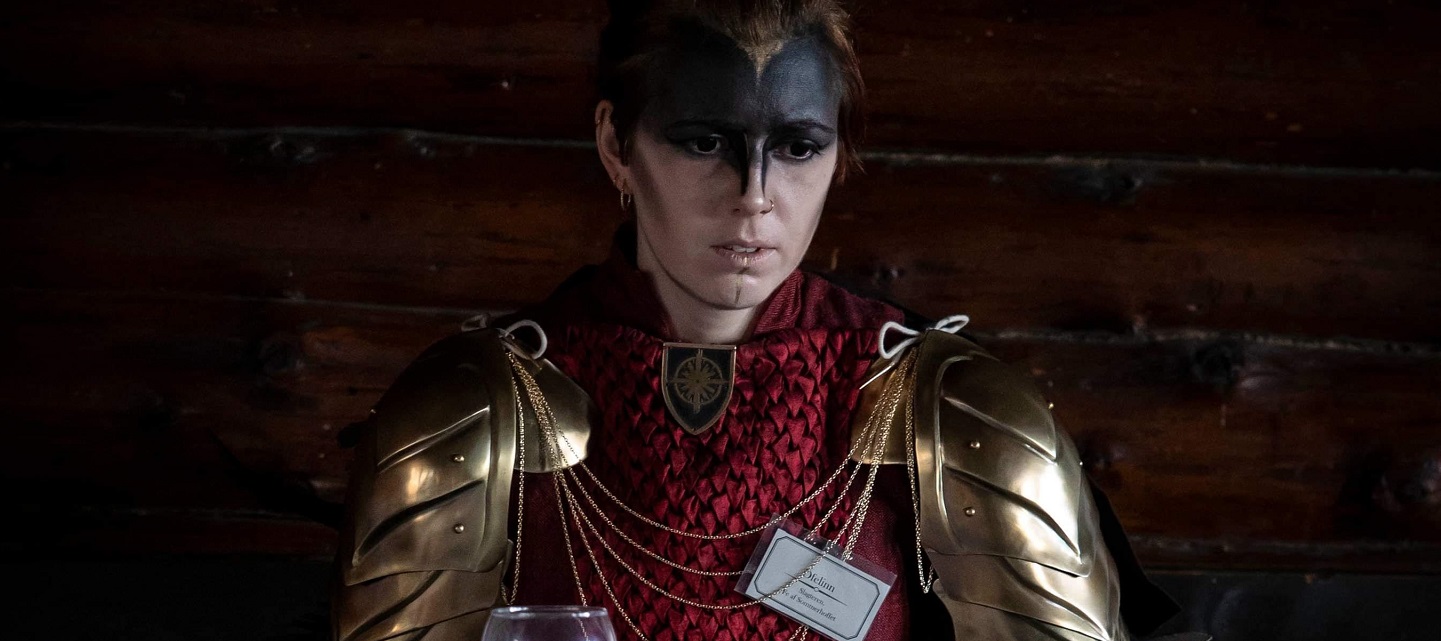
    Photo of person in black makeup and gold armor sitting at a stone table
    The author in the larp Høstspillet. Photo by Bjørn-Morten Vang Gundersen. Image has been cropped.

    4. Prepare your play and potential interactions.

    Playing a villain puts you in the role of the aggressor, often having to generate new ideas for transgressive actions towards multiple co-players. It can be tiring and draining, both regarding energy and capacity for new ideas. First step is to consider what your low effort villainy is like. What can you always do if low on energy? Some mean bullying, hateful glaring, or sabotaging someone else’s life and relations? Secondly, can you plan some (inter)actions ahead? Either pre-calibrated scenes with other players (especially good for the start of a larp, as it kicks everyone, including yourself, into action and sets the tone) or “a catalogue of evil ideas” you can draw inspiration from during the larp.

    5. Let your victims be creative.

    See if you can make your victims come up with the perfect transgressive actions towards them. After all, they know what would hurt them the most. It can both be done in-game, which might even add another layer to the scene, making them tell you how to hurt them, or as a part of an off-game calibration, with the player of the victim brainstorming or suggesting ideas to you. Do, however, make sure you don’t end up as a facilitator of their larp. Their ideas might not match your character’s motivation and beliefs (no.3) or even more importantly, it might be against your own boundaries (no.2).

    6. Steer for a conclusion to your character.

    Consider what kind of ending you want your character to have. Do you want your villain-self to suffer for their actions? To experience redemption and forgiveness? To ride off into the sunset, preparing their next villainy deed? You might not be able to decide yourself, and it might change throughout the course of the larp, but steering for catharsis of your antagonist story arc, can add value to your experience – or be a full stop separating you from your character. It is especially relevant, if you are suddenly facing an ending you are not comfortable with, e.g., revenge from your victims. Remember to consider your boundaries. You might be comfortable playing the perpetrator, but not comfortable ending as the victim. And that is okay.

    7. Check in with your victims – and yourself!

    Checking in with your victims is necessary to make sure they are okay, the larp is safe for them, and the interactions aren’t crossing their boundaries. But it is equally important to check in with yourself, especially after hard scenes! What do YOU need? A comforting hug? A cup of coffee? A nap or a positive interaction-break? Being behind the transgressive actions can be just as emotional and taxing an experience as being on the receiving end. Use your support-person (no. 1) if necessary; your victim might not be the one wanting to hug you right after the scene – and that’s okay too.

    8. Plan for larp aftercare.

    Consider what do you need after the larp has ended, after all, villains might need aftercare too. Your needs are valid, even if they might not be possible to fulfill. You might want to change out of your costume to distance yourself from the character – or stay in costume to reconnect it with yourself. Maybe a hot shower is at the top of your list, or a sit-down conversation with your victims? Maybe you want to sit by yourself and digest the experience in peace? Some of it you can plan for, like packing your favorite snack and a soft sweater, other things require specific facilities or interactions with co-players. Be mindful of how you can best take of yourself, while also being mindful of your co-players and their needs. Sometimes you might need a little more help, especially if you find yourself cast as a main antagonist at a larp. In that case:

    9. Collaborate with the organizers.

    Villains don’t exist in a vacuum, and what seemed like an excellent plan prior to the larp, might fall short as soon as confronted with the runtime reality of the game. On location organizers can often help improve, steer, or brainstorm solutions with you, if you find yourself and your character stuck in a bad situation and/or dynamic.


    Cover photo: The author in the larp Høstspillet. Photo by Bjørn-Morten Vang Gundersen. Image has been cropped.

  • Your Alternate Relation Narrative (YARN)

    Published on

    in

    Your Alternate Relation Narrative (YARN)

    Creating relations between characters is essential to larp. The interaction between the characters dictates how the story unfolds and what kind of experience the players end up creating. Sometimes these pretend relations leave a lasting impression on the players, which can be expressed for example as bleed or the foundation of real-life friendships.

    YARN is a method intended to support both organizers and players in their relation building process. The method focuses on building relations containing dramatic options to generate different forms of drama between the involved characters, as well as their surrounding relations. Rather than defining a relation as being either negative or positive, YARN combines both positive and negative aspects into a single relationship. By doing so, the relations will contain a dramatic tension that can be exploited to achieve:

    • Organic and realistic relations
    • Options for drama and conflict which the players can tap into
    • A constant tension that can create more drama and conflict
    • A starting point for the characters’ play together

    At its core, the built relations will contain two elements: An emotional bond, that defines the magnitude and type of the relation, and a conflicting element, that defines the center of the relation drama.

    YARN Relation Building

    First of all, YARN relations are a cooperative effort. Therefore, the relation building must be seen as a dialogue, either between the involved players, between the organizers in charge of creating the relations, or between the organizers and players (or all of the above). This is to ensure different kinds of input, generating new ideas and thereby creating nuanced relations not entirely based on archetypes or tropes, as well as the option for negotiating the built relation.

    Secondly, YARN is based on an alternate version of the collaborative improv principle ”Yes… And…”. Instead of this term, YARN uses the expression “Yes… But…”, thereby focusing on the conflicting element in the relation being built.

    The starting point of the relation building dialogue will be to find or create the characters’ common ground (the Yes…). The common ground is what binds the characters together, defines their emotional bond and gives them a reason for interacting with each other. The common ground can for example be the relation type (e.g. family, friends, lovers, neighbors), the network, community or group the characters belong to (e.g. school class, cult, workplace, friend group), or what they have in common as persons (e.g. interests, hobbies, talents, dreams, ambitions). While the first two (relationship type and network/community group) can be considered highly descriptive, the last one can be very personal to the characters, and as such create many options for drama during the larp. The characters’ common ground can be based on several of these examples, creating the type and depth of the bond between the characters.

    The next step is to define what would spark a conflict between the characters (the But…). This could for example be a change in the status quo (external and uncontrolled change: a fellow family member dies, one of the characters gets fired, their community gets separated), the characters’ actions (internal and controlled change: one character breaks with the other, cheats in a competition, decides to run for office), or other relations (friends or parents against characters’ relation, boss prefers one over the other, one character is building a relation with someone new). This conflict can either be a part of the characters’ backgrounds or something that will happen during the larp, being agreed on or staged beforehand.

    The YARN Relation Building Summarized

    • Create relations as a dialogue
    • Find the characters’ common ground
      For example:
      • Relation type
      • Network, community or group
      • Interests, hobbies, talents, dreams, ambitions
    • What would spark a conflict?
      For example:
      • Change in status quo
      • The characters’ actions
      • Other relations

    These steps constitute the YARN relation building. They can be used either on their own in the relation building process, or they can be employed as a part of a relation building workshop before the larp, as described below.

    YARN Workshop

    Practical Information

    To host this workshop, you will need a ball of yarn for each workshop group (app. 2m of yarn for each relation, depending on group size). The yarn has both a visual, tactile and mediating function, and for symbolic reasons red yarn is recommended as it will create both a figurative and literal “red thread” between the characters.

    A workshop group needs to consist of at least two people and can be as large as needed, but it is recommended to create groups around the size of 4-7 people. This is due to logistical reasons (such as time and physical space), to keep it as a collaborative process, as well as for the sake of the participants’ ability to remember the relations being made.

    Allow at least 1 minute per group member for introduction of characters (if the characters are unknown to each other beforehand) and minimum 2 minutes for each relation.

    Example: A group of 5 would need app. 20m yarn and at least 25 minutes for the workshop.

    How to Run the Workshop

    Divide the participants in groups and give each group a ball of yarn. The groups can either be randomized or thematically chosen, based on the relation groups of the larp (e.g. the different families, friend groups, societies, etc.).

    The group settles in a circle facing each other. Every participant gives a very short introduction of their character (name, function and position in group, etc.).

    The relation building is a collaborative process between the group members. One participant starts by taking the yarn and, while holding on to one end of it, throws the ball to another participant in the circle. This creates a thread between the two participants. The participant throwing the yarn then states the common ground for the two characters (the Yes…). If the groups are thematically chosen, the common ground related to the characters’ relation type and group affiliation might already be decided. In that case, focus instead on the personal common ground (e.g. interests, hobbies, talents, dreams, ambitions). Everyone in the group can suggest ideas or thoughts on the relation, but as a rule, the definition right is with the one who threw the ball of yarn. The participant who has received the yarn then states the conflicting element in the relation (the But…), as before, suggestions from the group are encouraged, but the definition right is with the participant now holding the yarn. Note: all players involved in the relation has the right to decline any suggestion or change it to something they are comfortable with by applying the “But…”

    When the first relation has been made, the participant with the yarn keeps a hold on the thread and throws the ball to another participant, thereby creating another thread and another relation. This process continues until each participant has a relation to everyone in their group, creating a visual network of yarn and relations (e.g. in a group of five, every participant will end up with four relations). Note that groups with an even number of participants will have to re-throw the yarn to some of its participants to ensure everyone gets relations to each other in the group.

    The YARN Workshop Summarized

    • Divide participants into groups and distribute yarn
    • Group settles in a circle facing each other
    • First participant throws yarn to another group member, defining “the Yes…”
    • Receiving participant defines “the But…”
    • The process continues as the yarn is thrown to another group member
    • The workshop ends with a finished network of yarn between participants


    Cover photo by Nór Hernø.

    Edited by Elina Gouliou.