Month: March 2022

  • Paranormal Experiences in Larp

    Published on

    in

    Paranormal Experiences in Larp

    Can we design larps that produce paranormal experiences?

    Summary

    Paranormal experiences are characterized by a perception that something that was previously thought to be impossible has happened. The paranormal is often part of the fictional settings of larps. We can, however, use techniques and practices inspired by events in the real world to allow our larp participants to experience what it is like to have a paranormal experience. These techniques should only be used with full and informed consent, and only as a tool to allow participants to shape their own experience. The article lists possible techniques for achieving collaborative paranormal larp experiences, and gives a concrete design example of a larp inspired by real-world psychic espionage.

    Introduction

    What is the paranormal?

    People have always experienced strange events. They may have had a dream that came true, seen a ghost or witnessed a highly unlikely coincidence. Even though many believe in the reality of supernatural phenomena, and many have had strange experiences,((Between one third and one fourth of the population has had a paranormal experience, based on surveys in European countries . The proportion is higher in the US, where around half report at least one paranormal experience (Haraldsson & Houtkooper, 1991). Another survey found that over one third of British adults reported at least one paranormal experience (Castro, Burrows, & Woolfit, 2014).))these kinds of events are still considered really weird. For example, if you see a person you know to be dead, or something happens exactly as you dreamed, you will probably be surprised no matter what your beliefs were previous to that experience.

    The paranormal means that which is outside the normal. It refers to events that we cannot explain through known natural forces. For example, seeing a weather phenomenon you do not know the exact cause of would be a normal phenomenon, but feeling like you are communicating with an intelligent blinking light in the sky would be paranormal. Having a paranormal experience then means sensing or feeling something that breaks with how you usually think the world works.

    This article is about creating circumstances that allow us to have these kinds of weird experiences – which I will call “paranormal” experiences. They are perceived as being outside the normal world of experience, and they are often interpreted to mean that something that is ordinarily believed to be impossible has happened.

    I will only discuss paranormal experiences that do not have a psychopathological origin. In other words, experiences that arise from healthy human functioning and not as a symptom of mental illness.

    It does not matter if the paranormal is really real.

    Some argue that all paranormal experiences are misinterpretations of ordinary events, and others argue that they truly are supernatural. No matter what we believe about the origin of these experiences, they are real for the person having the experience in that moment. For example, you may happen to think of someone the second before they call you and get a strange feeling of premonition at that moment. Later on you may think it was just a coincidence and forget it happened, or you may think you had a genuine psychic experience. Whatever you decide later, the experience was real when you got the call. This experience is the focus of this article, not the question of what is fundamentally real.

    The paranormal can be more than a background part of the larp setting.

    Often, the paranormal is part of the fictional worlds that are used as larp settings – settings where demons, ghosts or prophecies are real. My suggestion is that larp can also approach the paranormal in a different way – by creating a space where the participants can play with belief and allow themselves to experience, if only for a second, something impossible happening.

    Larp is sometimes seen as a way to access other kinds of experiences, and we have played with everything from the sensual to the horrifying. Why not also the impossible?

    All larps aiming for weird experiences must have full and informed consent as the basis.

    The degree to which the participants can allow themselves to believe in the paranormal is an important factor in allowing paranormal experiences to happen. I do not believe it is possible to do this with unwilling or uninformed participants. It would also be unethical to design a larp where you trick someone into believing something impossible has really happened. Larp must be based on consent, and allowing paranormal experience is not the same as just scaring the participants. Leave the tricking to the false prophets and fraudulent mediums, and instead embrace the unknown in collaboration with your participants.

    General principles for allowing paranormal experiences

    Do not use any magic tricks or deception.

    The techniques described below do not involve any tricking in the form of magic tricks or lying to your participants. If the aim is to have a genuine paranormal experience, then any tricks or deception will lessen the impact. If you use methods that involve suggestion or aim to increase the likelihood of a correct guess, be transparent about this.

    If you design your larp free of tricks or deception, then any participant that has a weird experience during the larp is more free to attribute the experience to something paranormal rather than trickery or unintentional information leakage from the organizers. Allow the participants to believe in the weirdness of an experience without looking for the secret to a trick or trying to uncover deception on the part of the organizers.

    Give the participants tools to believe in the experience.

    A person’s beliefs highly influence how they interpret their experiences. The degree of belief is also a factor in allowing oneself to have these kinds of experiences. This means that the larp participants should be given tools for having their characters believe in the possibility of paranormal experience as strongly as possible. They can create, or be given, characters that have strong beliefs.

    This also means that it is useful to pay attention to the context that the characters are acting in. Context is very important for how experience is interpreted. A noise on a busy street goes unnoticed. A noise in a haunted house may be interpreted as a paranormal event.

    Give the participants tools to use their imagination.

    Larps often use external cues for supporting the imagination of the participants. However, when designing larps that allow for paranormal experience, it may be useful to also give special attention to the inner worlds of the participants. The paranormal is often associated with vague sensations, hunches or inner impressions. The inner world is a play area that has great potential, and there are many techniques for enhancing the imaginative power of the participants.

    Larp designs that allow the participants to focus on their inner landscape may find it useful to emphasize the group aspect of the larp, rather than leaving each participant isolated. Merely imagining the same thing as the rest of a group may feel more powerful than doing it alone. The participants can also be allowed to communicate and play up each other’s sensations, impressions and hunches, and thereby further enhance the experience.

    One way to bring attention to the inner experiences of the participants is to guide them in some form of meditation. Various kinds of meditative practices are common in modern larps. Having the participants focus on their immediate surroundings and breath may lead to a pleasant and relaxed state of mind. This could be a kind of intermediate exercise leading to more intense experiences, or it could be used with the aim of creating paranormal experiences in itself. Unusual physical and mental experiences also commonly occur when meditating, and may be interesting especially to those who are new to meditation.

    Prepare to give basic emotional support.

    For many, the paranormal is associated with feelings of anxiety and uncertainty. This association is formed both by popular culture and because naturally occurring paranormal experiences often happen in connection to powerful and sometimes negative life events. While the people who choose to attend an event that is clearly communicated as connected to the paranormal are probably prepared to immerse themselves in the experience, they may still experience unpleasant emotions. Prepare for allowing participants to choose their degree of engagement, and for a soft landing after the larp. Familiarise yourself with guides and best practices for larp safety, a good starting point is Koljonen’s (2020) fundamentals of larp design safety.

    Techniques for allowing specific paranormal experiences

    In this article, I will focus on three classic kinds of experience that are often investigated in the literature on the paranormal. From skeptics and debunkers to ghost hunters and self-proclaimed psychics, these kinds of experience are often reported and written about:

    1. Extrasensory experiences or “being psychic”
    2. Experiencing a strange coincidence
    3. Sensing the presence of a ghost

    Techniques for allowing extrasensory perception.

    Popular fiction is teeming with representations of characters who can see the future or sense what is happening far away, and self-proclaimed psychics are common in contemporary media landscapes.

    Extrasensory perception (ESP) occurs when a person appears to get information that none of the ordinary senses could provide. Extrasensory experiences often have content of strong personal and emotional significance, and they are often vague and give only partial information about the event to which they presumably refer (Watt & Tierney, 2014). The experiences range from the relatively mundane, such as thinking of someone the moment before they call or guessing the outcome of some event to more intense experiences such as dreaming of an event that happens the following day or hallucinating something that is happening far away.

    It is also possible to have second-hand ESP experiences by having information about oneself guessed by another person. This can be from a person claiming to be psychic, or it can be that a friend had a strange dream that fits very well with current life events.

    Everybody guesses correctly once in a while, but what makes ESP experiences stand apart is the sense of wonder and impossibility that usually follows the experience. The emotional reactions to these experiences vary, with the most typical being happiness or anxiety (Watt & Tierney, 2014).

    In a larp, participants can experience receiving information psychically through:

    The possibility of guessing something.\

    From 1983 to 1989, the parapsychologist Charles Honorton and his colleagues conducted one of the largest studies of ESP done to date (Bem & Honorton, 1994). Their method was to place two people, “sender” and a “receiver”, in two separate, acoustically isolated chambers. The “sender” looked at a randomly selected visual target, and the “receiver” was given the “Ganzfeld procedure”. This means that the person was reclining in a chair with translucent ping-pong ball halves taped over their eyes while a red floodlight directed towards the eyes produced an undifferentiated visual field, and white noise played through headphones to produce an undifferentiated auditory field. The receiver was instructed to pay attention to any images coming to mind, and to report verbally their thoughts. This went on for half an hour, and at the end the receiver was asked to guess which of four targets the “sender” had been looking at. At the end, the sender and receiver met and the true target was finally revealed.

    While it may be too complicated to set up such an elaborate laboratory for a larp, it gives an example of what kinds of situations parapsychologists have created in order to facilitate ESP. Some participants reported imagery that aligned quite well with the target, and the experience of seeing the target revealed at the end must have been quite powerful for some of the participants.

    By setting up situations where the participants may guess something correctly, you can make it possible for them to experience ESP. The more detailed, unlikely or obscure the target of the guess is, the more likely it is that someone who guesses it correctly will feel like they received the information through paranormal means.

    Imagining something that may have relevance in the future

    In 2003, a group of 47 people attending a “remote viewing” workshop attempted to imagine the circumstances under which Saddam Hussein would be found (Schwarz, 2018). They went through a series of exercises prompted by the instructor such as visualising various features of his person and surroundings. The participants then drew their impressions as best they could, and the workshop instructor Stephan A. Schwarz compiled a list of “consensus” impressions as answers to a series of questions. When Saddam Hussein was found about a month later, Schwarz compared the answers to the actual circumstances and was struck by what he believed to be close similarities between the participants’ guesses and the outcome.

    The group exercise led by Schwarz is one example of trying to imagine something that may be relevant in the future. By asking the participants to imagine what will happen later in the larp, you can make it possible for them to experience precognition or sensing the future. Making more specific predictions will make it seem more unusual if any of the predictions come true. This technique might be relevant for a larp where there is a lot of uncertainty or where parts of the larp take place in an environment not fully controlled by the organizers. For example, the participants might imagine events that could occur, followed by walking around the city in a pervasive larp.

    One important note about Schwarz’ workshop: The participants were asked if they would like to try and “find Saddam Hussein”, and could opt out. In fact, about a dozen of the participants did so. Make sure that your participants are aware of and comfortable with what the larp will explore.

    Being the target of cold reading

    “Cold reading” is a deceptive psychological strategy used to give, what seems to be, a convincing psychic reading (Rowland, 2002). Cold reading is not the same as simply guessing. It is a set of techniques to move from general to more specific statements in a conversation, and it requires conscious effort from the person doing the reading. Most people can learn the basics of cold reading, and it’s not unlikely that the recipients of cold readings experience the reading as a paranormal event. Cold reading is per definition deception, but that does not mean it cannot be used in a larp based on informed consent. Even if the participants know that cold reading is being used they may still feel that some guesses are more correct than they “should” be – after all, that’s the whole idea when using specific cold reading techniques.

    The technique can be used in larp if there are enough facts established about the character being given the reading that it makes sense to guess correctly. It can also be used before the larp to prime the participants for experiencing something paranormal. If cold reading or a similar technique to increase the likelihood of guessing correctly is used, make sure to inform the participants in advance.

    Techniques for allowing weird coincidences

    Unrelated events coinciding in a meaningful way are often portrayed in fiction as a sign from God or destiny that a course of action is right or that the hero of a story is on the right path. In real life, many of us experience weird coincidences that have personal meaning (Coleman, Beitman, & Celebi, 2009).

    These can be small events that merely seem a bit strange, such as hearing a favorite song on the radio immediately after receiving good news or seeing a meaningful phrase repeated several times in a row on social media. They can also be connected with big decisions or life-changing events such as “miracle” coincidences where unlikely events prevent fatal accidents, or a chance meeting that propels a career to the next level. One important component of a weird coincidence is how it makes the person experiencing it feel. Some may feel like the universe is perfectly in harmony in a single moment, feel dizzy or disoriented, or feel like they’re dreaming.

    In a larp, weird coincidences can happen when:

    Elements line up in an unusual and meaningful way

    Experiencing that different external events line up in a way that seems to fit perfectly for your story or character can be experienced as a paranormal event. In real life, these kinds of events are often associated with meeting people in unlikely places, such as meeting your neighbor on vacation on a remote destination. If you are designing a larp with a very large playing area such as a city, these kinds of coincidences may occur.

    Another kind of common event is seeing meaningful or recurring images or text. One example is the frequency illusion, where an obscure phrase or idea is encountered many times in a short period of time. Another example is seeing images or text that strongly relate to what you are currently thinking or doing, such as seeing someone post just the recipe you were looking for on social media. In a larp, these coincidences can be encouraged by including complex environments with many small details. For example, you may include a screen that shows random wikipedia articles, or randomly generated sentences may appear in an app that gives the characters advice.

    The participants interpret random events as signals from the universe

    The series “Hellier”, available free on YouTube, is an example of a group of people who follow strange coincidences wherever they lead. In the series, a group of paranormal investigators investigate what they at first interpret as an appearance of alien creatures. However, as the investigation proceeds they interpret a wide range of events as signals from the universe that they are investigating a greater mystery. The mindset of these investigators allow them to experience otherwise ordinary events (such as finding a tin can or a balloon) as paranormal.

    One way to enhance the feeling of random events as meaningful is to guide the participants in interpreting everything as signals from the universe to the character. This could mean following weather patterns, seeing symbols in maps or simply exploring an area in great detail while interpreting the findings as signals. As the reading of these signs lead to the characters taking action, the signs may seem like meaningful guides for the character’s journey.

    Techniques for allowing the perception of ghosts

    Hauntings and visits from the dead have been the focus of a great number of works in popular culture – both in fiction and in ghost-hunting series presented as nonfiction. Experiencing communication with departed loved ones is the least common of the three kinds of paranormal experiences discussed in this article, but one representative survey in Great Britain still found that around ten percent report having had this experience.

    People who sense what they perceive as ghosts report a wide variety of experiences. Common varieties include a feeling of something being present, temperature change and strange sounds and smells. In some cases apparitions are seen, either clearly or as vague shadow-like figures (Wiseman, Watt, Stevens, Greening, & O’Keeffe, 2003).

    In a larp, participants may experience sensing a ghost through:

    Interpreting sounds and images as signals from ghosts

    Participants can experience stimuli that allow them to easily imagine “something” being present. This can allow them to sense the presence of ghosts or other entities. The stimuli can be vague sounds such as white noise or short random clips from radio stations. It can also be visual impressions such as shadows or points of light.

    The near-death researcher Raymond Moody is famous for his “psychomanteum”, a large mirror with dim lights on either side. When one sits with this mirror for a while, it is common to experience slight hallucinations. Moody used this for an apparently successful kind of grief counseling, where the bereaved were given the opportunity to believe that they were contacted by deceased dear ones (Moody, 1992). A similar technique may be used in larp to allow participants to feel like a ghost is nearby.

    Participating in a seance

    Seances are well-known through ghost stories and horror movies, and are often associated with fear and negative outcomes. However, contemporary spiritualism is usually more oriented towards positive emotions and the hope of survival after death. Many of the techniques used in contemporary seances can be useful for larp designers. This includes fostering a positive, creative and “party-like” atmosphere before the seance, encouraging openness to whatever may occur during the seance and ritual techniques during the seance itself.

    Wiseman, Greening, and Smith (2003) document cases of paranormal experience in seances using suggestion. They hired an actor to play the medium, and he made clear at the start of the seance that he did not possess any mediumistic powers, and would simply guide the participants through the seance. During the seance, the actor made suggestions of paranormal events such as that a table moved. These suggestions led several of the participants to experience what they saw as paranormal events. In fact, about a third reported after the seance that the table had moved. Several participants also indicated that they had experienced the kinds of strong sensations and psychological states often associated with paranormal phenomena, such as feeling a strong sense of “energy” or smelling something unusual. One approach to larp design could then be to simply give the participants the opportunity to conduct a seance. This may in itself allow them to experience weird phenomena.

    Another possible source of inspiration is “the Philip experiment”, where a Canadian group of parapsychologists imagined that they believed in a ghost, and called to him every week for several months (Owen & Sparrow, 1976). After a while, they reported physical phenomena including hearing knocking sounds and seeing the large seance table move around the room. This paranormal experience created through a structured process of make-believing in a ghost may also be achieved in a larp.

    Visiting haunted environments

    Places known to be “haunted” may more easily allow experiences associated with sensing ghosts. Experimental research suggests that at least some of the reports of sensing ghosts arise from factors in the environments where the ghost was sensed. This could simply be that the environments are cold, draughty and include sporadic, unusual sounds (Wiseman, Watt, Stevens, Greening, & O’Keeffe, 2003).

    Some researchers have also suggested environmental factors such as local magnetic fields or radioactivity. In recent years, many have paid special attention to low-frequency sounds or “infrasound” (Parsons & Cooper, 2010). Some research suggests that exposure to this kind of sound may lead to feeling a sense of presence, experiencing temperature changes and seeing vague peripheral hallucinations. Haunted environments may then be places where these kinds of sounds occur naturally.

    Allowing larp participants to visit such environments may allow them to more easily sense ghosts or other entities. Of course, the safety and legality of the visit should always come first. A serious larp organizer should have little difficulty getting access to a comfortable but haunted hotel or similar place.

    Practical design example: Controlled Remote Viewing

    The larp Controlled Remote Viewing (2020) by the artist Mark Durkan and myself is an example of a larp that uses several of the techniques described above to open up the possibility of experiencing being psychic.

    In this larp, the participants take the roles of characters joining the first session of a training programme for enhancing psychic potential. The goal of the larp is to give the participants a practical impression of what techniques real-world government agencies have historically used to train psychic spies. The larp also allows for the possibility of experiencing real ESP in the form of correctly guessing an image hidden in an envelope. The larp is designed to be run in a black box and takes three to four hours from start to finish. I will outline some important design choices we made for the various phases of the larp.

    Before the larp: Real ESP targets and double-blind selection

    Before the larp, we give a person who will not be present at the larp access to a database of several hundred images that were historically used in a psychic espionage training programme (the “Stargate programme”). This person chooses a set of targets, prints them and seals them in brown envelopes. This means that neither the larp organizers nor any of the participants know what the targets are, except that they are images of places on Earth. This means that if any participant comes close to guessing the target during the larp, they are more free to attribute the guess to ESP rather than trickery or unintentional information leakage from the organizers. This is clearly communicated to the participants.

    Pre-larp briefing: Clear communication and safety measures

    When the participants are gathered for the larp, we start by stating that our goal is to re-create historical training programmes and explore how using a character as an alibi might generate an ESP experience. We then list the various techniques we will use in the larp and give special attention to how the participant may bring themselves out of any unpleasant experience. We also make clear that they can leave the room at any time, and that we will be available for a chat after the larp. We focus on making sure that the participants feel that they are in control of how they make use of the lightly consciousness-altering techniques that we use.

    Pre-larp workshop: characters with strong paranormal beliefs and a guided visualisation of a paranormal experience

    The participants are given characters who have a strong belief in the paranormal. This is both stated in the character description and reflected in a set of “test scores” that the characters are given at the beginning of the larp. These scores are explained before the larp, and are presented as results from real-life psychological tests showing high scores on items that have been associated with ESP ability, such as a high degree of belief in the paranormal.
    The participants are also invited to a guided visualisation of the characters paranormal experience. This is done by first guiding the participants to a state of heightened focus and then asking them to imagine a strange event in the characters life unfolding. The participants are guided by open questions about the event and are asked to use hand movements as visual feedback to the larp organizers about their progress in imagining the event. The visualisation technique relies on continually affirming that the participant is in control of the experience at all times. We also use inviting and open language, allowing the participant to choose to imagine the event in great detail or to skip over all or parts of the event.

    The aim of this is to give a strong sense of what it is like to be someone who has experienced weird things and who believes in the possibility of ESP.

    During the larp: Use of sensory homogenization to enhance imagination

    During the larp, the characters sit for approximately ten minutes with white covers over their eyes, a strong red light focused on their faces and loud white noise from a set of speakers. The aim is to enhance the participants imagination and possibly allow for light auditory or visual hallucinations, making it more easy for the participants to imagine the targets that they will later try to guess.

    During the pre-larp briefing we test this method by asking the participants to sit in a short practice session and calibrate the level of light and noise that we will use during the larp. We also make clear that they can remove their eye covering if they feel uncomfortable.

    During the larp: Guided meditation and creative exercises

    During the larp, the characters try to guess the image inside a sealed envelope. To facilitate this, we invite the participants to focus their breath and enter a state of calm focus. Then they draw a series of increasingly complex shapes, culminating in a drawing that incorporates the elements they have created and that aims to represent the target. After this, the envelope is opened and the characters discuss their performances.

    The aim of this technique is to allow all the participants to slowly build a repertoire of shapes and impressions that they can draw from to compose an image. Clear shapes and textures makes it easier to discuss the drawings after opening the envelopes, and allow for the possibility of guessing parts of the target.

    After the larp: A short de-roling, round of impressions and the possibility to talk more

    After the larp has ended, we facilitate a short exercise to leave the character behind and invite the participants to sit in a circle and share a short sentence or two about how they are feeling right now. After this, we hang out for a while and make ourselves available if any of the participants want or need to talk.

    The purpose of this is to give a slow landing after the larp and to be able to detect if any participants have had an emotionally unpleasant experience. We do not expect this larp to be particularly disturbing for the participants, but we acknowledge that the paranormal may evoke feelings of anxiety. We therefore wish to help the participants have a pleasant and calm ending to the larp.

    Conclusion

    I have outlined some general principles and techniques for allowing paranormal experience in larp. Larp is sometimes seen as a way to access a variety of ways of experiencing the world. The larps that are organized around the world today are filled with all kinds of unusual experiences, and allow the participants to explore areas of themselves that may be hidden in everyday life. With the ideas and techniques in this article, we may now also design larps that allow us to experience the impossible.

    Bibliography

    Bem, D. J., & Honorton, C. “Does psi exist? Replicable evidence for an anomalous process of information transfer.” Psychological Bulletin, 115(1), 4–18. (1994) DOI:10.1037/0033-2909.115.1.4.

    Castro, M., Burrows, R. & Woolfit, R. “The Paranormal is (Still) Normal: The Sociological Implications of a Survey of Paranormal Experiences in Great Britain.” Sociological Research Online, 19 (3). (2014) DOI: 10.5153/sro.3355.

    Coleman, S., Beitman, B. D., Celebi, E. “Weird Coincidences Commonly Occur.” Psychiatric annals, 39 (5). (2009) DOI: 10.3928/00485713-20090421-03.

    Haraldsson, E. & Houtkooper, J. M. “Psychic Experiences in the Multinational Human Values Study: Who Reports Them?” The Journal of the American Society for Psychical Research, 85. (1991) pp 145-165.

    Koljonen, J. “Larp Safety Design Fundamentals.” Japanese Journal of Analog Role-Playing Game Studies, 1, pp 3-19. (2020) DOI: 10.14989/jarps_1_03e

    Moody, R. A. “Family Reunions: Visionary Encounters with the Departed in a Modern-Day Psychomanteum.” Journal of Near-Death Studies, 11(2), (1992) pp. 83-121.

    Owen, I. M. & Sparrow, M. Conjuring up Philip: An Adventure in Psychokinesis. Don Mills, CA: Fitzhenry & Whiteside Limited, 1976.

    Parsons, T. & Cooper, C. E. Paracoustics: Sound & the Paranormal. Hove, UK: White Crow Books, 2010.

    Rowland, I. The Full Facts Book of Cold Reading. London: Ian Rowland Limited, 2002.

    Schwarz, G.A. “Finding Saddam Hussein: A Study in Applied Remote Viewing.” Edgescience, 36, (2018) pp. 5-10.

    Watt, C. & Tierney, I. “Psi-Related Experiences” In E. Cardeña, S. J. Lynn, & S. Krippner (Eds) Varieties of Anomalous Experience, 2nd Ed. Washington, DC: American Psychological Association, 2014

    Wiseman, R., Watt, C., Stevens, P., Greening, E. & O’Keeffe, C. “An investigation into alleged ‘hauntings’”. British Journal of Psychology, 94. (2003) pp. 195-211.

    Wiseman, R., Greening, E., Smith, M. “Belief in the paranormal and suggestion in the seance room.” British Journal of Psychology, 94, (2003) pp. 285-297.


    Cover photo: Image by Tumisu on Pixabay (cropped).

    This article is published in the companion book Book of Magic: Vibrant Fragments of Larp Practices and is published here with permission. Please cite this text as:

    Bruer, Erlend Sand. “Paranormal Experiences in Larp.” In Book of Magic: Vibrant Fragments of Larp Practices, edited by Kari Kvittingen Djukastein, Marcus Irgens, Nadja Lipsyc, and Lars Kristian Løveng Sunde. Oslo, Norway: Knutepunkt, 2021.

  • Larp in Leadership Development at the Royal Norwegian Naval Academy (RNNA)

    Published on

    in

    Larp in Leadership Development at the Royal Norwegian Naval Academy (RNNA)

    Abstract

    Can the use of live action role plays (larps) be beneficial in the leadership training at the Royal Norwegian Naval Academy (RNNA)? This is the question I asked myself the autumn of 2019, as I began the work with my bachelor thesis in Military Studies, Operational Branch. Having played and designed larps since the summer of 2010, personal experience told me that larps hold great potential for personal development. At the same time, I missed more opportunities for practising leadership skills in my own education at the RNNA. To find an answer to the question above, I designed five larp sessions and ran them with the class of 2019-2022 at the RNNA. This article seeks to present what I found in my bachelor’s degree with a main focus on the larps.

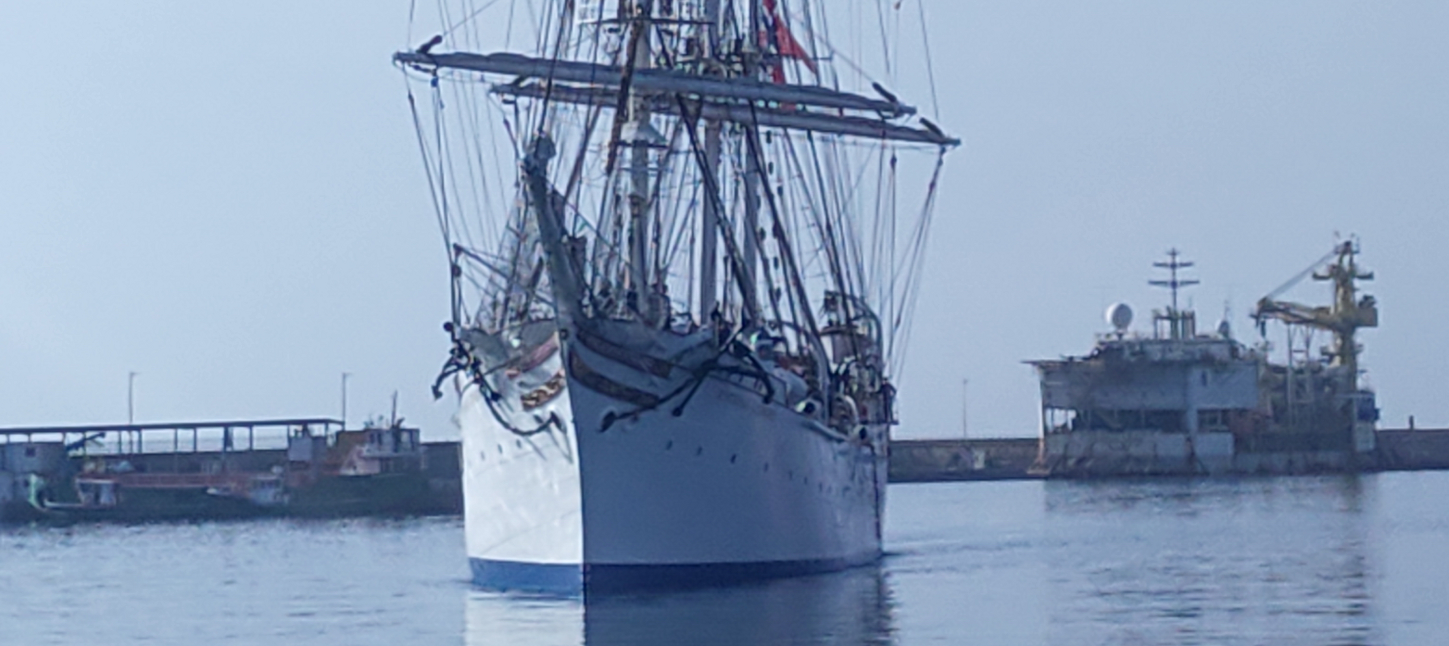
    Cadets on board the tall ship Statsraad Lehmkuhl participating in a larp session. Photo: author
    Cadets on board the tall ship Statsraad Lehmkuhl participating in a larp session. Photo by the author.

    Introduction

    Military personnel are required to perform in times of crisis and war. These situations are characterized by complexity and uncertainty (Boe, 2016). Because the situations are too vast for one person to grasp alone, teams become necessary. For a team to function under such circumstances, the teamwork has to be robust (Sjøvold, 2006). This requires the team members to be capable of showing role flexibility. In this context, role flexibility refers to 1) the ability to read a situation and choose the appropriate behaviour to move the team towards their goal and 2) the range of behaviours one can comfortably choose from (Sjøvold, 2007). In order for a team to reach its full potential, four functions – nurture, control, opposition and dependence – must all be in harmony. Every team member should ideally be able to exercise behaviour that supports each function (Sjøvold, 2014).

    Figure 1: The Balance of the Basic Group Functions in the Systematizing Person-Group Relations Model. Figure 1: The Balance of the Basic Group Functions in the Systematizing Person-Group Relations Model.

    Educating officers who are capable of being role flexible, is however not a given. The natural tendency for members of newly formed groups is to fall back on roles they are comfortable and familiar with and staying there (Sjøvold, 2006). In this context, a role refers to Endre Sjøvold’s explanation of the word: “In an interaction, we have certain expectations regarding how others should behave. Such expectations of behaviour is called a role when they fulfil certain basic functions in a group” (Sjøvold, 2006). The pressure to succeed during training at the RNNA is great. This leads the cadets to fall back on behaviours and leadership styles with which they have previously had success, as opposed to trying new angles. This social pressure and the fear of failing hold the team members back from going outside their comfort zones, and thus hinders them from widening their behavioural spectrum. When this happens, a team’s success will consequently usually depend on one or a few strong team members who keep the team together (Sjøvold, 2006). I hypothesised that larps could be a solution to the challenge of developing role flexibility, as it offers a way to remove the barriers that hold team members back.

    In a larp, the participants play out fictitious characters. The characters might inhabit traits that the participants want to practise or explore (Waade, 2006). By giving the cadets the alibi of a character within a fictitious context, the social pressures connected to the cadets’ personas can be removed. The responsibility for any failures within the larp falls on the characters. This can offer the cadets a safe arena to practise in, and adds a framework for direct feedback. When the social pressures that normally hold the cadets back were removed through larp, I hypothesised that they would dare to challenge themselves in roles with which they were uncomfortable. This in turn, could lead to them developing their role flexibility and make them robust members of their teams.
    I worked with three hypotheses:

    1. The cadets will become more role flexible after completing five larp sessions.
    2. The cadets who are positively inclined towards the larp sessions and choose to play characters that challenge them will have the greatest development in their spectrum of behaviours.
    3. The cadets who are positively inclined towards the larp sessions will have the greatest development in their ability to observe situations and select an appropriate behaviour.

    Limitations

    Due to the scope of the thesis, it was not possible to examine the long term effects of the larp sessions, which might differ from the short term results. Even though it is likely that the role plays had other effects than those on role flexibility, these are not examined here.

    Research Process

    Timeline showing the research process Table 1: Timeline showing the research process

    The research process began in December 2019. I designed many alternative larps scenarios with the goal of helping the cadets develop their ability to show role flexibility. Due to practical reasons, the sessions had to be run aboard the tall ship Statsraad Lehmkuhl while it crossed the Atlantic Ocean. The sessions were executed with the first year students in the class of 2019-2022, 64 students in total, 9 women and 55 men. They were divided according to their already existing teams of 7-8 members, which they remained part of for the duration of a year. Each team consisted of one woman and the rest men.

    The framework for each session was as follows:

    Goal: increase the participants’ role flexibility
    Purpose: educate capable officers
    Number of participants: 7-9
    Target audience: military cadets with no prior experience with larp or theatre
    Time: 70 minutes
    Location: one room with a table and chairs


    The tall ship Statsraad Lehmkuhl. Photo: author
    The tall ship Statsraad Lehmkuhl. Photo by the author.

    In the end, the strict time constraint led to a design that focused almost completely on role flexibility, cutting away any elements not contributing to this. On January 27th 2020 two of the scenarios I chose were playtested with 16 students at Metis High School in Bergen. Though the high school students were younger than the cadets and not organized in teams the same way, the playtest still gave a general feel for how a group with no prior experience with larp would react to them. Through a questionnaire filled out by the students and an in-depth interview with one of them, valuable feedback was acquired, and the sessions adjusted accordingly. One of the larp sessions was playtested a second time on February 1st 2020 at the Norwegian larp festival Spillerom. These participants were all experienced larpers. Feedback was also received from this group, and some final adjustments were made.

    The results of all the planning were three scenarios that were played over five larp sessions with each team. Every larp session consisted of a workshop, a larp and a debrief. During the larps half of the team played characters, while the other half trained observation skills. The participants who trained observation skills received an observation form written for one character they were going to pay special attention to, and took notes during the larp. The workshop and debrief were the same for the whole team. I personally ran all of the sessions. I played the role of “supervisor” in the larps, assigning the characters a task at the beginning of the larp and requesting a solution at the end. Sometimes a superior officer would sit in and provide additional feedback during the debrief.

    The structure of the larp sessions Table 2: The structure of the larp sessions

    The characters were written with one of the four base functions – nurture, control, opposition or dependence – at its core. The character sheets were one-pagers containing a character name; a “title” describing the type (for example the grandparent, the analytic, the inspirator, etc); a base function (nurture, control, opposition, etc); three keywords (business-like, effective, conforming, etc); two personal goals (keeping things the way they have always been, become the new boss of the company, etc); relations to the other characters; and finally a list of suggested actions (mimic others, ask how they are feeling, give praise, help and comfort, give a hug, etc).Typical traits from each function were exaggerated.

    The scenarios were set in civilian settings, and were themselves designed to not take too much focus; the main focus was on practising the behaviours connected to the function each character represented. During the workshop, I gave a short presentation of each character. The cadets could then choose which character they wanted to play, and were encouraged to pick characters they thought would challenge them. They also made suggestions for what roles their teammates should practice based on their areas with potential for improvement. However, there were a limited number of characters for each larp, so everyone didn’t get the character they wanted the most every time.

    The debriefs were an important part of the sessions, as a lot of learning happens when we reflect on past experiences (Lindholm, 2006). In this part, the cadets shared reflections from the scenarios and got feedback from the observers on points where they had succeeded in portraying their character. I also shared my own observations, and encouraged discussion around certain situations and topics. We tried to relate what happened in the larp to situations in real life where similar issues could arise, and how these could be handled.


    Overview of the five larp sessions each team participated in Table 3: Overview of the five larp sessions each team participated in

    Research Design

    In order to determine the effects of the larp sessions, I used a pre-test post- test comparison-group design. I compared the development of two classes. The class of 2019-2022 participated in the five larp sessions. The class of 2018-2021 was used as a non-equivalent control group. The two classes included 124 cadets in total, and 116 of the students consented to their data being used in the research (including all the cadets from the class of 2019-2022).

    Before the larp sessions, a Systematizing Person- Group Relation (SPGR) test was performed. The SPGR method is an operationalization of the spin theory and can be applied as a tool to illustrate the dynamics in a group. The spin theory perceives group dynamics as a balance phenomenon. It states that there is no one group dynamic that is ideal; the context is what determines which dynamic is useful in any given situation. In order for a team to reach its full potential, four functions – nurture, control, opposition and dependence – must all be in harmony (Sjøvold, 2014). SPGR tests have been used for several years at the RNNA to map the group dynamics within the teams and as a starting point for discussions around the topic. The test itself consists of a form where the team members rate how often they have observed certain behaviours in each other since the last test. Based on these ratings, each team member receives a score. This score can be represented in a coordinate system with an x, y and z-axis. A high z-score is considered desirable, as it signifies influence within the team and an ability to balance the four different functions within the group – nurturing, dependence, control and opposition. Sjøvold describes a high z-score as an indicator of robustness and role flexibility within a group (Sjøvold, 2006). The z-value was used as a measurement for role flexibility in the research.

    The cadets filled in a questionnaire after the larp sessions. This consisted of 23 questions, and was designed to evaluate the effectiveness of the training in addition to getting feedback on how to improve the sessions in the future. Some days after the last larp session, a second SPGR-test was performed.

    One of the teams playing a larp. They have their character sheets with suggestions for actions in front of them, most using them actively during the larp. Photo: author
    One of the teams playing a larp. They have their character sheets with suggestions for actions in front of them, most using them actively during the larp. Photo by the author.

    Results and Discussion

    This part presents the most central results from the research, and a short discussion on each hypothesis. If the reader wishes more details, please refer to the bachelor’s thesis this article is based on (Jensen, 2020).

    Hypothesis 1

    “The cadets will become more role flexible after completing five larp sessions.”

    To determine if there had been any significant development in the ability to show role flexibility in the class of 2019-2022 – the class which took part in the larp sessions – as a whole, a paired samples t-test was carried out. The mean score on the z-axis was higher on the second SPGR-test (M= 0,88, SD = 3,124) than the first SPGR-test(M=0,27, SD=3,497). The difference was statistically significant***, with a mean increase of 0,609 of the z-score, CI[0,263, 0,956], t(63)=3,514, p<0,001, d=0,44. This means that a statistically significant development in the ability to show role flexibility had taken place in the class of 2019-2022 as a whole.

    Figure 2: Visual representation of the mean z-scores of the class of 2019-2022 before and after the larp sessions. Figure 2: Visual representation of the mean z-scores of the class of 2019-2022 before and after the larp sessions.

    To examine if this development was statistically greater than in the class of the previous year, 2018-2021, an independent samples t-test was performed. This test did not yield any significant difference in the development of the z-score in the class of 2019-2022 (Mean score=0,61) compared to that of 2018-2021 (Mean score=0,73), showing a mean difference of 0,12. This could indicate that the larp sessions had little or no influence on the class as a whole, and that hypothesis number 1 should be rejected.

    Nevertheless, this cannot be concluded with certainty. There are several examples of previous classes at the RNNA where development has differed greatly between classes, in spite of seemingly similar frameworks (Nissestad, 2007). Furthermore, 40,6 percent of the cadets reported that their spectrum of behaviours had been broadened as a result of their participation in the larp sessions. 65,6 percent of the cadets reported that their ability to observe other cadets had improved as a result of their participation in the larp sessions. These numbers indicate that the development the cadets experienced not exclusively could be attributed to other factors on board.

    Figure 3: Visual representation of the responses to the statement “My spectrum of behaviours has been broadened as a consequence of my participation in the larp sessions”. Figure 3: Visual representation of the responses to the statement “My spectrum of behaviours has been broadened as a consequence of my participation in the larp sessions”.


    Figure 4: Visual representation of the responses to the statement “My ability to observe the other cadets aboard has improved as a consequence of my participation in the larp sessions”. Figure 4: Visual representation of the responses to the statement “My ability to observe the other cadets aboard has improved as a consequence of my participation in the larp sessions”.

    Based on this, it was concluded that hypothesis number 1 should be partially accepted.

    Hypothesis 2

    “The cadets who are positively inclined towards the larp sessions and choose to play characters that challenge them will have the greatest development in their spectrum of behaviours”

    Those who are motivated in a learning situation are prone to learn more, and so I hypothesised that the cadets that felt positively inclined towards the larp sessions would learn more than those who felt negatively inclined (Volet & Järvelä, 2001). Furthermore, a prerequisite for broadening the behavioural spectrum is stepping outside one’s comfort zone (Sjøvold, 2007). Due to this, I also included that the cadets who felt challenged by the characters they played would develop the most.

    The second hypothesis was examined using both results from the questionnaire and the SPGR-tests. I worked with four groups of cadets, those who were:

    1. Negatively inclined towards the sessions and played roles that were not challenging (N=16)
    2. Negatively inclined towards the sessions and played roles that were challenging (N=6)
    3. Positively inclined towards the sessions and played roles that were not challenging (N=10)
    4. Positively inclined towards the sessions and played roles that were challenging (N=28)

    A Kruskal-Wallis H test was conducted to determine if there were differences in self-reported broadening of the behavioural spectrum between four groups of cadets (Figure 3, 1=completely disagree, 5=completely agree). This data was acquired from the questionnaire. The test revealed a statistically significantly difference between group a) the cadets who were negatively inclined towards the sessions and played roles that were not challenging (Median = 2,50), and group d) the participants who were positively inclined towards the sessions and played roles that they found challenging (Median=4,00), p<0,0005.

    Figure 5: Visual representation of the distribution of the responses from figure 3 according to the four groups. Figure 5: Visual representation of the distribution of the responses from figure 3 according to the four groups.


    Figure 6: The median and mean scores in self-reported broadening of the behavioural spectrum, showing values from figure 5. Figure 6: The median and mean scores in self-reported broadening of the behavioural spectrum, showing values from figure 5.

    A mixed two-way ANOVA examining the development of the ability to show role flexibility among various groups using the z-score as the measurement showed similar results. This data originated from the SPGR-tests. The results are illustrated in the figure below.


    Figure 7: Graphs displaying the mean z-scores in the different groups before and after the larp sessions. Figure 7: Graphs displaying the mean z-scores in the different groups before and after the larp sessions.

    Figure 7 shows us that the groups who felt most challenged by the characters they played also had the lowest z-scores to begin with. This might indicate that the larp sessions in their current form are most beneficial to those with the least developed ability to show role flexibility to begin with. A general linear model procedure for the simple main effects of time showed that group d) the positively inclined and challenged cadets, saw a statistically significant*** effect of time on the z-score, F(1, 27)=18,481, p<0,0005, partial η2=0,406. This means that group d) was the only group which had a statistically significant development from the first measurement to the second.

    Figure 8: The same z-scores as shown in figure 7, here in greater detail. Figure 8: The same z-scores as shown in figure 7, here in greater detail.

    This data shows us that a statistically significantly greater development happened in the cadets who were positively inclined towards the larp sessions and who played characters that challenged them compared to the negatively inclined cadets who played characters they found unchallenging.

    This leads us to the conclusion that hypothesis number 2 should be accepted.

    Hypothesis 3

    “The cadets who are positively inclined towards the larp sessions will have the greatest development in their ability to observe situations and select an appropriate behaviour.”
    Like in hypothesis number 2, it was predicted that the participants who felt motivated would learn more during the sessions. A Mann-Whitney U test showed statistically significantly** higher self-reported observation development scores in the positively inclined cadets (Mdn= 4,00) compared to the negatively inclined cadets (Mdn=3,50). The numbers are from figure 4, “My ability to observe the other cadets aboard has improved as a consequence of my participation in the larp sessions” (1= completely disagree, 5 = completely agree).

    Figure 9: Population pyramid from the Mann-Whitney U test, showing the distributing of the answers to the question in figure 4 based on inclination towards the larp sessions. Figure 9: Population pyramid from the Mann-Whitney U test, showing the distributing of the answers to the question in figure 4 based on inclination towards the larp sessions.


    Figure 10: The numbers from the independent-samples Mann Whitney U test illustrated in figure 9. Figure 10: The numbers from the independent-samples Mann Whitney U test illustrated in figure 9.

    These results are based on the cadets’ self-reported development, and a weakness is that they could be influenced by personal biases. However, the results seem plausible based on learning theory and logical deduction.

    Based on this, it was concluded that hypothesis number 3 should be accepted.

    Benefits other than those concerning role flexibility

    As stated in the limitations, the scope of the article does not leave much room to examine the other possible benefits of the larp sessions other than those concerning role flexibility. It should however be mentioned that 78,1 percent of the cadets probably or definitely would recommend the larp sessions to another cadet if asked. As this number is much higher than those who reported to have had benefits concerning broadening of the behavioural spectrum and the ability to observe, it suggests that other benefits were experienced. Indeed, gaining a better understanding of the spin theory, acquiring new perspectives and achieving a greater understanding of group dynamics were reported in the questionnaire by several cadets when asked what they learned from the sessions.

    Figure 11: Visual representation of the responses to the statement “I would recommend the larp sessions to another cadet if asked” from the questionnaire. Figure 11: Visual representation of the responses to the statement “I would recommend the larp sessions to another cadet if asked” from the questionnaire.

    Conclusion

    The following was concluded in regard to the hypotheses:

    1. The cadets will become more role flexible after completing five larp sessions
      => Partially accepted
    2. The cadets who are positively inclined towards the larp sessions will have the greatest development in their ability to observe situations and select an appropriate behaviour
      => Accepted
    3. The cadets who are positively inclined towards the larp sessions and choose to play characters that challenge them will have the greatest development in their spectrum of behaviours
      => Accepted

    Based on this and the fact that almost four out of five cadets would recommend the larp sessions to another cadet if asked, the answer to the research question is:

    Yes, the use of larp can be beneficial in the leadership training at the RNNA.

    Considering the conclusion, my recommendation was to keep the larp sessions in the training of future cadets at the RNNA. Based on the feedback from the cadets, I also recommended some changes to the sessions. These changes included creating five unique scenarios instead of replaying two of them. By replaying the scenarios with different players, I had hoped that recognizability and repetition would promote learning. However, as the cadets pointed out, this effect was achieved by having recognizable characters. Furthermore, the cadets desired more characters to choose from in each scenario, so everyone could practise the traits they wanted. I think this would be very interesting to try, though I have some reservations as this would make for some very unpredictable dynamics within the larps. The only way to know if it could work is to try! Finally, I recommended exploring the possibility of including more subject matter learning into the scenarios. I think this could help motivate a greater part of the cadet mass to participate, though I would only advise adding more to the scenarios if more time is allowed. My main concern with including more subject matter or making the scenarios more like a military mission is the challenge regarding staying in character with so little time to prepare. Keep in mind that each session only lasted 70 minutes in total. I worry that scenarios that are too personally engaging might lead the players to “play themselves” instead of the characters provided, thus missing out on the role flexibility training. However, I think more complex and relevant scenarios are a great idea with enough time to get properly into character!

    Musings from the Author

    I would like to round off this text with some personal thoughts on the subject of using larps for training personal development. I think most larpers can agree that larps can be great arenas to go outside the limits we set for ourselves in our everyday lives and to try new or challenging things. Having the alibi of a character, and thus this character to blame for our mistakes while within the setting of a larp, can feel very liberating. It can allow us to try things we would most likely never do as “ourselves”. Having experienced personal growth from many larps that were never designed for this purpose specifically made me wonder what would be possible to achieve when actually designing for personal growth!

    The edu-larp scene has of course already explored this to some degree. It has previously been argued that a well-designed edu-larp can train several skills at once: both subject matter skills and social skills. I very much agree! However, it is my impression that subject matter often gets priority in edu-larps, as these results are considerably easier to measure. To promote the incorporation of personal growth into larps, I would like to share these two reflections that I made after writing my bachelor’s thesis.

    Developing social skills can be very daunting, and so we as designers need to help the players get the hang of it! To help the players in my larp sessions, I made lists in the character sheets containing concrete actions that their characters could take during the larps. In my experience, experienced larpers don’t use their character sheets for support as much as new larpers. This was clearly illustrated during the playtests. One of the most distinct differences between these two groups was that the experienced larpers almost didn’t look at their character sheets with suggested actions after the workshop was finished. The unexperienced larpers, one the other hand, had the character sheets in front of them the whole time. An effect of this was that the unexperienced larpers used many more of the suggested actions. In doing so, they got a lot more actual practice than the experienced larpers. When designing for personal development, I think we should encourage tools that can help the players get the hang of it, not only in the workshop, but also during the larp itself! These could for example be lists to be carry around, meta-techniques, breaks during play to discuss, reminders on the bathroom door, and more. This could be included in any larp you design!

    You can design your own character for personal growth in almost any kind of larp you play! This one might seem obvious, but doing this project made me realise how true this statement really is. One way to do this, is to first choose a character to play with traits you want to explore. Next, do a little research online; find inspiration in characters from books or movies who are talented at the traits you choose; think of people you know, etc and write down a list of concrete (this is important) actions they do. Finally, bring the list to the larp, read the actions regularly, and then do the actions as your character. Asking coplayers for feedback after or during the larp will help you see your progress more clearly. Even if the larp designers did not design for personal development, you can add it if you want to!

    Sources

    Boe, Ole. (2016). Character strengths and its relevance for military officers. Lesehefte, Forsvarets Høgskole.

    Bowman, S. L. (2014). The Wyrd Con Companion Book 2014. Wyrd Con under Creative Commons License.

    Jensen, Maria Kolseth. (2020). Larp in Leadership Development. Can the use of live action role plays (larps) be beneficial in the leadership training at the Royal Norwegian Naval Academy? FHS, Sjøkrigsskolen. https://hdl.handle.net/11250/2724530

    Lindholm, M., Sverige, & Försvarsmakten. (2006). Pedagogiska grunder. Försvarsmakten.

    Nissestad, Odd Arne. (2007). Leadership development: An empirical study of effectiveness of the leadership development program at The Royal Norwegian Naval Academy and its impact on preparing officers to execute leadership in today’s conflicts and the conflicts in the years ahead (Doctoral dissertation, Norges Handelshøyskole). From 21.06.20 https://fhs.brage.unit.no/fhs-xmlui/bitstream/handle/11250/2449975/Nissestad.pdf?sequence=1&isAllowed=y

    Sjøvold, E. (2006). Teamet. Universitetsforlaget.

    Sjøvold, E. (2007). “Systematizing Person-Group Relations (SPGR): A Field Theory of Social Interaction.” Small Group Research, 38(5), 615–635.

    Sjøvold, E. (2014). Resultater gjennom team. Universitetsforlaget.

    Volet, S., & Järvelä, S. (Eds.). (2001). Motivation in learning contexts: Theoretical advances and methodological implications (1. ed). Pergamon.

    Waade, A. M. (2006). “Jeg – en actionhelt!” in K. Sandvik & A. M. Waade (Red.) Rollespil: – I æstetisk, pædagogisk og kulturel sammenhæng. Aarhus University Press.


    Cover photo: Image

    This article is published in the companion book Book of Magic: Vibrant Fragments of Larp Practices and is published here with permission. Please cite this text as:

    Kolseth Jensen, Maria. “Larp in Leadership Development.” In Book of Magic: Vibrant Fragments of Larp Practices, edited by Kari Kvittingen Djukastein, Marcus Irgens, Nadja Lipsyc, and Lars Kristian Løveng Sunde. Oslo, Norway: Knutepunkt, 2021.

  • Let Me Look into Your Future

    Published on

    in

    Let Me Look into Your Future

    A few years ago, I was cast as a character linked to the paranormal in a Victorian game played over several instalments. The organisers allowed us to choose our own preferred play-style and specialisation. I quickly decided that I wanted to play a character who led seances. I was interested in exploring themes of real mysticism against fake seances. I wanted to use a very visual way of running the scenes and decided that I wanted to do something using fortune-telling cards or tarot.

    Playing the expert

    My character was supposed to be an expert on the subject of card readings. She did both real readings with the intention to actually help the subject and fake ones, which were merely used to tell the rich customers what they wanted to hear. Initially, I thought to bring a regular tarot set to the game, but I quickly stepped away from that idea for two reasons;

    1. I was not an expert on tarot. It would have been an option to study regular tarot cards very thoroughly, but I knew that there would likely be more knowledgeable players around.
    2. Many people object to the use of real tarot sets at games. After all, for many people tarot actually serves a purpose akin to religion so it is not necessarily right to bring a real tarot set to a game. I wanted to respect this.

    For a while, I debated whether a store-bought card set would work fine for my purposes, but I eventually decided against taking something that was readily available.

    Building my own cards

    That brought an entirely new challenge: building my own set of cards and making them suitable for the game. I’ve researched existing fortune-telling methods and came to realise that the perfect number for cards was somewhere between 30 and 50. It would mean there would be enough variation to not draw the same card every single time I’m but it would also mean that I didn’t have to learn the meaning of too many cards and I could make it look like my character actually knew exactly what she was doing.

    To figure out what to put on the cards, I contacted the organizers to learn more about this Victorian setting with a hint of Steampunk. I wanted to know how present those elements would be and if they would be represented in cards that were made to fit the world. I tried to find items that were very ambiguous meaning wise, so they could be explained in many different ways.

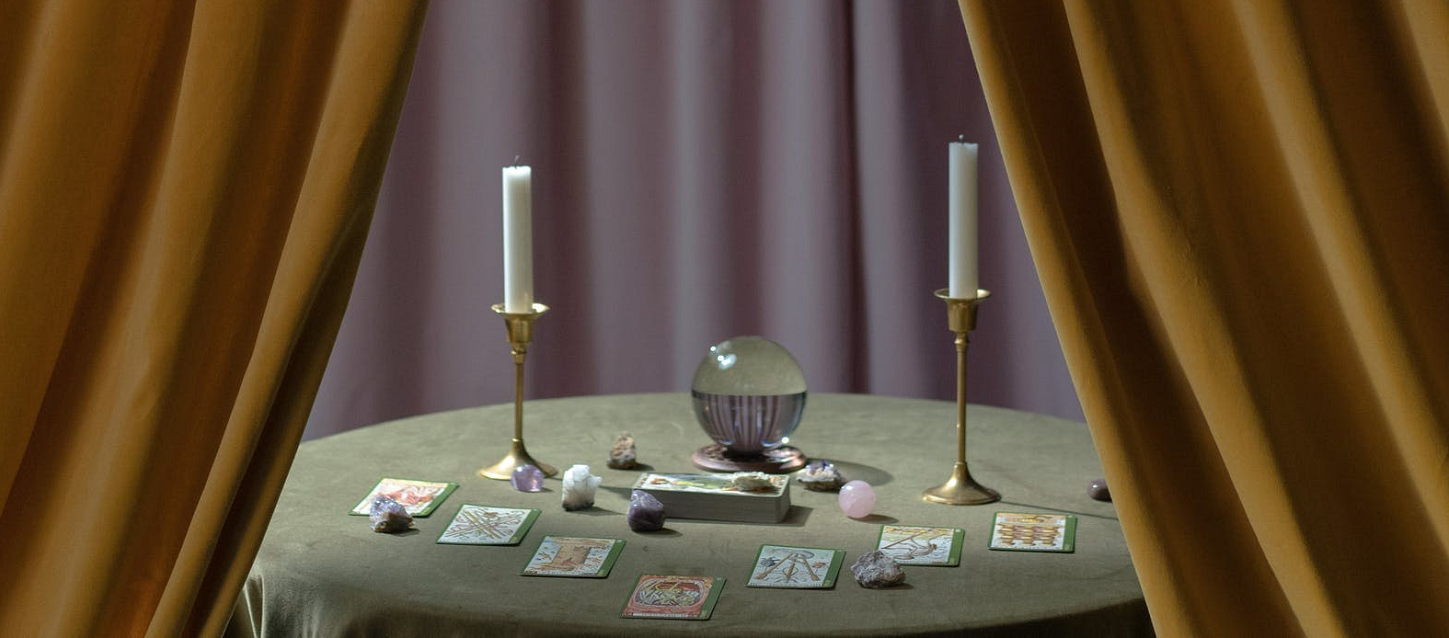
    I ended up photographing 40 different items that were appropriate for the setting, like an hourglass, a Venetian mask and a pearl necklace. I then edited the photographs to look like paintings and had the set of cards professionally printed.

    Interpreting

    I love making small-talk before a card reading, especially if I don’t know the other character. It gives you some hints on what to play with, much like actual fortune-tellers do. While drawing cards onto the table I’d attempt to watch the other person’s body language. It’s often hard for the person across from you to suppress their initial reaction to a card. Sometimes characters (and even players) would clearly display surprise, shock or excitement when you drew a card that they had strong feelings about.

    Once I laid out the cards I would always ask the other character for a quick interpretation. I’d ask them whether any cards stood out to them or whether they believed the spread was ‘’right’’ for them. They’d often start talking about topics relevant to them which then gave me very easy hooks to progress the conversation with.

    After that, I’d spend some time interpreting the card spread as a whole. Sometimes it would be very easy to make up a story on the go and sometimes I needed to check my booklet which contained example card spreads and interpretations of each card. I created the booklet primarily for my own peace of mind, so I could have consistent interpretations and always had something ready to go even when I was low on inspiration.

    I’d often intentionally fall quiet during interpretation, which meant that the other player would likely start to talk a little bit more about what they were seeing. I’d weave those verbal and physical cues into my story as well. As the game progressed card readings became easier to do, I knew quite a lot of the characters and had an idea of what made them tick, which made it easier to actually give them a relevant story.

    The magic of the game

    The cards ended up being way more popular during the game than I had initially expected. I thought that at most I would be doing one or two readings each time but people actually really loved the idea and requested seances and card readings constantly. This was partially due to the fact that the paranormal themes of the game were much more physically present in play than most players initially expected. Many characters struggled with feelings of uncertainty and anxiety about the “unknown factors” and were desperately seeking some sort of comfort and direction.

    As the story of the game unfolded I discovered that the items were much more suitable than I could have imagined. Some items on the cards turned out to be present in the game in their most literal sense. In one case there was a tiny boat that would lead us to an island in the middle of the lake – which we were forbidden from accessing. While determining our strategy for the upcoming days we kept drawing the card with the sailing boat and eventually, the characters decided they could no longer ignore their destiny and to just break the rules, so they did row to the island anyway.

    Even though it was, especially in such circumstances, sometimes hard to resist, I never forced a hand of cards or prepared a card layout. Part of the fun of playing with the cards was allowing myself to be surprised and challenging myself to spin an appropriate interpretation.

    There was even one reading where a player went to check with the organizers afterward. They were so surprised by the reading they were wondering whether I had read their (secret) background.

    Staying flexible

    One of the best parts about having my own cards meant that nobody knew the rules that applied to them. I decided early on to allow myself total creative freedom and whenever I had a fun idea I would just execute it.

    Throughout the game I’d whip out the cards for advice, like drawing a single card to determine whether something was a good idea or not. On one occasion a new character who seemed to have some shady business going on appeared. As we tried to figure out whether or not to trust them we drew a card. The card indicated they had noble intentions so we as characters decided to trust them completely.

    Or I’d ask people to just draw me a card and then analyze their personality based on that card. Characters who were close to my character became more familiar with the cards and their meaning and I would sometimes ask them to interpret for me or pick cards for specific situations. This led to a lot of play as I could constantly adjust the flow of the readings and adjust their length and severity to what I thought the game or the player needed or wanted on an out-game level.

    That freedom also became visible in the option to re-interpret cards on the fly. In one case my character decided that a card with a pearl necklace stood for monetary riches as the character was a rich factory owner even though that was originally not a noted interpretation. My character lied about the meaning of the card as she believed that it was what the man whom she feared greatly wanted to hear. It led to a much more consistent story as a whole and a character (and player) who was convinced that I had stacked the deck to get a specific outcome.

    Looking back on the game now and the role the cards played in shaping the journey of not only my own character but also that of those around her, I dare to say there was definitely “magic” in play. Some of it was created by us as the players as we read the stories in the cards but a large part of it was more serendipitous. We wouldn’t have the stories we have now about crazy adventures in boats fueled by a random card draw if we hadn’t opened ourselves up to that.


    Cover photo: Image by cottonbro on Pexels. Photo has been cropped.

    This article is published in the companion book Book of Magic: Vibrant Fragments of Larp Practices and is published here with permission. Please cite this text as:

    Mutsaers, Susan, and René van den Berg. “Let Me Look into Your Future.” In Book of Magic: Vibrant Fragments of Larp Practices, edited by Kari Kvittingen Djukastein, Marcus Irgens, Nadja Lipsyc, and Lars Kristian Løveng Sunde. Oslo, Norway: Knutepunkt, 2021.