Month: November 2021

  • Atypical: Journeys of Neurodivergent Larpers

    Published on

    in

    Atypical: Journeys of Neurodivergent Larpers

    Being neurodivergent often means walking into the world with misunderstanding as a certainty. Everyone expects you to respect and abide by rules unstated and unknown to you. As an autistic person, larp has brought me places where the rules are shared and I can have the same language as others. And for someone who didn’t have a voice for so long, being able to communicate, feel, and create with others is more than just a little magic.

    Through a series of testimonies illustrated by drawings we hope to raise awareness and bring acceptance in our larp communities on the difficulties encountered by the neurodivergent players both in life and in play. Here we have chosen to focus on people who have been diagnosed with ASD and/or ADHD. 

    While all neurodivergent experiences are different, you might find these testimonies are quite similar to each other. These correspondences demonstrate our deep similarities, the needs and traits that must be highlighted for neurotypical players and organizers to reach understanding and recognition of their neurodivergent counterparts. I’m also aware that those testimonies are personal statements that don’t account for all of neurodivergent players’ ways to relate and feel toward the larp experience.

    What is the core of the neurodivergent players’s experience of larp?

    What can we learn from each other?

    What can we teach to neurotypical players and organizers? 

    What do we need from them?

    drawing of a person imagining different kinds of shoes

    Finding Magic in the Dark

    LolV Peregrin

    The autism spectrum encompasses a range of neurodevelopmental conditions, generally known as autism spectrum disorders (ASD). Individuals on the autistic spectrum experience difficulties with social communication and interaction and also exhibit restricted, repetitive patterns of behavior, interests, or activities.

    –Wikipedia, “Autism Spectrum”

    I grew up difficult. I was a difficult child and a difficult teenager.
    The world was a maze. I felt I was the only one without a map.
    Everyone seems to have figured their way out.
    So I built my own world, full of all the things I liked.
    I had an interest in magic, spells, witches. A specific one.
    I’ve been labeled unhinged and crazy.
    Because
    I thought animals were better than people,
    I walked bare feets,
    My face was strange,

    Because I looked for magic.

    I felt too much, or not enough.
    I am autistic, not a puzzle, therefore I can’t fit or be solved.

    I hate unpredictability,
    I wanted to be in control somehow, to understand what was happening.

    To switch the narrative.
    To find magic, dreamt and remembered.

    My strong emotions,
    my intense personality,
    my ability to mask and interpret roles constantly:
    It made larp the perfect environment for me.

    A place where while we all wear masks I could finally forsake mine.

    Role-play and Larp have brought me places where the rules are shared
    and I can have the same language as others. Finally.

    And for someone who didn’t have a voice for so long, being able to communicate, feel
    and create with others is more than just a little magic.

    drawing of person in superhero costume with ADHD on their helmet

    My ADHD

    Charlie Haldén

    I instantly think of how my ADHD partly turns into something that makes me great at larping — that larp is a world that my brain is perfectly suited to (in ways), and how that is magic. My impulsive traits, spontaneity, the superpower of being totally in the moment – stuff that can make life outside difficult but fits perfectly with larp.

    Always Playing a Role

    Lea Elias

    Many people on the autism spectrum feel obliged to pretend not to have autism. They invest considerable effort daily in monitoring and modifying their behavior to conform to conventions of non-autistic social behavior. This phenomenon has come to be called masking, compensation and pretending to be normal. Masking is exactly what it sounds like, simply putting on a metaphorical mask. In many cases of the autism spectrum, that mask is a neurotypical (“normal”) one. It is when someone on the spectrum either consciously or subconsciously hides the telltale signs they are on the autism spectrum.

    — Bahar Ateş, “Masking in Autism: Social Camouflaging”((Ateş, Bahar, “Masking in Autism: Social Camouflaging,” Good Autism School, last retrieved April 17. 2021 from https://goodautismschool.com/autism-masking/ ))

    drawing of a chameleon

    As an autistic person, I am, in a way, always playing a role.

    It’s an experience not unique to people on the autism spectrum, but I’ve never met a neurotypical person who understood just how tiring it is to be born into a world where the way you express yourself is completely nonsensical to other people.

    And vice versa, that the way other people express themselves, through tone, body language, and facial expressions, makes no sense to you, while pretty much everyone else appears to have an instinctual understanding of what the hell is going on. 

    To survive in that world, you need to become very adept at studying and copying the behavior of other people. In order to appear acceptable, I’ve developed into a chameleon; In seconds I can change my tone of voice, sense of humor, dialect, mannerisms et cetera.

    While tiring in my day-to-day life, it’s proved very useful in larps, and I’ll often joke that the main difference between real life and larp is for me that having a character sheet makes the process of figuring out what role I’m expected to play much simpler.

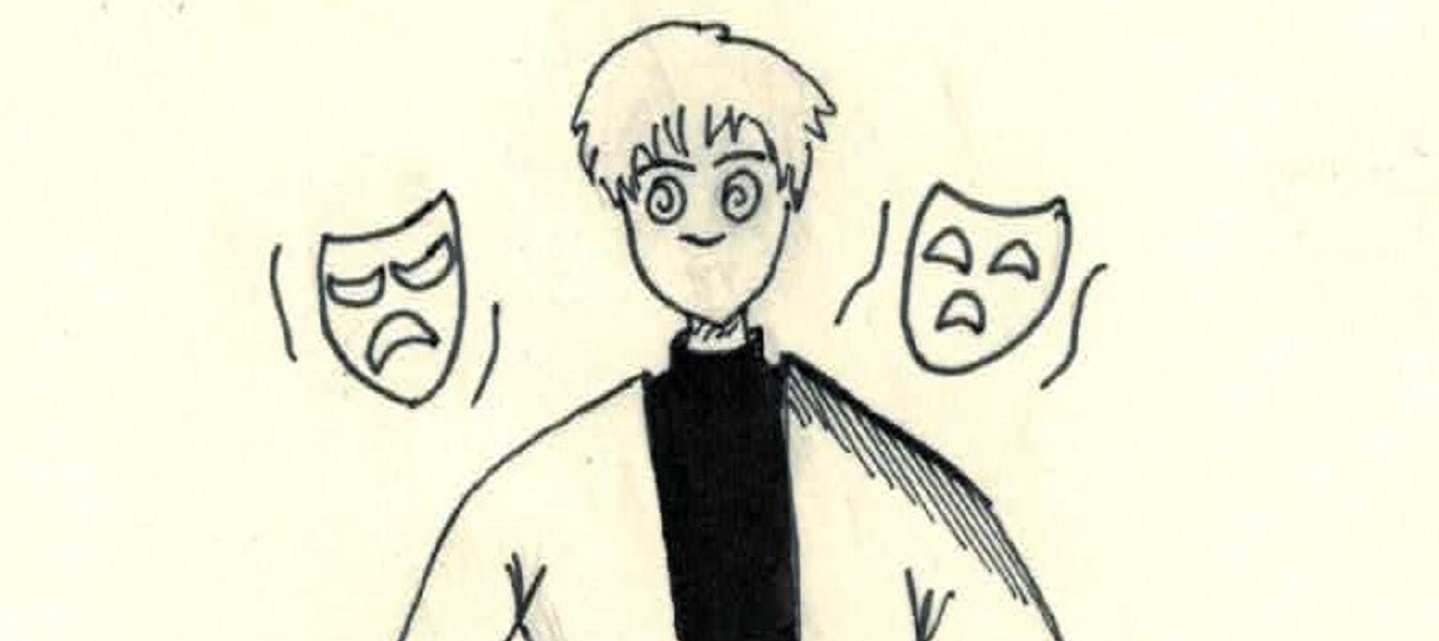
    drawing of person surrounded by masks and holding a mask

    Many Differences…

    Cecilia Dolk

    There are many differences between people that are on the spectrum, just as we are all different human beings. What is a struggle for me can be something that another person the spectrum has no problem with – at all. 

    As a producer and being diagnosed as an adult with both ADHD and autism, I finally can understand why some parts of producing feels natural and easy for me. It also makes so much more sense why I feel so much more comfortable visiting and participating in a larp and then going to a dinner party, birthday party, or just traveling to a new place.

    Why, you may wonder?

    The rules and expectations are equal within a larp since I don’t have an autopilot when it comes to social rules or boundaries, a larp setting – before – during, and after – is giving me the opportunity to participate on the same starting point as a person that is not on the spectrum.

    photo of a person surrounded by rainbow colors and the words: language, motor skills, perception, executive function, and sensory
    Photo by Rebecca Burgess of Autism Spectrum.

    To explain how my mind may be a bit different than yours, I don’t think in words, I think in pictures. My mind is like “google for images” and I attend to details – I mean all the details. Let me give you an example – If someone asks you to think of a shoe, your mind thinks of a generic one. Instead, my mind thinks of specific ones, one at a time or as a video that shows stuff on YouTube.

    When it comes to new information and making decisions, my mind is like an international airport but I don’t have a staff running it. I have to manually do everything on my own, while for most other people it’s on autopilot. This happens so quickly in my mind and it makes me exhausted quickly and suddenly sometimes when I’m in a new situation. 

    I also feel sounds, I feel structures, but it isn’t scary or uncomfortable it can just be too much.


    So, now you know a little bit of how my mind works, and many of these traits make me a kick ass as a producer – mostly because I remember details and not making assumptions on things. I run all different versions of the outcomes in my mind while I even may be talking to someone! 

    I can see and feel a budget work or not in my mind, logistics, and timetables – it’s like it’s there on my own internal whiteboard.

    drawing of person with many objects in front of them

    There is something that you can help your fellow larper with if they are on the spectrum, this is things that help everyone but for me, it’s the thing that decides on how much energy I will have during the larp. These things are often the difference for me on how much I can participate until I’m crashing and need to rest.

    • Clear schedules – with times and what will happen during that time.
    • Clear expectations – what do I need to do and when.
    • Pictures and signs – an emoji next to a text can help our minds so much!
    • Knowledge beforehand – show pictures of the venue and describe where I will have my sleeping quarters. 

    Also — sometimes it’s more comfortable being NPCs just because we get a clear picture of the run time schedule! Take that in consideration if you can offer that to some people before the game

    • A place to recharge if the sleeping quarters are being in-game at all times.
    • A clear structure of the website and if there is much information to read, it’s not a bad thing to have someone do an audio recording or be there to read it with a person. I know it’s much to ask – but maybe a volunteer can help with that and make it accessible for more people to join. 
    • Friendly reminders – if you have a deadline coming up and ask if they need any help!
    • Be clear with changes before, during, and after, over explain is better than vague.
    • Arrange someone in the coordination staff that can be a safe person and/or a person to ask questions that is focused to help people on the spectrum. It’s helped me tremendously to have someone that understands since the stigma and misunderstanding are making us mask and try to fit in.
    • Ask – ask – ask. Ask us if you can do something to help, but also be clear that we may say “no”.If you do not have knowledge of how to adapt and create more accessible – ask for help – we will be so grateful to contribute knowledge that we have to create a better experience for us all.

    Bibliography

    Ateş, Bahar, “Masking in Autism: Social Camouflaging.” Good Autism School. Last retrieved April 17, 2021. 

    Wikipedia. “Autism Spectrum.” Last retrieved February 21, 2021.

  • More Than A Few Funny Words: Designing Magic Systems That Convey Challenge & Rigour

    Published on

    in

    More Than A Few Funny Words: Designing Magic Systems That Convey Challenge & Rigour

    Introduction: A Difficult & Demanding Magic

    In a sense, representing “magic” in larp is an exercise in futility. How does one imbue the principle of “live action” to a phenomenon that, by its very definition, breaks the laws of nature? Barring expensive special effects technology, such reality-bending is difficult to reify.

    As such, most larps treat magic not as something to simulate with photorealistic accuracy, but as an aesthetic; the concern becomes one of transmitting the feel of performing and witnessing magic. As Salen and Zimmerman write in Rules of Play, “It is possible to say that the players of a game are “immersed”—immersed in meaning…this kind of immersion is quite different from…sensory transport…”((Zimmerman, Erik and K. Sale, Katie, “Chapter 27: Games as the Play of Simulation,” in Rules of Play: Game Design Fundamentals, MIT Press, 2003.))

    Complicating matters is that there is no unified definition or even sense of the word “magic”, no agreement of what this “feel” is. Is it mysterious and miraculous, such as the great spells of Merlin and Morgan Le Fay? Is magic methodical, empirical, and academic, such as the scholarly magic of Susanna Clarke’s novel Jonathan Strange and Mr Norrell? Is it something even more bizarre, such as the highly specific abilities granted by swallowing minute quantities of metal alloys, such as in Brian Sanderson’s Mistborn books?

    As a result, when “magic” is included in a larp, it is necessarily coloured by the designer’s vision of what is “magical”. For instance, Susanne Vejdemo introduces a method of creating “cool magicky-feeling rituals”,((Vejdemo, Susanne, “Group Improvisation of Larp Rituals,” Nordiclarp.org, 27 February 2018.)) but this magic has a distinct aesthetic: group based, energetic, and involving mysterious, otherworldly forces. By contrast, New World Magischola (2016-2020) features a freeform system of magic that players can take in many different directions, from labour-intensive to potions, to quick, comedic hexes, to dark and deadly rituals.((Bowman, Sarah Lynne, “When Trends Converge – The New World Magischola Revolution,” NordicLarp.org, 4 July 2016.))

    Larps such as New World Magischola and College of Wizardry (2014-) embody a particular sub-genre of fantasy: that of the “school of magic.” Genre tropes include elements typical to an academic environment applied to the study of magic: rigorous homework, difficult tests, complex projects requiring long hours in the library, and the like. Designers of these types of games typically envision magic as challenging, necessitating years of study and practice. Unlike the wonders of myths and legends, this magic is learnable, masterable, theorizable, and debatable.

    While the aim of such larps is to convey a scholarly atmosphere, this is rarely achieved via the systems of magic employed in the games. Rather, the larps rely on character interactions, lore, set dressing, and other elements to communicate that, yes, magic is difficult and demanding. Players perform challenges, and reinforce each other’s performance through the process of what Mike Pohjola calls “inter-immersion”((Pohjola, Mike, “Autonomous Identities,” in The Foundation Stone of Nordic Larp, Knutpunkt, 2014, pp. 113-126.)): players communicate to each other through their actions and words that magic is arduous business, and thus it is so. The game system contributes little in this regard.

    Indeed, the works that provide inspiration for these larps themselves rarely spend little narrative real-estate contending with the academic nature of magic at a system level. Even in a sprawling set of books such as J.K. Rowling’s Harry Potter series, we witness students of magic spending endless hours on homework and study, only to cast magical spells by muttering a few words and waving a wand. We’re rarely given a glimpse into what the study is and why it’s required.

    There is power in attempting to communicate the desired aesthetic via procedure and mechanics. As Hunicke, Leblanc, and Zubek theorize, “aesthetics set the tone, which is born out in observable dynamics and eventually, operable mechanics.”((Hunicke, Robin, LeBlanc, Marc, & Zubek, Robert “MDA : A Formal Approach to Game Design and Game Research,” in Proceedings of the Challenges in Games AI Workshop, Nineteenth National Conference of Artificial Intelligence, 2004.)) A larpwright can use the very system of magic itself to evoke many of the aesthetics noted above.

    In this essay, I outline a method of creating a system of magic that can achieve many of the desired aesthetics of complexity, challenge, and scholarship. Since our concern is one of process, I attempt to make my argument by building a hypothetical system of magic. I then use a real-world case study to demonstrate how such a system can function within an actual game.

    Assumptions

    To begin with, we must assume that the larp we’re working with desires to achieve the feeling of “difficult magic”, and that magic plays a big role in the larp. For simplicity’s sake, since the genre is familiar to many, let’s assume we’re designing a “magic school” larp, where the majority of players are students attempting to master the supernatural. Our aim is for magic to feel academic and complicated, and to make students work to cast spells.

    As an initial, base system, let’s say that players can cast whatever spell comes to mind: they simply have to verbally indicate what they’re attempting to do, wave their hands in a vaguely mystical gesture, and voilà, the game assumes that magic occurs.

    It is immediately apparent that this very freeform system, while appropriate for some games, does not fit our task of reinforcing the academic aesthetic of magic at a systems level. Let’s start by making magic a little bit harder.

    Player Effort

    “Any slight error in the movement or in the incantation would weaken, negate, or pervert the spell.”

    — Lev Grossman, The Magicians

    The first step might be to ensure that players have to voice a specific “magic word” or incantation to produce a magical effect:

    >>Yelling the word “Fire” produces in-game flames

    This is a start. However, in order to evoke a feeling of real challenge, we can modify our magic system to make players apply non-trivial, analytical effort in order to cast a spell. Effort is non-trivial if the player can simply perform magic without any thought. Yelling a desired effect out in English is a fairly trivial bit of effort.

    On the other hand, if one needed to memorize the word for “fire” in Sanskrit, this would constitute non-trivial effort:

    >>Yelling the word “Agni” produces in-game flames.

    Effort might be analytical if it is not wholly creative, and requires some degree of analysis. If a spell asks a player to recite a lyrical description of its effect, this effort is non-trivial (but in this case, not very analytical):

    >>Reciting “Flames of the earth, rise to my call, obey the heat of my command!” produces flames.

    If on the other hand, the player must yell out the first and last letter of the force they are conjuring, this effort is analytical, but probably fairly trivial:

    >>Crying out the letters “F E” produced a flame.

    The combination of the two properties, non-triviality and analysis, results in magic that feels challenging and logical (and thus, worthy of traditional academic study). A designer can produce a system that is both non-trivial and analytical in a variety of ways. For example, this effect could be achieved by using a set invented set of words to represent verbs and nouns, out of which players must select a combination. Let us say that the designer has put forth the words “Creatarus” , “Desctrucio”, “Fireflammus”, and “Glaciola” to stand in for spells that “create” or “destroy” “fire” or “ice” respectively. Now, a player will have to take a moment to remember and then select the right two-word combination for the situation at hand:

    >>Thinking about the desired outcome to “create” an affect which is related to “fire”, the player intones “Creatarus Fireflammus” to produce in-game flames

    This process of recalling the right words is non-trivial, while that of selecting the correct words for their current task is analytical.

    While workable, this “list of magic words” system lacks depth. If all magic were about studying and combining two words, then in order to become a skilled practitioner a single hour’s worth of lecture, followed by solo memorization for however long it takes would probably suffice. There would be no need for a complete course of study; a well-stocked “name library” would be enough. What this system needs is a more complex set of operations.

    Rulesets & Operations

    “Words are powerful. And they become more powerful the more that they’re said and read and written, in specific, consistent combinations.”

    — Rainbow Rowell, Carry On

    An entire magic system consisting of memorizing word lists would likely be rather dull in an academic setting (and probably a game setting). The challenge of “which word should I use?” would quickly lose its shine. To spice up this system, a designer can add more complex operations to their existing rules.

    For instance, we can add complexity by bringing in other parts of a player’s physicality. In our current system, let’s add gestural components to our spells:

    >> To create flames using “Creatarus Fireflammus”, the player must make a pointing gesture with their hands,

    >> To extinguish flames using “Destrucio Fireflammus”, players must form a fist.

    The addition of the gestural components to spells adds complexity; yet, this isn’t significantly better than the magic words. While the physical element adds interest, the player is now simply memorizing gestures in addition to words. If instead, the gestural act is added to the spell based on a formal, internally consistent rule, we have an “operation”.

    Let’s modify our ruleset. Let’s say, when casting any spell on an inanimate object, the player must make a pointing gesture, while when casting any spell of creation on a living target, the player must make a fist. So:

    >> “Creatarus Glaciola” while pointing can be used to freeze a glass of water.

    >> “Creatarus Glaciola” while making a fist might be used to deep-freeze an animal specimen for later study.

    Here each time the player casts a spell, they must analyse the intended effect, and modify their spell in order to satisfy the rules of magic. While this system still relies on memory, it now also includes a pattern. By linking the kind of gesture to the target of the spell, we’ve succeeded in adding a more complex, internally consistent practice based on a rule, giving us an “operation”.

    This serves to flesh out our magic system. Additionally, and crucially, this system still allows for player creativity. If, as designers, we’ve created a sufficiently robust ruleset with a broad vocabulary of possible actions, then we’ve likely left room for players to create their own permutations, to try novel forms that designers haven’t accounted for. Of course, this might be a big “if”, one we’ll tackle later in this essay.

    We now have processes and rules of magic which must be learned, practised, and internalised. Players should feel that magic can be studied, or even mastered. As a next step, we can attempt to provide this system of magic with a more theoretical feel, offering room for (in-fiction) scholarly articles and careful experimentation, for debate and discourse.

    Lore, Terminology & Style

    “There are threads to the One Power, and each person who can channel the One Power can usually grasp some threads better than others. These threads are named according to the sort of things that can be done using them—Earth, Air, Fire, Water, and Spirit—and are called the Five Powers… While Spirit was found equally in men and in women, great ability with Earth and/or Fire was found much more often among men, with Water and/or Air among women.”

    — Robert Jordan, The Eye of the World

    It is an undisputed fact that larps make use of lore, backstory and scenic design in order to reinforce desirable themes and aesthetics. Such a principle can be applied on a micro level to our system of magic. A larpwright can make their magic more memorable by creating their own terminology or by inventing fictional reasoning behind their operations and rulesets.

    For instance, in the system we’ve been working with, one might ask, “Why are different gestures needed for different classes of targets?” Is it because a different geometry of energy flow is required to engage with a living system? Is it because magic was invented by the gods, whose very gestures changed the world? Or is it merely a mental construct that allows the mind to focus its energies differently? Indeed, posing such questions but keeping the answers somewhat open-ended might stimulate interesting in-game discussions and exciting play.

    The way in which we teach players how to use our magical system is an area ripe for such fictional adornment. Many larps find it simple and practical to teach game system to players would be to instruct them during a pre-game, out-of-character workshop. Providing them with the incantations, rules, and time to practice casting spells, allow most players to begin grasping the basics of the system. By contrast, one can imagine a more “immersive” way of teaching the system: instruction in-character.

    Instead of a pre-game workshop on magic, perhaps a professor, or mentor figure can tell player-characters about the principle of using incantations, about the rules of gestures, and how to use them, and have them practice their spells with each other. Allowing players to take notes and ask questions might further involve them in the learning processing, enhancing not only the atmosphere of academia, but improving their ability to recall the rules of magic.

    Taking this a step further, we can integrate the setting and lore of the world at the systems-level. Perhaps, in addition to learning from a teacher figure, players must search through and cross-reference various scrolls to learn what the incantation for “fire” is, mimicking the real process of research. Perhaps, there are disputed theories about which hand is best for performing magical gestures, and both theories are presented to players in their “reading”; players can then perform an empirical “test” to creatively “discover” which method works best for their characters. They may even have to interact with other characters to gain access to these scrolls, and to practice rooms to try their experiments. While neither of these examples are particularly novel, they represent ways in which players’ actions directly affect their ability to engage with the game’s magic system. An inventive game designer could dream up even more interesting ways players can learn about magic, perhaps leaving some room for player creativity, as we shall discuss below.

    Thus, the process of learning and performing magic becomes intrinsically tied to the players’ stories, not just because the players decide that it’s the direction they want the characters to go, but because the system itself prohibits them from performing magic until they complete these tasks.

    The manner in which the information is presented can also do much to enforce the setting and tone. Burying incantation across multiple academic papers with titles such as “Ignis & Agni: Towards a Unified Theory of Thermal Manipulation”, papers which must then be accessed from an in-game library, would contribute to a stuffy, academic tone. By contrast, hiding the incantation within the illuminated marginalia of a lavish scroll recounting the story of “Ye Deʃtructionne of Ye Greate Dragonne” might be suitable for an epic fantasy quest. In both cases, the presentation of the information about the system of magic and the manner in which it is accessed have been leveraged for play.

    Leaving Room for Gaps

    “Great mages have wasted their lives trying to get at the root of magic. It is a futile pursuit, not much fun and occasionally quite hazardous.”

    Lev Grossman, The Magicians

    It is possible to over-define the rules for magic, to create a complete, ironclad system that leaves no room for interpretation. This is useful if we are preoccupied with the puzzle-like nature of magic, with questions of correct and incorrect.

    Most larps, however, are more concerned with creating interesting play than in verifying correctness of magic. While rules and systems can help immerse players in specific moods and aesthetics, we might want to leave gaps in our system. Perhaps not every possibility is explored, or maybe there are ambiguities within the system itself.

    If there exists an ongoing debate about which hand to use when forming magical gestures, for instance, enterprising players can explore this debate as part of play, and colour their own spellcasting with the questions posed. As another example, reference books might describe the incantation “Fireflammus” as “pertaining to the movement of excessive heat”. A creative player could use this ambiguity to invent an analogue to our ice spell “Glaciola”, using “Fireflammus” to siphon away from an object and freeze it solid. In a collegiate game, such an activity might even become the topic of one’s homework assignment, or dissertation.

    Creating space for players to propose their own theories of magic and have them validated by fellow players or facilitators might make for a powerful motivator for immersive play. A thesis defence, a grand tournament of magic, or a midnight “show-&-tell gathering” witches might be ideal scenarios for such experiments.

    A gap in our magic system allows player ingenuity to emerge, and permits a deeper exploration of the system and the narrative. As Frank Lantz declared in his talk on the Immersive Fallacy, no doubt foreshadowing our present context, “This gap is where the magic happens.” [6]

    A Question of Player Skill

    “A rock is a good thing, too, you know. If the Isles of Earthsea were all made of diamond, we’d lead a hard life here. Enjoy the illusions, lad, and let the rocks be rocks.”

    — Ursula K. Le Guin, A Wizard of Earthsea

    In our quest to create a magic that feels rigorous and academic, we have devised the rudiments of a system where players’ fictional actions (researching, studying, and casting spells) and their real world activities (researching, studying, and performing gestures and sounds) are closely mapped. Where mundane effort is used to simulate its magical analogue is where we begin to see an issue of inclusivity.

    This system clearly favours players with certain skills over others. Those practiced with logical thinking, data analysis, and puzzle-solving will likely find the system of magic easier to grasp. If the aim of the larp is to provide a fantasy of academic magical rigour to those who are inexperienced with such academic tasks, skills other than these must also be valued in the larp.

    The role of creativity, of filling out the “gaps” in the system of magic might be emphasized, giving players more options to invent their own magical acts within the existing framework. There could be many ways of doing this, from those that are more “cosmetic”—asking players to name certain acts, or invent parts of the lore—to those that are more “systemic”—inviting players to invent their symbols or rules that pertain to casting spells.

    Alternatively, the game designers could encourage the cooperative discovery and performance of magic at the systems level. Perhaps many people are needed to actually carry out the research for a spell, since parts of it are scattered throughout many sources. This would work even better if these sources required different sources of interaction; maybe the research of a spell requires someone to look through a text, another player to recognize patterns in an image, and a third to ask a mentor a question. Moreover, the casting of a spell could itself be a cooperative act, requiring multiple individuals to carry out different, simultaneous tasks. Such design decisions might go a long way in making the larp, and it’s magic, accessible to a wider audience.

    Using Real World Symbolic Systems: A Case Study

    Earlier on, we considered the prospect of designing a magic system that is “sufficiently robust”. Obviously, designing a complete, complex, analytical, rule-based, and story-rich system is challenging. One method is to rely on real-world analytical or symbolic systems. A designer can select an ordered system such as the Periodic Table of Elements, the geometric properties of regular polygons, or a computer programming language, upon which to base a magic system.

    The advantages of using such a system are potent: such systems contain built-in complexity suitable for analysis, consistent rules and operations will not have to be devised from scratch, and terminology (and perhaps even areas of ambiguity) that can be borrowed from the real-world discipline of study. Additionally, the players might come away from the larp with real-world knowledge. While the effort spent engaging with a game system might in of itself constitute a pleasurable act needing no justification or “end goal” outside the game (an anti-capitalist concept vehemently put forth by designers such as Paolo Pedercini),((Pedercini, Paolo, “Videogames and the Spirit of Capitalism,” Molleindustira, 2014. [Online]. Available: https://www.molleindustria.org/blog/videogames-and-the-spirit-of-capitalism/.)) it might be comforting to some players that their outside the “magic circle” of the larp

    I will illustrate an example using as a case-study Basic Principles of Incantation by Sharang Biswas (myself, the author of this essay) and Max Seidman, an hour-long, playful, live-action experience first exhibited at the “Game Night #5” showcase at the Denny Gallery in Manhattan.((Biswas, Sharang, “Basic Principles of Incantation,” [Online]. Available: https://sharangbiswas.myportfolio.com/basic-principle-of-incantation.)) Since then, the piece has undergone numerous changes, and has been performed at Living Games 2018, as a fully produced interactive theatre piece for Sinking Ship Creations in 2019, as an online show for Mirrorworld Creations in 2020, and in other smaller venues.

    Note that while we, the designers, do not consider the piece to be a fully realized larp, the live action elements lend it a larp-like nature, and the conclusions from this analysis can be applied to many forms of games and interactive performance.

    In Basic Principles of Incantation, players take on the role of Victorian students in a tutoring session where they are to learn the basics of magic. In this game, magic is performed using very specific, calculated incantations, and the system of magic is based on real-world Linguistics, in particular, phonetics, phonology, and morphology.

    While detailing the complete system is impractical, a few points can be noted:

    1) Non-Trivial Effort: Part of the challenge of each incantation is the pronunciation. Consonants and vowel sounds from a variety of languages were included in spells, meaning that participants who primarily spoke English had to practice the words multiple times in order to sound them out correctly.

    text describing a magic spell

    2) Analytical Effort: Each incantation had a tripartite morphological structure. Key words needed to be appended with a prefix, suffix, or in-fix, depending on whether the spell to be cast was one of creation, destruction, or modification. These affixes had to additionally be chosen from printed tables, depending on external factors (such as the time of day, or month of the year etc.)


    text describing a magic spell

    3) Complex operation: Once affixes were chosen for a magic word, vowel or consonant shifts were made based both on external features and phonological rules. A table of vowel shifts (listing real-world tongue positions for various vowels) was provided, telling players exactly how to modify the vowels in their spell.

    text describing a magic spell

    4) Lore & Style: Magic was never referred to as “magic” but as the “Esoteric Arts”. Rules, tables, and words were all found in a specially written textbook, written in the style of a 19th century pamphlet, complete with theoretical chapters and footnotes with references. Players had to hunt through this book, cross-referencing tables, charts, and explanatory paragraphs with each other in order to arrive at their spells. This textbook was essential to maintaining the tone of the game. As Edward Mylechreest wrote in his review on No Proscenium:

    “Perusing the pages, I quickly feel completely out of my comfort zone. It is classic academia, with hard to understand wording and the feel of being lectured at by a 19th-century professor. It reads exactly like a historical tome, plucked out of a sorcerer’s library, and now sitting on my lap. I am immediately transformed into the role of student wizard, although perhaps I feel more like a Neville than Hermione.”((E. Mylechreest, “Getting All Magicked up in ‘Basic Principles of Incantation’ (Review),” No Proscenium, 23 October 2019. [Online]. Available: https://noproscenium.com/getting-all-magicked-up-in-basic-principles-of-incantation-review-f2e4e9e6755d.))

    5) Gaps Were Permitted: The role of infixes (as opposed to prefixes or suffixes) was only hinted at. Players were repeatedly told that the rules they were learning were “oversimplifications”, and that the true, complex rules were for advanced study. Questions were often met with the answer of “it depends”, and the instructor was able to fictionalize debates and theories of magic.

    Basic Principles of Incantation revealed a few more advantages of using the protocol outlined in this essay:

    a) Players were deeply engaged in group-play. Because magic took on a puzzle-like nature, players cooperated and built on each other’s answers and theories, often in-character. Even players who believed themselves to be less skilled in the puzzle-solving aspect of the game were drawn into the challenge and contributed to the team in different ways, such as searching the classroom for the relevant texts, listening to and transcribing the spells intoned, and writing out theories and possibilities on the blackboard.

    b) The volume of information in the text book created the illusion of a deep, fully realized world.

    c) Since the basis of the system was actual Linguistics, real-world skills and knowledge was taught: pronunciation and the classification of vowels and consonants, some basics of the International Phonetic Alphabet, a little morphology, and more.

    In summation, all these features created an atmosphere of studious focus, and a world where magic was challenging, slow, and, frankly, impractical as a solution to most problems. This was precisely the tone we, the designers, were aiming for.

    Next Steps

    This essay modelled a way in which a larp designer can infuse the practice of magic with an element of rigour and challenge. By calibrating the effort required for magic on behalf of the player, by constructing a system of internally consistent and appropriately complex rules, and by introducing suitable lore elements and story trappings, all while maintaining some degree of ambiguity for players to build upon, the larp wright can be confident that their game enforces their desired tone through the game mechanics themselves.

    Of course, much of this essay relies on a conjectured system: “If one were to…”, “Perhaps if we…” While a case study is presented, it is for a short, puzzle-like experience with only a light narrative, that relies on skilled facilitators to arbitrate the correctness of spells.

    For a full larp with narrative richness, much more thought and playtesting needs to go into a system of magic such as the example created using the ideas in this essay. Can such a system work without the eagle eye of an assiduous game master, allowing players to check themselves and each other on the correctness of their magic? Can we balance the time it takes to learn and cast a spell with the pacing of the game? Does our system remain engaging after a few hours of play? Do players become far more pre-occupied with puzzle solving with to the detriment of character interactions and narrative creation? When using the framework presented in this essay, these are questions a larpwright will need to address.

    Ultimately, my aim was not to present a “best” way to create a system of magic, but to provide aspiring designers with tools that can help them achieve a certain aesthetic, and inspire them to experiment with how magic is portrayed in their game.

    Bibliography

    Biswas, Sharang, “Basic Principles of Incantation,” [Online]. Available: https://sharangbiswas.myportfolio.com/basic-principle-of-incantation.

    Bowman, Sarah Lynne, “When Trends Converge – The New World Magischola Revolution,” Nordiclarp.org, 4 July 2016.

    Hunicke, Robin, LeBlanc, Marc, & Zubek, Robert “MDA : A Formal Approach to Game Design and Game Research,” in Proceedings of the Challenges in Games AI Workshop, Nineteenth National Conference of Artificial Intelligence, 2004.

    Lantz, Frank, Writer, The Immersive Fallacy. [Performance]. Game Developer’s Conference, 2005.

    Mylechreest, Edward, “Getting All Magicked up in ‘Basic Principles of Incantation’ (Review),” No Proscenium, 23 October 2019. [Online]. Available: https://noproscenium.com/getting-all-magicked-up-in-basic-principles-of-incantation-review-f2e4e9e6755d.

    Pedercini, Paolo, “Videogames and the Spirit of Capitalism,” Molleindustira, 2014. [Online]. Available: https://www.molleindustria.org/blog/videogames-and-the-spirit-of-capitalism/.

    Pohjola, Mike, “Autonomous Identities,” in The Foundation Stone of Nordic Larp, Knutpunkt, 2014, pp. 113-126.

    Vejdemo, Susanne, “Group Improvisation of Larp Rituals,” Nordiclarp.org, 27 February 2018.

    Zimmerman, Erik and K. Sale, Katie, “Chapter 27: Games as the Play of Simulation,” in Rules of Play: Game Design Fundamentals, MIT Press, 2003.


    Cover photo: Image by RODNAE Productions on Pexels. Photo has been cropped.

    This article is published in the companion book Book of Magic: Vibrant Fragments of Larp Practices and is published here with permission. Please cite this text as:

    Biswas, Sharang. “More Than A Few Funny Words: Designing Magic Systems That Convey Challenge & Rigour.” In Book of Magic: Vibrant Fragments of Larp Practices, edited by Kari Kvittingen Djukastein, Marcus Irgens, Nadja Lipsyc, and Lars Kristian Løveng Sunde. Oslo, Norway: Knutepunkt, 2021.

  • Tarot for Larpers

    Published on

    in

    Tarot for Larpers

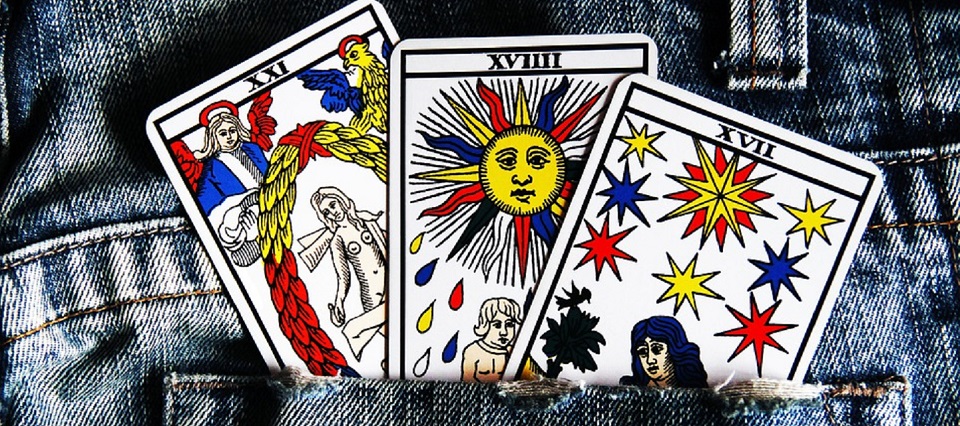
    The best prop I can have at a larp is a deck of tarot cards. They’re pretty; they’re powerful; they’re mystical. I love going to occult themed larps where they can be brought in for pretty much any reason, but if it makes sense for your character they can make sense in almost any larp. Tarot readings are great because they are fundamentally narrative in nature and shape themselves to any kind of situation. And the kind of skills a con artist uses in real life can be used to deepen and intensify the experiences of your co-players. So I’d like to give a little guide to getting started with tarot and how to make the most of it at a larp. The concepts can be used for pretty much any kind of divination, but tarot is just so dang evocative and iconic, it’s hard to beat if it’s an option. But if rune stones, animal entrails, or the I-Ching are a better fit for a given larp, the same basics go for them.

    On Magic

    There’s no actual magic in tarot cards beyond what we invest in them. They’re just an older form of regular playing cards that later got used by occultists, latter day witches and spiritualists as a tool or trick. But that doesn’t mean they can’t be used for powerful stuff. The names and images on them have been refined to touch on very strong universal themes in the human experience that we can tap into and they’re surrounded by a mystical story that we can use to make them more serious than they really are. Especially in a context like a larp, where we allow ourselves to believe in magic and the power in things just a little more. Tarot cards tap into the power of ritual in all the best ways on a scale that’s quick and easy to use in a larp setting. They’re fundamentally a narrative device, which is why they’re a perfect complement for role-playing. They tap into our subconscious and our brain provides patterns and explanations to make them speak meaningfully. There really is no magic, but when we allow ourselves to believe, there is.

    But let’s get started with the practical side of things.

    photos of anime tarot cards
    Photo by YAGO_MEDIA on Pixabay.

    Choosing your deck

    There are a ton of different tarot decks. You can get pretty much any kind, theme, and quality. It’s really all about finding one that speaks to you. And in the case of larp: one that fits into the fiction you’ll be playing in. I have two recommendations: The first is to go for the classic Rider-Waite-Smith or Universal Waite-Smith decks gorgeously illustrated by Pamela Colman Smith. It’s the one you’ve seen used a hundred times with the iconic pictures. It fits nicely into a wide range of time periods and people know exactly what it is. The iconography is quite evocative and pretty easy to work with. You hardly ever go wrong with a classic Rider-Waite-Smith. The second, and my personal favourite, is the Thoth Tarot designed by Aleister Crowley. It has a few twists on the classic deck and is more modern looking, but the cards are more abstractly expressive in the art and each comes with a label that drips drama. But if you go to the shop and find that the panda tarot deck really speaks to your next character, go for it. Just make sure the cards can inspire you when you use them. A good beginner trick is to ditch the Minor Arcana of Swords, Wands, Cups, and Pentacles and just focus on the Major Arcana with the big hitters like The Devil, The Tower, or The Lovers, until you are more comfortable with the cards.

    Setting the Mood

    Tarot really benefits from doing just a little bit of work on setting the mood before using them. Use a tablecloth; the cards are easier to pick up and it looks nicer. Light up a few candles; the flickering light will make the artwork come alive. And maybe place the deck on a nice plate rather than pulling it straight out of the pack. Be super obvious and ritualistic about how you shuffle them. Craft a little space where you, the cards, and the person you are reading them for are in tight focus. Tarot requires focus and a little drama to work their best. And get the recipient to contribute too: have them formulate a definite question they want inspiration for. Never offer clear answers, though. Just that you’ll help show them what lies ahead. Have them pick out a card to represent themselves if you have the time. If you’re the dramatic sort, a few invocations or ritual phrases might also be a good addition, but always play them as seriously as you can.

    Dialogue

    You can do a tarot reading like a show, talking all the way through the process while the recipient is just an audience member, but you’re much better off thinking of it as a dialogue. Both for their immersion and for making it easier on yourself. I like to get myself very calm, speaking slowly and as if I am teaching the person across from me to read the cards themselves, rather than as divine inspiration through me. I like to leave a bit of uncertainty and magic in just exactly how I know the things I say and how the cards reveal them. And I give the other person plenty of time and silence to think and react if they need it. Shape it to your own personal style, your character and the person you are reading for. It’s a one-on-one kind of show, so play into the strengths that it gives.

    photos of tarot cards on a burgundy background Photo by GerDuke on Pixabay.

    Cold Reading

    Con artists have two main techniques when doing these kinds of things out in the real world that you’ll find useful in larps as well: cold reading and hot reading. Cold reading is basically using the person you are talking to, to reveal things about themselves. It’s the same skill you’d use to guess which cards people have at the poker table, or when your friend is grinning ear to ear, but won’t tell who they kissed last night. With a little practice you’ll quickly notice which of your words impact them and which you need to skip past. Throw a lot of stuff out and see what sticks; they won’t likely remember the misses. See when their ears prick up, when their eyes become unfocused, or their attention zooms in. Try to shape moments where they’re the ones talking and you’re just confirming. The human brain is trash at remembering who said what, so odds are they’ll remember you telling them something they revealed themselves. It can be a little tricky to do while juggling the cards at first, but really fun when you get it working. There’s no reason to rush, so take your time to observe your audience.

    Hot Reading

    Hot reading is when you know things about the person they don’t know that you know about them. Con men will do a background check on their targets and then pretend angels told them, but in larp we can just read their character sheet beforehand or notice what kind of drama they’ve been in recently, or even have an offgame chat before the reading to lay out the themes. It’s where you can really help someone’s play by pushing them at choices their character has to make or realizations they’re just about to make. Bringing in characters they’re in conflict with or want to seduce. It’s a great steering tool or just a super fun way to mess with their heads. I like to leave most of it unspoken between us. I’ll hint at the thing, but never name it, to preserve the magical feeling. If I saw them have a big row with their brother earlier, I’ll start talking about how the cards mean family and the great price of loving someone, and see if they pick up on that. If they’re the ones making the realizations themselves, it’s often much more dramatic.

    Card Manipulation

    If you have the dexterity to pack the deck beforehand, you can choose which cards come up during the reading. It’s rarely subtle, but it can definitely be impactful. I personally have too many thumbs for it, so I can’t really give any practical tips; my skills are more in the area of making the most of the cards as they fall. That also keeps the magic alive a bit even after the larp is over, but that’s a matter of taste.

    Layouts

    You can do a tarot reading by just drawing a single card, but you get a lot of synergy out of having several in a layout on the table. Don’t go overboard; more cards aren’t better. The sweet spot is usually between three and five cards total. How you place them on the table is up to you. It’s a fun way to shape the dialogue beforehand. The classic is the Celtic Cross where you make a cross with the recipient’s chosen signifier in the middle and there’s a card for the past, the future, what’s working against them, and what’s helping, but you really can do any pattern. I like a Y-shape if someone is facing a choice or laying a wall if someone is up against a challenge. Or a circle if they want to know where they stand. It’s up to you. Just give each card position a clear metaphorical meaning when you lay down the card. I like to lay all the cards except the first out facedown in their place and then turn them over during the reading as needed.

    Tarot cards decorates witth stained glass spread over a colorful embroidered cloth
    Photo by MiraCosic on Pixabay.

    Layers of Meaning

    The last skill is the “actual” interpretation of the cards. This is where most beginners feel intimidated, but just remember that there is no right answer for any card. It’s all about how well it connects to the target. Just keep bringing forth meanings until you strike gold.

    Depending on the deck you have, there will be various amounts of things to work with on each, but every card will always have a couple of these:

    • What is the immediate feeling the card inspires?
    • What does the picture show? Who are the people in the picture to the recipient?
    • What is the colour of the card? What emotion does that bring out?
    • What is the value of the card?
    • What suit is the card?
    • What name does the card have?

    You don’t need to use all of them, just whatever seems to fit best in the situation. These are usually obvious enough to get started talking and seeing what the other person reacts to, if not try another aspect of the card and so on. If you have a hard time, leave it and go on to the next card; maybe the pattern will make more sense later. As more cards are revealed so does your recipient reveal things about themselves that might be brought back to previous cards.

    You can also invoke some of the structures behind most decks with a bit of practice. For example, the four suits usually align with the four elements:

    • Cups are Water, Pentacles are Earth, Swords are Air, and Wands are Fire.
    • Cups and Pentacles are usually feminine, while Swords and Wands are masculine.
    • Placement on the table matters; you can have axes of time, positives and negatives, good and evil.
    • All cards of course also always hold their own opposites within them.
    • Sometimes The Devil is in the details. It might really be the figure in the background the card is about.
    • There’s also often a structure to the values of the cards that you can play with. I won’t get into it here, but check out the Sefiroth of Kabbalistic tradition if you’re into mathematical magic.
    • Thematic decks can also have even more layers.

    But all of that isn’t necessary to get started. Just go with an intuitive reading with a strong dose of confidence and you’re good. In addition, tarot decks often also come with a booklet that details each card, but there’s really no need to memorize or buy books on tarot. In the end, it’s all a subjective artform and not an accurate science. If you’re feeling uncertain, try imagining a situation in play and draw a couple of cards and think of how you’d make them relevant to that situation as practice before play.

    Taror cards on a colorful cloth
    Photo by MiraCosic on Pixabay.

    Role-playing Opportunities

    Once you get comfortable with the basics, you can start to add layers on top. Maybe your character has an agenda and wants to twist the reading in a certain direction? Or they’re inspired by a demonic entity that loves sex, so the cards always points towards carnality? Or a theme of the larp is lost hope, so the readings tend to be cold on comfort. You can do a lot with the framing and what you emphasize in the cards to drive play in a fun direction. But all that’s for later. For now, just go get started.

    I hope this makes it less intimidating to pick up a deck and bring it to your next larp. It’s a super fun tool to have. Or if someone else has brought their deck, don’t be afraid to ask for a reading or for them to show you how it’s done; I’ve had a ton of great play moments teaching acolytes the art of the tarot. It really is what you make of it and tarot tends to pay back big dividends for the effort put into it.


    Cover photo: Photo by Jean-Didier on Pixabay.

  • Larping Before the Larp: The Magic of Preparatory Scenes

    Published on

    in

    Larping Before the Larp: The Magic of Preparatory Scenes

    This article is going to discuss a workshop tool: the use of short in-character larped scenes. These are scenes involving larp participants, in which they play their character. They take place during the pre-larp workshop, as a structured activity designed-in by the organizers, before the actual larp has started. They are being referred to here as ‘preparatory scenes’.

    What are preparatory scenes like?

    • A small number of characters are in the scene, often just two.
    • A scene usually lasts for maybe five or ten minutes.
    • Each participant might play just one such scene, or a series of them.
      • (If a series of scenes, then those might be with the same other participant(s), or with a mix of different people.)
    • The other participants might be watching, or they might be involved in scenes of their own, in parallel.
    • Usually these scenes don’t involve the scenography, and other immersive material, that will be used during the larp itself: maybe not even costume.
    • Usually they will happen towards the end of the workshop, so that their factual and emotional content is fresh in the minds of the participants as they start the larp.

    Note, this is considered as separate from ‘preplay’ – which is in-character activity that participants undertake together without direct supervision from organizers, usually according to their own preferred structure or in an open-ended way, often quite some time before the larp. While preplay may have some of the same purposes and effects as preparatory scenes, it’s not being covered here: Kyhn((Mia Kyhn, “Preplay,” What Do We Do When We Play? (2020). )) has a discussion.

    What types of preparatory scenes can be used?

    • Backstory – participants can play out part of their characters’ shared backstory together. Perhaps a key point, such as ‘our first date’, or ‘the time A saved B’s life’ – to establish exactly what happened, and who said what to who.((For example, at On Location, character relationships are outlined in their briefings in terms of events from the past. During the workshop, the players will play through these scenes, to find out and agree together what exactly happened.))
    • Relationship – participants can establish the details of how their characters are when with each other – this can be illustrative, such as ‘this is how we spend a typical day/meal/mission/murder together’.((At Just a Little Lovin’, the in-character ‘social groups’ eat a meal together, during the workshop. This helps them explore how they relate to each other as a group during a regular day-to-day activity.)) Or it might be exploratory: the characters meet in a cafe – what might they start chatting about?
    • Group dynamics – how does a group of linked characters function together? What are their dynamics of communication, of sharing space, of hierarchy, etc?((At De la Bête, characters live together in social groups of mixed status. During the workshop each group of participants designed and played out, with the other participants as audience, an extended scene that showed the group’s internal hierarchy and social dynamics.))
    • Reaction – how do the characters react (individually, and together) when placed into a particular situation? For example: if the two characters were seated together in a bus that came under gunfire, what would they say/do? When one of them finds a letter that the other has received from an ex-lover, what might happen? (This would usually be an imaginary episode; not drawn from their actual backstory – because its purpose is to explore ‘what if?’.)

    And they could be:

    • Emotional – intended to get into the insides of the relationship: how these characters feel about each other, and how those feelings are expressed. ((At Dawnstone, participants were encouraged to together identify and play out a backstory scene that explored or established a key emotional dynamic between them: that set the tone for how they would relate to each other emotionally during the larp.))
    • Physical – getting the feeling of interactions within the relationship into the participants’ bodies. How do the characters use touch, distance, height, movement?
    • Factual – making sure that the characters’ memories of the details of the event being depicted match each other.
    • Different ways of doing things – trying out a scene a few times in succession, with variations in content or expression – or varying the character portrayal from one part of the scene to the next.

    What’s the point of this?

    Calibration! Preparatory scenes are a great tool for developing a shared understanding among participants. Nielsen((Martin Nielsen. “Culture Calibration.” In Pre-Larp Workshops (2014). )) explains why calibration is such an important task prior to larping together. And this can be a very effective way to help achieve it.

    Calibration via preparatory scenes can be particularly valuable when participants themselves have had some responsibility for character (and even, world) creation.((In Brudpris, during the workshop the players determine the details of the culture that their characters inhabit, around a skeleton design: its rituals, behaviours, and the key ways in which families interact. It’s then valuable to play through some of these in pre-larp scenes)) They can show each other what they have created/added; and they can explore together what they have jointly decided.

    What might participants get from it?

    • The chance to try out different ways of playing their character, before having to commit to it in the actual larp.
    • The chance to agree key details of backstory with the other participants who are involved.
    • Feeling the backstory as lived, rather than just as text that they’ve read.
    • The chance to explore relationship dynamics, and tweak them if necessary, in collaboration with the players of the counterpart characters.
      • (Potentially, the chance to discuss with those people how the relationship might evolve, and what might happen between the two characters, during the larp – if the larp design permits this, and time hasn’t been allocated for it elsewhere in the workshop.)
    • The chance to develop trust and shared understanding with fellow-participants – particularly important with those with whom they’ll be playing closely.
    • A step towards emotional safety – from having had a ‘dry run’ of the relationship, and having set and tested boundaries.

    What might organizers get from it?

    • Participants on the same page – ensuring that they have covered the key things that are needed to be covered.
    • Participants sharing in creation of material – giving them the chance to bring their own creativity to the larp preparations as well as the larp itself, even when the characters are fully predesigned.
    • Participants energized – larping a scene is the best way of preparing minds and bodies for larping a larp. If preparatory scenes take place shortly before the start of the larp proper, they can help participants hit the ground running. (This is good for the participants themselves, too, of course.)
    • Participants feeling safer and more able to trust – because they have been able to explore their behaviour together in a much lower-pressure and lower-stakes framework than within the larp itself.

    There might also be other reasons or functions to use preparatory scenes. For instance, some participants might value having a ‘lived experience’ of the backstory, rather than it just being written in the character sheet. Or they might find that it helps them to physically embed memories as though they were their characters’. These psychological angles are beyond the scope of this article, but might repay some study.

    How are they organized?

    Organizers may just leave a time window for participants to decide and run their own preparatory scenes, but more usually there will be some sort of plan. Most efficiently, this will be a rota arrangement, telling each participant with whom they are to play a scene, when, and also where to do it (to save time trying to find an empty room/corner while everyone else is doing so too). The idea will generally be to play at least one scene with each of your character’s most important relationships: what kind of scene will depend upon the details of the backstory and of the connection that they have together. The Spanish organization Not Only Larp call this ‘speed-larping’, by analogy with speed-dating. One of their larps that used it is No Middle Ground.

    A participant’s schedule might look something like this:

    Timeslot 1: with character A, in location X, play out the scene when you first met and became friends.

    Timeslot 2: with characters B and C, in location Y, play out your drinks together last night that decided you to join this mission.

    Timeslot 3: take a break.

    Timeslot 4: with character D, in location Y, play a typical family holiday from your childhood together.

    Timeslot 5: with characters A and D, and player Q acting as an NPC, play the scene of your parent dying in hospital.

    … with more details given for what’s expected to happen in each scene, as required.

    (Breaks are sometimes needed if it’s not possible to occupy everyone in every timeslot, because of some scenes involving different numbers of people.)

    The transitions between timeslots will usually be signalled by ringing a bell, or something like that. That tells everyone to end the current scene, and move to the location where their next one will be happening.

    One approach used in Harem Son Saat was to use preparatory scenes as a transition into play: as the very last phase of the pre-larp workshop. It started with one-on-one and small-group scenes (from backstory), then progressed into three large groups segregated by gender (this segregation was an important aspect of play in the larp) containing the whole set of participants – and then the larp itself started. The larp designer, Muriel Algayres,((Muriel Algayres. Personal communication with the author. (2020). )) explains that the intention is to progress throughout the workshops to being more and more in-character, and then to move from in-character scenes directly into play so as to have the participants as ‘warm’ as possible.

    Of course, for this to work, everyone had to already be in costume, and the usual final-briefing notes had to have already been given. It won’t be appropriate for all larps, or for all participant groups. But it was effective at supporting Harem Son Saat’s theme of a community whose present is overshadowed by its history (open and secret) and by its customs and patterns of behaviour.

    So where does the magic part come in?

    Think of the traditional ‘magic circle’ model of play.((Katie Salen and Eric Zimmerman, Rules of Play: Game Design Fundamentals. (2004). )) In this model, preparation for the larp and other para-larp((‘Para-larp’ is that activity around the larp that is not the larp itself. See Johanna Koljonen, ‘Designing Your Thing, Their Experience and Our Culture’ (2016).)) activities take place outside the circle: then at the start of the larp, participants cross into the circle, and start play under the different rules of reality, etc, that apply there.

    Preparatory scenes are a way of bringing some of the magic out of the circle, into the pre-larp. They allow calibration activities to take place in-character, with all the benefits for remembering and feeling that can bring. They allow participants to try out ways of relating their characters to one another, without the commitment to consistency that will be required in-play.

    By using preparatory scenes, you can make the magic of larp fresher, stronger, and just all-round generally magicker.

    References

    Algayres, Muriel. Personal communication with the author. 2020.

    Koljonen, Johanna. “Designing your thing, their experience and our culture.” Nordic Larp Talks 2016, Oslo. YouTube, https://youtu.be/yKZAeVAVfoE?t=422

    Kyhn, Mia. “Preplay.” In What Do We Do When We Play?, edited by Eleanor Saitta, Johanna Koljonen, Jukka Särkijärvi, Anne Serup Grove, Pauliina Männistö, and Mia Makkonen. Helsinki: Solmukohta, 2020. https://nordiclarp.org/2020/12/24/preplay/

    Nielsen, Martin. “Culture Calibration in Pre-larp Workshops“. Nordiclarp.org, 2014. https://nordiclarp.org/2014/04/23/culture-calibration-in-pre-larp-workshops/

    Salen, Katie, and Eric Zimmerman. Rules of Play: Game Design Fundamentals. Cambridge, MA: The MIT Press, 2004.


    Cover photo: Image by Natalia Y on Pixabay. Photo has been cropped.

    This article is published in the companion book Book of Magic: Vibrant Fragments of Larp Practices and is published here with permission. Please cite this text as:

    Holkar, Mo. “Larping Before the Larp: The Magic of Preparatory Scenes.” In Book of Magic: Vibrant Fragments of Larp Practices, edited by Kari Kvittingen Djukastein, Marcus Irgens, Nadja Lipsyc, and Lars Kristian Løveng Sunde. Oslo, Norway: Knutepunkt, 2021.