Month: September 2019

  • Writing an Autobiographical Game

    Published on

    in

    Writing an Autobiographical Game

    An autobiographical game is a game that is based on the experiences of the designer(s). There is, of course, a lot of wiggle room in that description. A game that realistically depicts an event from the creator’s life moment to moment is an obvious example, but what about an abstract game that is emotionally true to the creator’s lived experience but not literally true? Does a game in which players fumble around a room in total darkness without speaking count as autobiographical, if the purpose is to experience something similar to the helplessness and frustration the designer felt when they experienced a loss?

    For the purposes of this piece I am going to talk about something that’s planted firmly in between the two. Specifically, I’m going to talk about designing an experience that explores autobiographical themes through metaphor while also incorporating characters that are based on real people. This goal is what I tried to achieve when writing The Truth About Eternity, my semi-live scenario for Fastaval this year.

    The Truth About Eternity (Davis 2019) is a scenario about a near future in which ancestor worship has taken the form of preserving the deceased in digital tombs. When a person dies, their family can upload an artificially intelligent copy of them to a server and then continue to visit them via virtual reality. The scenario explores the relationships between two digitized ancestors and their three living descendants, all who belong to different generations, as well as the financial and emotional strain that comes with maintaining these digital tombs. One of the major themes is the struggle of balancing familial responsibility and personal freedom. At its core, this scenario is about Korean family dynamics, eldercare, guilt, and grief. It’s also about whether artificially intelligent copies of human beings have souls, but that question is presented in the scenario as a way to further explore those core themes.

    While I clearly do not live in a world in which digital tombs of this nature exist, The Truth About Eternity is largely autobiographical. The three descendants, Esther, Helen, and Sam, are based on my grandmother, mother, and me. They are not carbon copies when it comes to the details, but I wrote them to be largely emotionally true to the three of us. The two ancestors, Jungwoo and Minji, are amalgams of various family members both living and deceased. Likewise, while some of the scenes are completely fictitious, many of them pull from real moments in my family’s history, some which I was present for and others which I heard about after, sometimes long after, they transpired.

    grandparents posing with granddaughter by trees
    Family photo of Clio Yun-su Davis and grandparents. Photo by Hoyun Kim.

    Why Write an Autobiographical Game?

    There’s a scene that makes its way into what feels like the vast majority of media revolving around ghosts. The protagonist somehow witnesses the trauma of the ghost through a vision or by investigating what happened to the deceased, and through witnessing the trauma they have either freed the ghost or have learned what must be done in order to do so. This trope is so prevalent that it’s hard to imagine there’s nothing to it in real life. There is something healing about having other people witness the most painful moments in your life because in sharing these moments you become less alone in them.

    What part of your life do you want other people to witness and experience, and why? If you’re thinking about writing an autobiographical game, it will likely help to have as specific of an answer to that question as possible. If I had gone into writing The Truth About Eternity with the goal of creating a game about my family rather than creating a game about the guilt and profound grief my family has contended with while taking care of my grandmother who has advanced dementia, I would likely not have gotten too far. In my experience, vague design goals often lead to less memorable experiences for players. I would rather play in a game about someone’s family dinner growing increasingly awkward because a will was recently read than a game about a family dinner that becomes awkward because the characters don’t like each other for unspecified reasons.

    Once you have determined what part of your life you would like other people to experience, even just for a snapshot, it’s a good idea to have some understanding of the “why” behind the design. There is a decent chance that your “why” will look like one or all of the following:

    • Because I want other people to understand this part of my life.
    • Because if other people experience this (in a controlled environment), I will feel less alone.
    • Because words are not enough to explain what I experienced.
    • Because I want to be witnessed.
    • Because other people have gone through something similar and I want them to know they aren’t alone.

    The Curse (Stark 2013), a scenario written by Lizzie Stark also for Fastaval, has a premise and family tree that both pull from the author’s own life while not exactly replicating it. The designer created the scenario partly as a means for giving others a glimpse into the challenges faced by those who have hereditary cancer in their family, and specifically cancer caused by a BRCA mutation. That is, at least in part, her “why.” Marshall Bradshaw, another American larper and designer, wrote his short semi-autobiographical larp A Political Body (Bradshaw 2018) in order to provide an opportunity for players to explore the struggle of having to choose between participating in a protest and staying home when a chronic illness flares up badly. The larp functions as a highly specific snapshot that depicts a much longer-term issue.

    The Truth About Eternity was the equivalent of the cursed video tape from Ringu (Nakada 1998) or The Ring (Verbinski 2002) for me. In these films, the ghost of a girl who was killed by being pushed down a well manifests her anger and pain as a video tape that kills the viewers after they watch it. The scenes shown in the video are mostly abstract, with shots that illustrate her trauma dispersed throughout. The video’s message is not a simple confessional of what happened, but a strange piece of art that conveys the creator’s suffering by inflicting suffering upon those who witness it.

    I was, and still am, this ball of guilt and sorrow due to my grandmother’s condition and the immense challenges that have come with taking care of her. It has been unbelievably hard to communicate the sheer magnitude of my grief through conversation or even in writing. Like the girl in the well (yes, I am running with this analogy), I had to create something else in order to make people understand the emotional component of my family’s situation. One of the goals of The Truth About Eternity is absolutely to make its players distraught. When I hear that players cried during a run, it feels like part of the weight of the situation has been lifted off me. It feels like an essential part of my existence has been seen by another person—finally—and just by being seen, some of the pain dissipates. Is it selfish to write a game for those purposes? It might be, if there weren’t a lot of players out there who specifically seek out games that try to rip their hearts out.

    There is a secondary reason for why I wrote The Truth About Eternity, and that is to help people who are unfamiliar with Korean culture and Confucianism to understand it a little better. The Wikipedia entry on Korean Confucianism serves as a good brief overview of some of the cultural information relevant to the scenario. As mentioned previously, this scenario was specifically written for Fastaval in Denmark. There are parts of it that would be different if I had written it for an American audience, and parts that would be very different had I written it specifically for Asian players intimately familiar with the culture.

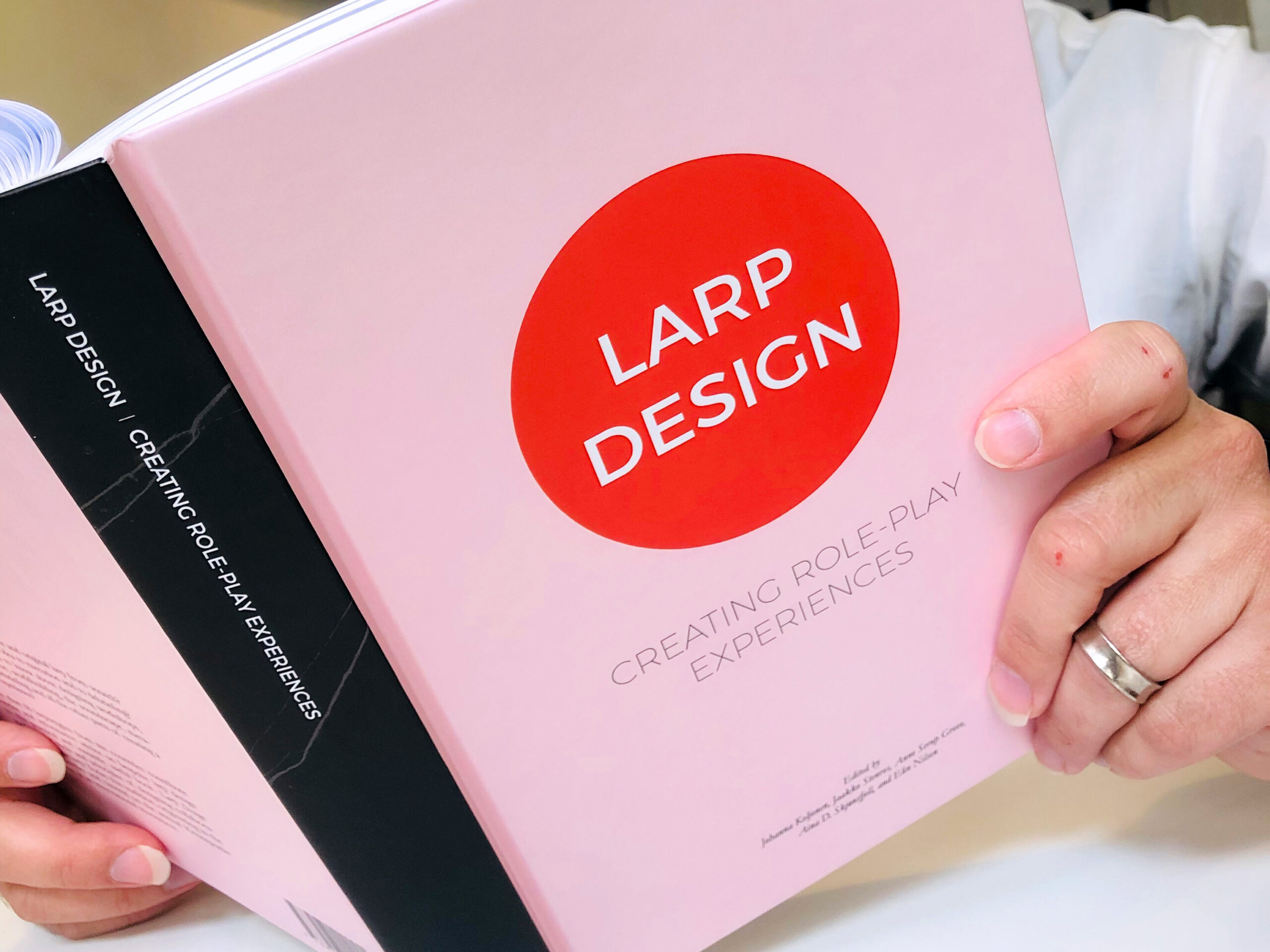
    Much of the workshopping at the beginning is in place to deter accidental (and potentially purposeful) microaggressions. Autobiographical games that depict a culture different from the one the majority of its players come from have this additional challenge, as you must provide cultural context for the life events inspiring the content. You also run the risk of participants interpreting the game’s message as “this is what is wrong with this culture and why it’s worse than others” even if the goal is supposed to be “here is a glimpse at some of the complexities of this culture.” This especially tends to happen when players enter a game with existing assumptions about said culture gleaned from stereotypes, depictions of it in other cultures’ popular media, and brief encounters with it without deeper knowledge and context for its values. James Mendez Hodes touches on this tendency in his article “Best Practices for Religious Representation, Part I: Check for Traps,” in which he warns against wasting time on hierarchies of evil (Mendez 2019). One nightmare outcome for my scenario would have been if players used it as an opportunity to paint Korean (and Korean American) society as inferior and unevolved compared to others because of the game materials’ inability to make the characters’ values relatable. Too much information and the players are overloaded, while too little and they do not have enough to work with. Martin Nielsen and Grethe Sofie Bulterud Strand outline good practices for portraying cultures in larp in their “Creating and Conveying Cultures” chapter of Larp Design: Creating Role-Play Experiences (Nielsen and Strand 2019).

    Writing Characters Based on People you Know

    There are some questions of ethics and etiquette to consider when basing characters on real people. Each case is different so I won’t go into much detail here, as there are plenty of articles on how to deal with this when writing fiction that apply to games as well, such as Matt Knight’s “Using Real People, Places, And Corporations In Your Fiction – How Real Can You Get And Not Be Sued?” (Knight 2017). The short of it is, it’s generally a good idea to not make characters one hundred percent identical to those they’re modeled after. The more similar they are, the better it would be for you to get explicit permission. There are, of course, exceptions, but this is a good place to start.

    A game that is autobiographical for you, the designer, is also likely in part biographical for one or more people unless you are creating a game in which multiple players all play different facets of yourself or alternatively, a single player experience. You may very well be telling other people’s stories as well as your own. In a chapter of Larp Design: Creating Role-Play Experiences entitled “Writing Realistic, Non-Exploitative Characters,” Laura Wood (2019) describes the thinking behind writing Inside, a larp that takes place during an English class held in a women’s prison. The characters, created during a pre-larp workshop, pull from the histories of real people with whom the designer has interacted, but are purposefully not recreations of specific people’s lives. This is one way to avoid exploiting real individuals and their lived experiences.

    When emotions are strong and psychological wounds are fresh and/or deep, it can be tempting to write characters based on people we know as saintlike or evil beyond the shadow of a doubt. If you’re going for a surreal, cartoonish, or over the top tone, then this might work! If not, however, you will probably want to include a bit more nuance. Real lives and people are complex, and if you want to convey that complexity, you are going to have to do some things in your design that may hurt a little. Or a lot.

    Playable characters based on people who have hurt you generally need to have qualities other than that they hurt you. Again, when you dive into very surreal territory you might want to throw this out the window, but when writing realistic characters, this is important. Players are already often inclined to take a character with unpleasant traits and play heavily into them, making them as despicable as possible. I learned this the hard way with Jungwoo, an ancestor character who does some nasty, selfish things but is also supposed to be pitiable and at least somewhat sympathetic. Many runs of The Truth About Eternity seem to have featured a decidedly horrible version of Jungwoo, something that I’m taking into account as I prepare to make revisions to the scenario.

    Likewise, playable characters based on people who you love and admire need to have flaws. I struggled with this when writing Esther, who is based on my grandmother. I ended up taking one of her best qualities and amplifying it so much that it became a flaw—Esther is so selfless that her selflessness actually becomes a burden to her family. Similarly, writing Helen was a challenge because she is largely based on my mother who shoulders many of the same responsibilities that Helen does. It wouldn’t be difficult to play her as someone who easily makes all the most selfless decisions if I didn’t make her realistic by giving her her own conflicting needs. If a character is placed on a pedestal, a player may be hesitant to portray that character with the depth they would like for fear of breaking an unwritten rule about representing that person as perfect and beyond reproach.

    Photo of a mother her young girl posed against a rock wall with a building behind them
    Family photo of Clio Yun-su Davis and mother in South Korea. Photo by Mark Davis.

    Writing a Character Based on You

    This is where things get even trickier. There are so many ways in which writing yourself into a character can go wrong. You have to have a keen sense of self-awareness in order to write a character based on yourself realistically, and I’m still not sure whether I managed this or not. My approach was to create a character who shared my motivations, fears, and one big flaw that I’ve had plenty of time to examine. Sam, the youngest character in the scenario, is the embodiment of my desire to have all the elderly people in my family well taken care of despite what it might do to those fronting the brunt of that responsibility. In my case it is primarily my mother, in Sam’s case it is Helen, his mother. As much as Sam and I might sacrifice to help our families, it is never as much as our mothers sacrifice. So it is that Sam is fairly oblivious to how his desperation urges his mother to martyr herself. Sam has this flaw because I have spent a lot of time reflecting on its manifestation in myself. Had I not, I don’t know what kind of character Sam would have turned out to be, but I suspect he would be rather two-dimensional, not very believable, and therefore difficult to play.

    It can be a little weird and disorienting to have other people step into your shoes and play someone who is based on you for several hours. They may make decisions that make your head spin because you’d never see yourself making them, or they may accentuate your worst or best qualities in a way that makes you feel anywhere from slightly embarrassed to utterly ashamed. If you find yourself reacting strongly to the way others portray you, it’s a good idea to remind yourself that they are likely playing for drama and not to accurately depict you. Depending on how much you disclose, there is a good chance the player won’t even know their character is based on you.

    So far, I’ve mostly been amused and fascinated by how players portray Sam. I’m relieved when people play him as naive and childish because it means I didn’t write him to be a perfect angel simply because I didn’t want to see myself in an unflattering light. It is wise to check your motives when writing yourself into a game. If it turns out that the whole thing is a long way of saying you were right and everyone else was wrong, chances are you need to revise it.

    Is This a Game that is Emotionally Safe for You to Facilitate?

    This leads us to a question I grappled with even before I started writing The Truth About Eternity. Is the game you want to create something that you would be able to facilitate without it causing you too much distress? You are, after all, setting up a bit of an Ebenezer Scrooge and the Ghost of Christmas Past situation in which you may be witnessing variations on upsetting scenes from your past, depending on the content of your game. Some of those variations might take you by surprise in terrible ways.

    I don’t have a good answer when it comes to The Truth About Eternity because illness kept me from attending Fastaval this year so I did not get to facilitate the game for its intended audience. I have, however, heard and read detailed accounts of the runs that took place in my absence. Before I settle on a definitive answer, I feel that I need to run the scenario for a group of players not composed of my friends.

    What I do know is that I cried for about twenty to thirty minutes every time I sat down to write this scenario, which made finishing it in the first place ridiculously difficult. There were also multiple layers to my concerns about seeing players embody these characters. Would they make a parody out of these characters’, and therefore my family’s, suffering and the way I presented Korean culture? Would they find the characters and their situation so alien that they couldn’t possibly portray them with any seriousness or depth? These concerns are in addition to the standard anxieties so many people have about their games; do the mechanics work, are the workshops helpful, is the pacing okay?

    My advice is mostly hypothetical since I did not run the scenario in the environment it was written for. However, I would suggest running it first with players you trust before making yourself vulnerable to the world at large. That way at least you can see how it is you react when you know the other people in the room have your back and will understand if it’s an intense experience for you.

    Receiving and Parsing Feedback on an Autobiographical Game

    It’s a pretty radical act of vulnerability to write an autobiographical game and then hand it over to people who are going to tell you what’s wrong with it. When you take the time to create something that holds so much meaning for you and share it with the world, you will eventually encounter people who don’t like the thing you created at all. When you’ve created something based on your own life, you might find that even if you’re normally thick-skinned, the criticisms sting particularly badly.

    It can also be difficult to distinguish, particularly when writing about a culture that is likely unfamiliar to the players, when your design isn’t doing the best job of explaining how to portray that culture or when players are being unintentionally insensitive. I also dealt with this challenge when writing and calibrating The Long Drive Back from Busan (Davis, 2017), a freeform larp created for the 2017 Golden Cobra Challenge about a dysfunctional k-pop group. If the majority of runs of the game do not encounter an issue with this, then it may very well be an issue with the players instead when it does occur. When players are being intentionally insensitive, it tends to be more obvious, and unfortunately you can’t trust much of the information you gain from those sessions.

    Fortunately, none of the feedback I received for The Truth About Eternity was painful to read. In fact, it was overwhelmingly encouraging and informative. Some runs were a little bumpier than others, and players pointed out the things that didn’t go perfectly, but at the end of the day the experience resonated with many of them exactly the way I wanted. There were some players who did not connect emotionally to the content, but that’s to be expected with any game. For now, I can safely say I do not regret writing this scenario and sharing it with people. I would love to see more autobiographical games in the future from designers from different backgrounds.

    References

    2019. “Korean Confucianism.” Wikipedia. Wikimedia Foundation. July 22

    1. Microaggression.” Wikipedia. Wikimedia Foundation. July 23.

    Knight, Matt. 2017. “Using Real People, Places, And Corporations In Your Fiction – How Real Can You Get And Not Be Sued?Sidebar Saturdays. August 5.

    Mendez Hodes, James. 2019. “Best Practices for Religious Representation, Part I: Check for Traps.” September 1.

    Nakada, Hideo, dir. 1998. Ringu. Toho Co.

    Nielsen, Martin and Strand, Grethe Sofie Bulterud. 2019. “Creating or Conveying Cultures.” In Larp Design: Creating Role-Play Experiences, edited by Johanna Koljonen, Jaakko Stenros, Anne Serup Grove, Aina D. Skjonsfjell, and Elin Nilsen, 228–31. Copenhagen: Landsforeningen Bifrost.

    Verbinski, Gore, dir. 2002. The Ring. DreamWorks Pictures.

    Wood, Laura. 2019. “Writing Realistic, Non-Exploitative Characters.” In Larp Design: Creating Role-Play Experiences, edited by Johanna Koljonen, Jaakko Stenros, Anne Serup Grove, Aina D. Skjonsfjell, and Elin Nilsen, 228–31. Copenhagen: Landsforeningen Bifrost.

    Ludography

    Bradshaw, Marshall. 2018. A Political Body. In Review.

    Kim, Yeonsoo Julian. 2017. The Long Drive Back from Busan. PDF.

    Kim, Yeonsoo Julian. 2019. The Truth About Eternity. PDF.

    Stark, Lizzie. 2013. The Curse. PDF.


    Cover photo: Wilson Vitorino.


    Content editing: Elina Gouliou

  • I’m Not Too Fat For Your Larp

    Published on

    in

    I’m Not Too Fat For Your Larp

    Article republished with minor amendments with the author’s permission from her blog: https://shoshanakessock.com/2019/07/01/im-not-too-fat-for-your-larp/

    Disclaimer: The opinions expressed herein are those of the authors and do not necessarily reflect the official policy or position of Nordiclarp.org or any larp community at large.


    I’ve got a pretty lousy memory, but I remember a lot of firsts in my life.

    I remember the first time I got a solo in a choir performance. I was so excited, I could hardly stand it. I remember going in to get fitted for my costume and the seamstress frowning. “She can’t be up front,” she said, “what’s that going to look like? Put her in the back row.” I didn’t realize then she meant because I was fatter than the other girls. I didn’t figure that out until a bully in my class made it abundantly, loudly clear at recess the very next day.

    I remember trying out for the role of Ms. Hannigan in Annie. I told the drama teacher I wanted to be on Broadway when I got older. “You’ll need to lose weight for that,” she said, “being heavy doesn’t work on Broadway.” I didn’t learn until later she, herself overweight, had tried to be on Broadway once. Learned from experience, I guess.

    I remember the first time I got up the nerve to ask a guy out in college. It was at a sorority party at a bar. He was a little drunk. We’d been hanging out for weeks. I’d been over his house, we’d talked video games, I thought he was wonderful. When I asked him, out in the rain, I’ll never forget what he said. “Sorry. But you know how some people don’t like some kinds of porn? I don’t like fat people porn.” I never spoke to him again.

    I remember. I might not remember what I ate for lunch two days ago or where I left my bag some days, but I remember every damn comment. Every doctor who never took me seriously and told me I just needed to lose weight. I remember every comment, every time I got laughed at in the street. Stories like those are memories worn into my mind. I won’t forget them any time soon.

    But there are good memories too.

    I’m going to tell a story here about a poignant fat-related story. And then I’ll get to my point. I was at an event where a number of small larps were being showcased. I signed up for one game because it abstracted emotions and events using music, which I thought was cool. Little did I know until too late that the game was about relationships, people falling in and out of love. I panicked. I was afraid of seeing the disgust in someone’s eyes knowing they’d have to date a fat girl in character. I was so cautious and scared it almost made me leave the game. But I stuck it out. And in that game, a guy I didn’t know at all played my love interest with such care it made me glow. When he stood up and asked me to slow dance, I nearly burst into tears. It was all I was able to do not to step on his toes. I’d never slow danced with a man before. I’d never had the chance.

    Larps have given me experiences that escaped me in my life because of a lot of social anxiety due to weight. I experienced what it was like to be a woman in a position of power, confident and powerful, when before I would hide. I got a chance to be on the arm of the most handsome men and women at a game. I’ve had the chance to play out love stories, stories of triumph. To lead battles and armies. To learn to be confident in my own skin.

    Teaching at New World Magischola (photo, Learn Larp LLC)
    Teaching at New World Magischola (photo, Learn Larp LLC)

    To play a badass teacher at Wizard School (Photo: New World Magischola)

    I’ve also had a guy at a convention game look at me and then go to a game organizer and say he needed to trade characters because “I would never date THAT.” He was meant to play my husband.

    I’ve had a guy meant to be an enemy of mine in a game say, “I’d feel bad beating you up, I can run rings around your fat ass.”

    I had a woman tell me I wasn’t allowed to play a sidhe in a Changeling: the Dreaming larp because “there aren’t any fat sidhe.” (Joke’s on her who helped put THAT change in the 20th-anniversary edition, but hey…)

    I remember a lot of stories about what it’s like to be fat in this world. And to be fat in the larp world too. And I have only one thing to say about it after all these years:

    I’m not too fat for your larp.

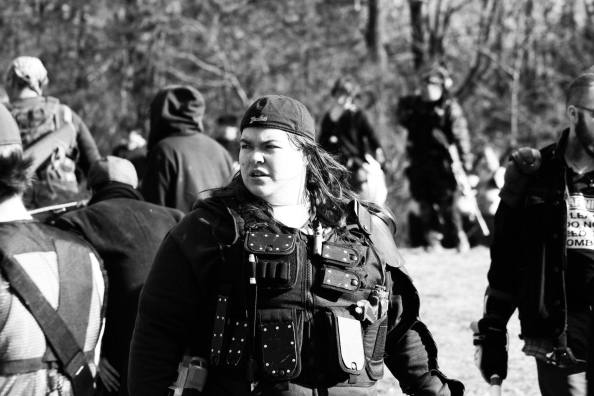
    Shoshana Kessock (photo, Dystopia Rising: New Jersey)
    Shoshana Kessock (photo, Dystopia Rising: New Jersey)

    Because screw you, I’m a goddamn badass. You heard me. Larp is a fantastic place, a blank canvas upon which to build whole new worlds, worlds where you decide the structures, the rules, the norms. And as the designers, writers, organizers, and producers of games, it is in your power to challenge the status quo of how fat people are treated in your games. You have the power to make the decisions about how people are treated in your community and in play based on the atmosphere you cultivate and the games you design. So why do so many games still have atmospheres where people who are fat are mistreated? Where being fat marginalizes the positions you’re allowed to have? Or the fun you’re allowed to enjoy?

    The simple matter is being fatphobic and hurtful against fat people is the last socially accepted bigotry enacted by almost every single group anywhere. Otherwise progressive communities and marginalized populations will still turn inward on fat members and harass, shame, ostracize, or minimize them when they would never consider letting that treatment go unchallenged to their own group. We as a society celebrate striving for tolerance in much of our media, giving us feel-good messages about love and kindness and acceptance with one hand, and making awful fat jokes with the other. And this same process happens everywhere, in every subculture group. Including larp.

    Shoshana Kessock (photo, Shoshana Kessock)
    Shoshana Kessock (photo, Shoshana Kessock)

    Don’t be that person. Just don’t.

    The problem is universal and yet hits different groups disproportionately. For example, it’s no secret that fatphobia affects women disproportionately more than men (although mistreatment of fat men is absolutely a thing). Women are put under the lens, pulled apart by people of every gender for the way they look, and their fat pointed out at every turn. Yet in a medium where we create our worlds, why is this still the case? Because we bring our bigotries with us. And in a real world where we can’t imagine not picking everyone apart for that stray pound, why the hell would you not do it in your games?

    Because it’s not right. And by continuing to do so, you’re creating hostile larp environments. Even if your game purports to be progressive, if you don’t consider fat bigotry in your events and designs, you’re not making progressive environments that are equal for all. You’ve failed in your inclusivity.

    Here’s a handy dandy list of how you might mess up at including size discrimination in your larp. We’ll call it the “If You ________ Then Your Game Might Be Fatphobic.”

    1. If you don’t have any fat people playing characters of social status or power.
    2. If you don’t cast fat players in romantic roles.
    3. If you design costume requirements for games which won’t allow fat people to participate comfortably (such as providing costumes for the event and make the sizes inaccessible to fat people).
    4. If you use fatphobic language in your game descriptions of characters (associating fat with evil, slovenly, lazy, disgusting, etc.)
    5. If you encourage social stratification based on appearance in your games.
    6. If you do not use people of all sizes in your larp promotion, instead relying on people who represent only the status quo in your advertisements and documentation.
    7. If you make being fat an accommodation one must ask for when participating rather than considering people of all sizes from the beginning.
    8. If you allow fatphobic comments or mistreatment to continue on in your game, either from other players or from your staff. (Bonus points on this one if you accept “being fat is unhealthy” as an excuse).
    9. If you adjust the power dynamic of a character being played by a fat player once they’ve been cast because they’re fat.
    10. If you accept bullying in character based on someone being fat and accept that as just the status quo (bonus points if you make a whole game about this, or try to subvert it and fail miserably, such as in the jeepform game Fat Man Down, which attempted to showcase the problems of fatphobia and instead only highlighted and nigh glorified them in their mechanics of the game).

    Okay. So here we are at the end of this rather scathing list. And you might be asking: so what do I do to make sure my game isn’t fatphobic? Well, take a look at that handy dandy list and don’t do those things. Work hard to make sure people who are plus size, people who are fat, are in positions of power. Fight back against fatphobic jokes. Make sure you recognize the power dynamics being played out against fat players and their characters and help adjust the narrative so they are not pushed out by those who equate fat with things like laziness, slovenliness, lack of power, etc. Do the work to represent the life of fat people accurately and do not focus your games on the life of fat people and their challenges unless you know just what you’re doing.

    As for me, I know that the world isn’t going to change overnight. I’m aware that there are plenty of places which will never shift the way they think about fat bodies (the clothing industry, for example…) But I solidly believe with a little conscious work we can make larp spaces more accessible and friendly towards body types of all kinds. By making sure people of all sizes feel comfortable coming to your game, you’ll enrich your game by bringing new experiences and new voices into your space. And you’ll prove that you recognize that fat people need not and should not be erased from your stories.

    Embrace a new way of thinking. Or join in fatphobia as a phenomenon. There is no middle ground. And if you’re about bringing fatphobia into your games, just tell me so. Because then you get from me what amounts to a rude gesture and language and certainly no attendance at your game. Because I don’t have time for you or your fatphobia. The larp world has plenty of spaces that aren’t you.


    Cover photo: Shoshana Kessock (photo, Dystopia Rising: New Jersey).


    Content editing: Elina Gouliou.

  • Larp Design Glossary

    Published on

    in

    Larp Design Glossary

    The original version of this glossary was published in the 2019 book Larp Design: Creating Role-Play Experiences.


    360° illusion
    Larp design idea where what you see is what you get. The environment is perceived as authentic, everything works as it should affording participants to engage in authentic activity for real, and participants perform immersive role-play.
    Act (noun)
    A segment of the larp runtime that has some kind of thematic unity, comparable to an act in a play.
    Act break
    The breaks between runtime when runtime is divided into acts. Often used to pause, reflect, and calibrate play.
    Agency
    The capacity of a participant or a character to act in a meaningful manner in a given environment, to have the possibility to impact the proceedings.
    Alibi
    The things that enable a person to (role-)play and to do things they would never do in everyday life while in character. Alibi is value neutral (“It says so in the character description”) and can be used in a positive (“We have all agreed to explore these themes together in a physical way”) or a negative way (“I was drunk at the time”).
    Amusement park design
    In the context of larp design this means creating a larp where there are pre-planned ‘rides’, story units, for the characters to explore.
    Bespoke design
    Approaching every larp as a new work and designing everything from scratch. As opposed to either iterating on a local tradition, or using the same larp system, such as Mind’s Eye Theatre, in multiple larps.
    Blackbox
    A genre of larp played with minimalist setting, with carefully curated props, and controlled light and sound. Often played in theatre black boxes. A room in a longform larp devoted to acting out scenes out of temporal sequence is also sometimes called blackbox, although a better term for that is meta room.
    Bleed
    When the feelings of the character impact on the participant, or vice versa.
    Blockbuster larp
    Longform larp that targets an international audience, features an expensive venue, high participation fee, and is hyped before and after. They usually have a high concept idea, often based on existing intellectual property. Originally, the term was critical of this type of larps.
    Boffer
    A padded weapon. Historically made out of foam covered with duct tape, nowadays often made out of latex.
    Boffer larp
    A larp where fighting modeled with boffers is a central feature.
    Briefing
    The part of the event before runtime where designers instruct participants about the larp.
    Calibration
    Negotiations relating to playstyle and personal boundaries, usually between participants.
    Campaign
    A pre-planned series of larps set in the same fictional world where events from one larp impact events in another.
    Chamber larp
    Shorter larps, with their length measured in hours, often taking place in a small venue and with participants in single or low double digits. Low demands for scenography and costuming make chamber larps easier to package and restage.
    Character
    The fictional persona a participant portrays during runtime. Sometimes also used to refer to the character description that is an inspiration for the character actually played.
    Character alibi
    The alibi provided by portraying a character.
    Character description
    The material on which a participant bases their performance of a character during runtime. Usually takes the form of text describing character background, motivation, goals, and contacts. In some traditions these can be very long and individually tailored, in others they are not used at all.
    Close to home
    Playing with themes, situation, experiences, or personae that one is very familiar with from everyday life.
    Collaborative-style
    Larps that have no victory condition and encourage participants to share and co-create, rather than conceal information and best each other.
    Competitive-style
    Larps in which there is a victory condition that only limited numbers of participants can achieve.
    Consent, physical
    Permission for something physical (e.g. relating to intimacy or roughness) to happen. Can be withheld at any time.
    Consent, story
    Permission to do something particularly impactful to another participant’s character (e.g. give permission to another participant that they can kill your character).
    Content larp
    A style of larp, predominantly Czech, primarily focused on pre-written and tightly structured plot content created by the design team.
    Debrief
    Larpmaker organised post-runtime event, where participants and designers talk about what they just did together. Can be structured or relatively free-flowing. Usually the goal is to put the runtime in perspective, to share stories, or to meet the other participants without the masks the characters provide.
    Decompression
    The cooldown period after the runtime of a larp, when the participant is leaving the fiction and the character behind, and gearing up to return to everyday life outside the larp. Sometimes also called aftercare.
    De-roling
    The process by which a participant divests themselves of the physical embodiment of their character, often used as a method to attempt to prevent or reduce bleed.
    Designable surface
    Anything that can be changed and made choices about that can impact the experience that is being designed. In larp, everything is a designable surface: the typeface of the website, the soundscape, the interaction patterns, character names, toilet temperature.
    Diegesis
    Things that exist inside of the fiction are part of the diegesis. For example, music during runtime is part of the diegesis if the characters can hear it, and non-diegetic if only the players hear it.
    Diegetic
    Something that exists inside of the fiction is diegetic. In a larp participants can address, react to, and interact with things that are diegetic, without breaking character. See diegesis.
    Director
    A runtime gamemaster who guides play in a very hands-on manner. Basically a freeform gamesmaster in larp.
    Escalation (and de-escalation)
    The process of incrementally increasing or decreasing the intensity of a scene to come to the optimal atmosphere for all participants involved. Sometimes there is a specific metatechnique for signalling desired (de)escalation.
    Fate (sometimes skjebne)
    A play instruction for character action that the participant is obliged to follow; occurs in fateplay designs.
    Fateplay
    Prior consent by participants and/or organisers to certain, immutable narrative beats or outcomes. A conscious design decision that presumes that how something happens or someone feels about it happening can be just as interesting to explore as if it happens.
    Freeform (freeform larp, freeform scenario)
    As the name implies, freeform scenarios have no standard form. They typically last a few hours, are usually played without costumes, props, or special lighting in whatever space is available, often feature heavy use of inventive bespoke mechanics and metatechniques, and are sometimes heavily gamemastered. In the Nordic countries, these used to be considered halfway between tabletop role-playing and larps; today, in the international discourse, they are lumped together with larps.
    Gamemaster, runtime
    A runtime story facilitator for a larp, keeping track of plot flow, solving narrative problems, and, if applicable, making rule-system calls. Sometimes but not always one of the larpwrights.
    Herd competence
    The amount of competence in the ensemble of participants. Running a larp for a group of participants where some have prior experience is much easier than running a larp for a group with only beginners. If there is enough experience in the room, beginners can learn by following the example set by more experienced participants.
    Immersion
    A term with multiple meanings, usually relating to how far the participant is engaged with the fiction of the larp. One common usage is in the sense of character immersion, that is, the participant experiencing the diegetic world through the eyes and mind of the character. Sometimes the word is used to mean immersion into the setting or the milieu, as in 360° illusion, or even engagement with the story as in narrative immersion.
    Ingame
    Things that happen during runtime and are true within the world of the larp.
    Inter-immersion
    In a larp, a participant is pretending to be a character, but is also pretending that everyone else is their character. The feedback from the other participants enhances the character immersion, creating a cycle called inter-immersion.
    Jeepform
    A specific tradition of freeform role-playing mostly coming from Sweden and Denmark. See jeepen.org.
    Knutepunkt (also Knutpunkt, Knudepunkt, Solmukohta, KP)
    Annual conference devoted to larp and larp design traveling between Norway, Sweden, Denmark, and Finland that began in Oslo in 1997. The name of the event always reflects the local language. The whole tradition is discussed under the original, Norwegian name.
    Larp crush
    An infatuation with another participant, or maybe just their character, that a player develops during runtime due to playing a romance with them. See also bleed.
    Larpmaker
    All the people responsible for the creation of a larp, both in production and in content.
    Larp script
    All the materials (character documents, rules, venue requirements, etc.) created by the designer that are needed to run a larp.
    Larp system
    A set of rules for larping if they can be separated from the individual larp, i.e. multiple larps are run with the same system of rules. Some larps use complex rule mechanics to explain what characters can and cannot do, and those rules can be printed as books. This is the opposite of bespoke rules.
    Larpwright
    The author(s) of a larp. The person or group who defines the larp’s vision, world, workshop structure, characters, etc. A synonym for larp designer from an era before game studies terminology colonised larp discourse. Also, a person who creates larps.
    Longform larp
    Larps that last a full day or several days, possibly with act breaks between different parts, with full scenography and participants in full costumes.
    Magic circle
    Metaphor for the separate space of playing. The time and space of the larp, in which characters are played and different rules apply than normal; upheld by a social contract.
    Mechanics
    In larps where the skills of the characters are important, and they are markedly different from those of the participants, these actions are expressed through replacements that simulate things that are impossible, undesired, or too intimate (e.g. violence and sex). In some traditions, mechanics imply points, levels or other numerical systems representing skills.
    Meta room
    A dedicated room in a longform larp devoted to acting out scenes out of temporal sequence. Often features a runtime gamemaster. Sometimes also called a blackbox.
    Metareflection
    The player reflecting on character actions or the fictional situation, switching between the fictive frame and the metareflexive frame.
    Metatechnique
    Mechanics that allow participants to communicate player to player about their characters, without breaking play. Metatechniques are commonly employed to let participants share their character’s inner thoughts or motivations, or to let participants together establish things about their characters’ shared history and relationship.
    Mixing Desk of Larp
    A theory of larp design, guiding the designer to make conscious decisions between contradictory virtues of larp design. It consists of a series of faders, such as transparency-secrecy, illustrating that a typical larp cannot feature both high transparency and many secrets.
    Narrative
    Narrative is what you are left with after the larp is done, when participants look back on the plot, the story, and the character actions and try to answer the question “what happened in this larp”. The narrative is the choice of events included, and the way they are related to each other, when a story is told. The narrative of a larp continues to change long after the larp has ended.
    Narrative design
    All design choices made in the service of enabling participants to tell stories.
    NPC
    The acronym is short for non-player character. It refers to a character who follows the larp designer or runtime gamemaster’s instructions. NPCs are typically played by organisers, or a crew dedicated to this purpose. NPCs can be present for the whole duration of the larp, or appear only briefly. The term was inherited from tabletop role-playing games.
    Offgame
    Participant activities or utterances outside of both the larp’s diegesis as well as the play of the larp itself.
    One-shot
    A larp designed to be stand-alone and not part of a series of connected larps like a campaign.
    Opt-in
    An instance of choosing to participate in something.
    opt-in design
    Designing in a way where participants have to actively choose to participate in certain aspects or design elements of the larp.
    Opt-out
    An instance of choosing not to participate in something.
    Opt-out design
    Designing in a way that presupposes participation in certain aspects or design elements of the larp, where participants have to actively choose not to participate.
    Organiser
    A person who is at least in part responsible for making sure the larp runs. This can include logistics work as well as runtime gamemastering and other activities.
    Paralarp
    The practices, designs, and texts surrounding the runtime to enable the playing of that larp.
    Playstyle calibration
    Participants or gamemasters communicating beforehand about the desired playstyle of a scene or larp. This type of calibration is not about the content, but about how the participants approach larp in general and to find common ground: physical or not physical, slow or fast paced, very emotionally intense or with levity.
    Plot
    Sequences of narrative events pre-planned by the larp designers, for example in the form of intrigues written into the character descriptions giving characters motivations for actions during the larp.
    Post-play activities
    Any activities undertaken after the official runtime of a larp.
    Pre-written
    Created prior to the run of the larp; often implies that the elements of the larp have been consciously designed and intentionally related to each other.
    Producer
    Person or persons responsible for the physical production and logistics of a larp.
    Role
    A collection of legible social behaviours in a given social position. Everyone plays numerous roles (customer, larper, offspring), both out of the larp and within a larp as a character.
    Rules-light
    Containing few enough rules that the larp can be learned instantly by a novice and that these few rules can be recalled on the spot with little difficulty.
    Run (noun)
    An instance of a full staging and playthrough of a larp. “Some see the first run as a playtest, I see it as a premiere.” (verb) To stage a larp. “We ran House of Cravings last weekend.”
    Runtime
    The allotted time for playing, when characters are being played and the narrative design unfolds.
    Sandbox design
    Sandbox design focuses on providing participants with a playable world that reacts to their input, in which participants can freely bring in or create on-site the plots and the drama they find interesting to play out together.
    Secrecy
    The use of secrecy in larp design is to purposefully prevent participants from knowing things their characters would not know. Common ways to add secrecy are to give participants secret character goals and motivations, and to include surprise happenings during runtime. See also transparency.
    Secrets & powers larp
    North American larp design pattern. Pre-written characters in typically a single-run larp all have often-oppositional goals that they are primarily able to reach by leveraging secrets (hidden information not known to everyone) and powers (game mechanics that permit participants to get other characters to do what their character wishes).
    Setting (a scene)
    The act of framing and describing who is in a scene, what is happening, and where it is taking place. Hitting particular themes or emotional overtones is particularly desirable.
    Status line exercises
    An abstract larp exercise in which participants physically queue up in order to demonstrate and visualise where their characters lie on a specific status continuum. Examples include oldest to youngest, most powerful to least powerful, or degree of agreement with an ideology.
    Story
    Story is created in real time from the moment the larp begins until the participants are done playing.
    Tabletop
    Role-playing style played verbally, where you do not act out your character’s actions, but instead narrate them.
    Theme
    The theme of a larp is what the larp is about, in contrast to what happens at the larp. Setting clear themes for a larp informs participants about the desired tone and playstyle of the larp, and affects what participants expect they might be likely to experience. Larps divided into acts often have different themes for each act.
    Transparency
    The use of transparency in larp design is to purposefully let participants know things their characters would not know. Common ways to add transparency are to let participants read more pre-written characters than just their own, to divide the larp into acts with announced themes, or to tell participants what is going to happen during the larp before it starts. See also secrecy.
    Workshop
    The workshop is a structured period of exercises that your participants will do before the start of runtime, to familiarise themselves with each other and the larp mechanics, enabling them to play together. Typically done on-site before runtime.

    Cover photo by Massi Hannula, used with permission.